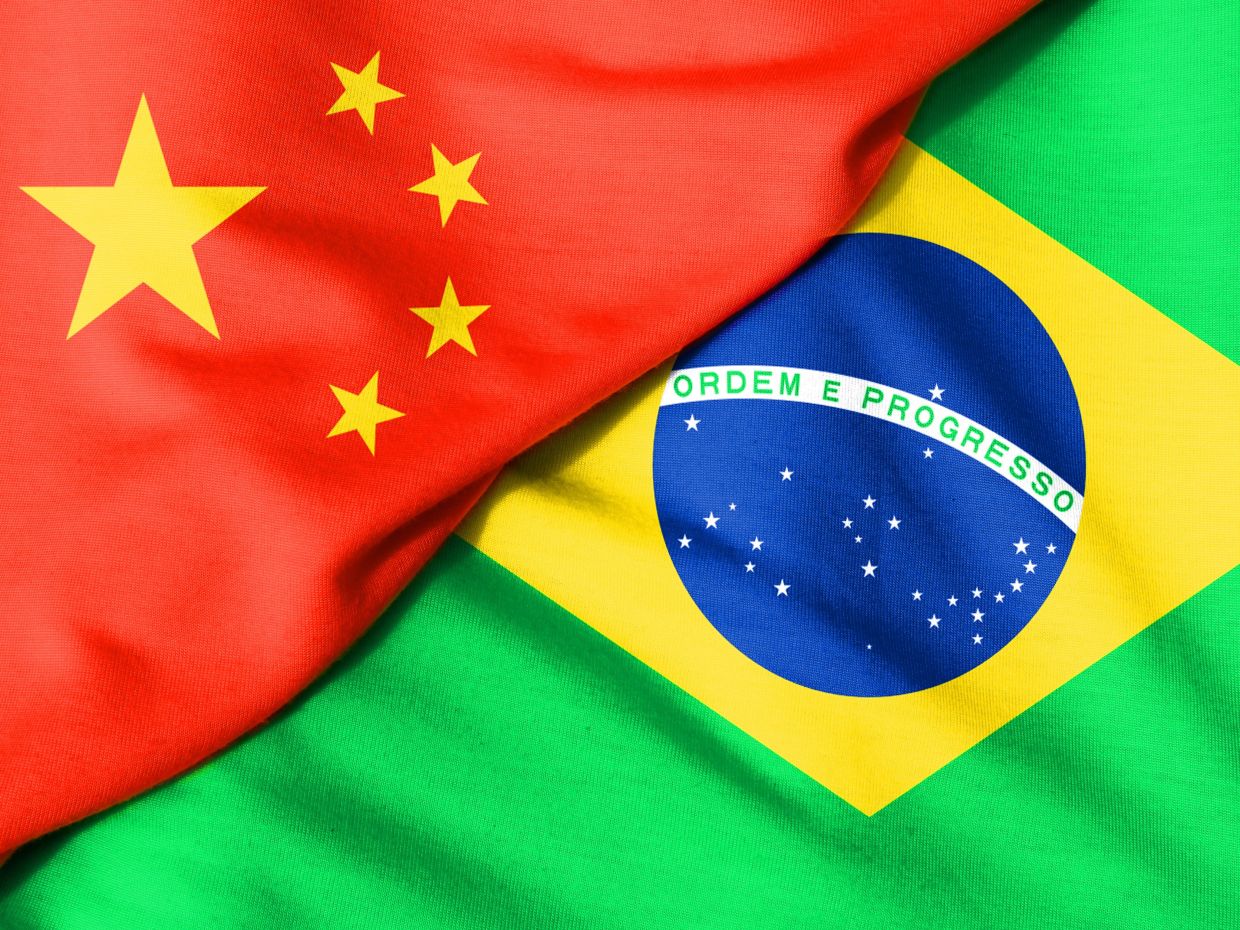
Brazil is poised to become a regular borrower in China's bond markets, with officials confirming that a long-anticipated sovereign yuan issuance should occur before 2024 closes. The move represents a calculated diversification of the country's funding sources and a recognition that tapping Asia's deep pools of capital offers distinct advantages beyond mere cost savings. Francisco Segundo, deputy secretary for public debt at Brazil's National Treasury, underscored the strategic nature of the debut during a recent webinar, positioning it as less a financial necessity and more a gateway to new investor classes and the establishment of critical pricing infrastructure.
The forthcoming issuance illustrates a pragmatic approach by Brazil's monetary authorities. External debt represents only four per cent of the federal stock, meaning the government is not dependent on yuan proceeds for its fiscal operations. Instead, the treasury views the bond sale through a longer lens: as the first step in building what economists call a "sovereign curve," the benchmark yield structure that other borrowers reference when accessing international markets. Segundo captured this distinction when he noted that for a nation of Brazil's economic scale, the exercise is "much more qualitative than quantitative for now," though he acknowledged the currency's competitive pricing and the appeal of broadening the investor base.
The financial arithmetic behind the yuan strategy is compelling. Bloomberg data tracking foreign issuers show that borrowers accessing China's bond market this year have secured average coupons of 1.97 per cent, less than half the 4.5 to 5.5 per cent costs associated with dollar-denominated debt. These yuan deals, however, tend to be modest in size and duration, typically representing about a fifth of what the same borrower would raise in dollars and running three to five years. Brazil's finance officials have articulated target ranges between five and ten billion yuan, equivalent to roughly US$735 million to US$1.48 billion, though the discrepancy between figures cited by different officials has not been formally explained.
Brazil's push into yuan markets follows formal engagement with Chinese authorities. Finance Minister Dario Durigan presented a letter of intent to People's Bank of China governor Pan Gongsheng in June, at which point the central bank signalled willingness to facilitate the issuance. The application has subsequently cleared regulatory hurdles, leaving only procedural steps, including engagement with a Chinese rating agency that has never previously assessed Brazil. Segundo cautiously stressed that while the year-end target remains the objective, no guarantees can be offered given the unpredictable regulatory timelines in cross-border financial transactions.
What distinguishes Brazil's strategy from merely accessing cheaper capital is an explicit commitment to sustained market presence. The treasury official emphasised that success requires repeated engagement, framing the approach as one where "we have to go once, we have to go twice, three times. We have to be there every year." This doctrine emerges from lessons drawn from the European debt markets, where Brazil's prolonged absence created distortions that compressed liquidity and made pricing inefficient. The treasury concluded that sporadic issuances fail to establish the institutional depth necessary for sustained investor confidence and corporate reliance on established benchmarks.
Corporate borrowers stand to benefit significantly from this sovereign pathway. Suzano, a major Brazilian pulp and paper manufacturer, pioneered Latin American access to panda bonds in 2024, raising 2.6 billion yuan across three transactions, including a green bond priced at 2.8 per cent. Emilio Yeh, the company's chief financial officer for Asian operations, revealed that investors consistently raised questions about when Brazil's sovereign issuance would materialise, viewing it as a linchpin for confidence in the broader credit story. The pricing advantage proved substantial: Suzano's yuan costs came in more than 50 basis points below equivalent dollar borrowing, even after accounting for currency swap expenses.
China's institutional investor base operates according to specific screening criteria that favour sovereign benchmarks. Alexandre Lowenkron, who heads Bocom BBM, a Brazilian bank controlled by China's Bank of Communications, explained that Chinese asset managers prioritise scale, credit quality, and what he termed "China flavour," meaning some operational or supply-chain connection to the country. Brazil itself, rated below investment grade by all three major credit agencies, falls below a threshold that restricts many large institutional funds from purchasing unrated or lowly-rated sovereign debt. Yet Brazilian companies like Vale and Suzano enjoy ratings one or two notches above the government, creating an anomaly where the corporations are technically more creditworthy than their home nation.
This ratings inversion underscores a deeper structural problem that the yuan strategy addresses. Petrobras, the national oil company, faces suppression to the sovereign's credit level by most agencies, though Fitch privately assesses the company as investment grade. The absence of a Brazilian sovereign curve in yuan has therefore constrained corporate borrowers by forcing investors to synthesise pricing through currencies and geographies lacking direct precedent. When Durigan engaged Chinese counterparts, he highlighted requests from Brazilian businesses seeking government issuance in yuan, motivated both by the ability to access their own cheaper offshore financing and by the prospect of reducing currency volatility in domestic operations.
The competitive landscape reinforces Brazil's rationale. Indonesia's recent sovereign yuan issuance of seven billion yuan on July 23 established a benchmark for developing-market debut sizing in Asia's bond markets. Whether Brazil's sale will match or exceed that figure remains uncertain, partly because officials have provided conflicting guidance and partly because the timing and quantum remain subject to market conditions and regulatory approvals. Segundo's cautious phrasing—that the objective is year-end completion "but we cannot guarantee it"—reflects the reality that cross-border financial transactions depend on factors beyond any single government's control.
The broader implications for Southeast Asia and emerging markets are noteworthy. Brazil's deliberate cultivation of a yuan-based funding channel signals confidence in the durability and depth of Chinese capital markets, even as geopolitical tensions complicate trade and investment flows elsewhere. For regional policymakers, the Brazilian case study suggests that establishing sovereign benchmarks can unlock corporate financing at materially lower costs, potentially reshaping how multinational firms based in the region structure their capital raises. The precedent may encourage other large emerging economies to pursue similar strategies, gradually rebalancing the geography of international finance toward Asia.
Looking forward, the success of Brazil's inaugural yuan issuance will likely influence both its own future market access and investor appetite for other emerging-market sovereign borrowers in Asia. Treasury officials have clearly committed to regular presence, signalling that this is not a one-off opportunistic transaction but rather a fundamental reorientation of how Brazil engages with Asian capital markets. If execution proceeds as planned and the markets respond favourably, Brazil may establish itself as a reliable recurring borrower, with all the benefits that status confers: lower borrowing costs, deeper liquidity, and a platform from which Brazilian corporations can pursue their own capital-raising ambitions at more competitive prices.

