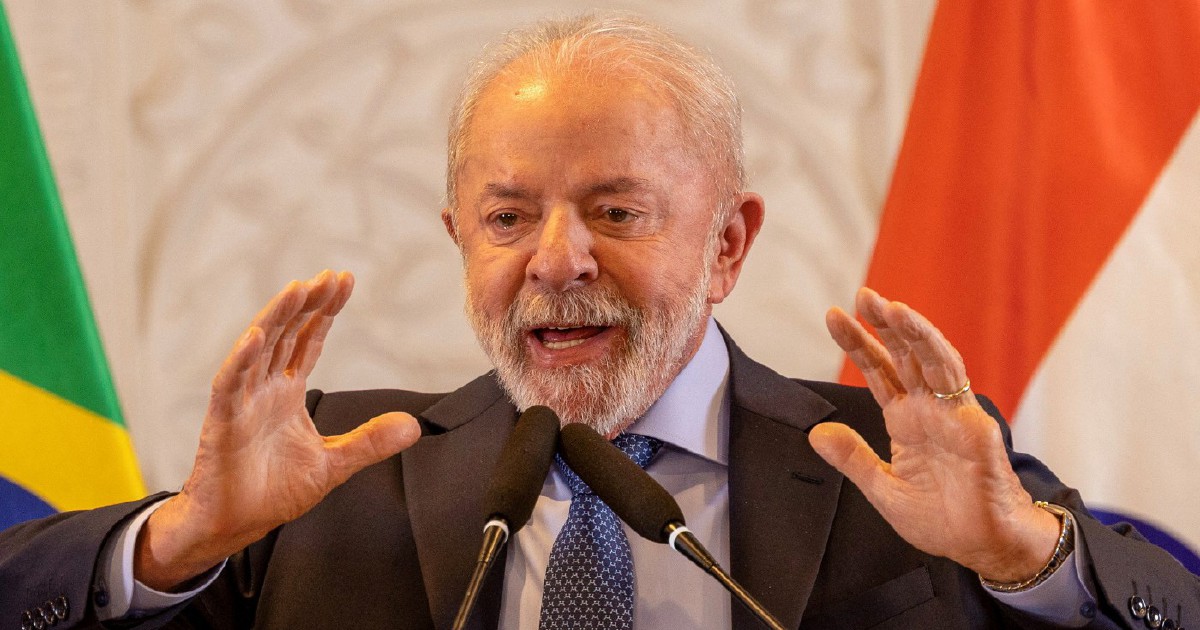
A prominent Brazilian Supreme Court justice has cleared the way for federal police to investigate Fabio Luis Lula da Silva, the son of President Luiz Inacio Lula da Silva, in connection with accusations that he inappropriately assisted a lobbyist attempting to gain leverage within government health ministry operations. Justice Andre Mendonca's authorisation of the inquiry marks a significant escalation in scrutiny surrounding the presidential family, drawing unwanted attention to the administration just as it attempts to stabilise economic and political conditions across the country.
The decision to proceed with the investigation emerged from information provided to Reuters by two individuals with direct access to the judge's ruling. The specific allegations centre on Fabio's alleged involvement in facilitating negotiations or arrangements between a lobbyist and ministry officials, potentially circumventing normal governmental channels. Such conduct, if substantiated, could constitute an abuse of proximity to power and raise questions about whether undue influence was applied to shape health sector decisions or contracts.
For Malaysian observers, this development illustrates how even senior political families in major regional democracies face serious institutional constraints and judicial oversight. Brazil's Supreme Court has demonstrated willingness to investigate figures close to the executive branch, reflecting constitutional safeguards that exist alongside executive authority. This contrasts sharply with varying approaches to presidential family accountability across Southeast Asia, where institutional independence and separation of powers operate with differing degrees of rigour depending on jurisdictional context.
The timing of the investigation carries political weight within Brazil. President Lula's return to office in 2022 followed a period of significant turbulence, including his imprisonment during the previous administration. His government has sought to consolidate legitimacy and rebuild international confidence. An investigation touching the presidential family, however, injects an element of vulnerability into the administration's narrative of restored institutional normalcy. The inquiry suggests that no individual, regardless of political standing or family connections, enjoys immunity from official scrutiny—a principle that strengthens democratic credibility but also generates political headwinds.
Lobbying in Brazilian health policy has emerged as an increasingly contentious arena, particularly given the country's sprawling healthcare system and the vast sums flowing through public and private medical procurement channels. Allegations involving ministry dealings carry particular weight because health contracts and policy decisions affect tens of millions of Brazilians. Any suggestion that such decisions might be influenced by informal networks or family connections undermines public confidence in the integrity of the healthcare apparatus and raises broader questions about governance standards.
The role of Justice Andre Mendonca in authorising this investigation reflects the Brazilian Supreme Court's institutional position as a potential check on executive overreach. However, it also underscores ongoing tensions within Brazil's judiciary regarding independence and partisanship. The court has faced criticism from various quarters regarding its handling of politically sensitive cases, and every significant decision generates debate about whether justices are applying law equally or responding to broader political pressures.
For regional observers monitoring Latin American governance, the Brazilian case demonstrates how presidential families and their networks continue to present governance challenges. The intersection of family relationships, political access, and business interests creates recurring vulnerabilities that democratic institutions must navigate. Southeast Asian governments could consider what institutional mechanisms might effectively prevent similar conflicts of interest, while respecting legitimate political participation by families of elected officials.
The investigation's implications extend beyond Fabio Luis Lula da Silva personally. Federal police success in developing evidence could strengthen broader efforts to enhance transparency in health ministry operations and potentially lead to systemic reforms addressing lobbying practices. Conversely, if the investigation stalls or produces inconclusive results, critics may question whether elite networks ultimately escape accountability despite formal institutional frameworks.
International observers, particularly those assessing Brazil's democratic resilience, will monitor how thoroughly the federal police pursue this inquiry and whether findings are acted upon decisively. The country's institutional capacity to investigate and prosecute individuals connected to political leadership, without appearing to weaponise investigations for partisan advantage, remains a central indicator of democratic health.
The investigation also highlights the complex relationship between the judiciary and executive branches in presidential systems. While separation of powers ideally prevents any branch from dominating others, investigations targeting the president's immediate family create political friction that can strain institutional relationships. Brazilian policymakers must maintain equilibrium between respecting judicial independence and managing the political consequences of high-profile inquiries affecting the executive branch.
As the federal police commence their investigation, several questions will shape how this case unfolds and what precedent it establishes. Whether Fabio Luis Lula da Silva receives equal treatment compared to similarly positioned individuals, the transparency of investigative processes, and the ultimate findings will all contribute to broader assessments of Brazilian institutional integrity. These elements remain critical not only for domestic legitimacy but for international confidence in Brazil's commitment to governance standards and rule of law.

