Berlin-based Blueprint Biomed is among dozens of startups presenting cutting-edge solutions at Paris Vivatech, with innovations ranging from regenerative medicine to artificial intelligence applications that could reshape how societies manage health, security and logistics across the globe. The company is developing synthetic bone grafts designed to eliminate the complications associated with current surgical practices, marking a significant departure from treatments that have dominated orthopedic surgery for decades.
Traditional bone grafting relies heavily on extracting bone tissue from patients themselves, a procedure that carries substantial risks. Chief executive Aaron Herrera explained to AFP that autologous grafts—harvested from the patient's own body—frequently fail, necessitating additional operations and potentially leading to serious complications. Blueprint's approach sidesteps these challenges entirely by creating artificial structures tailored to individual patient requirements. The company's three-dimensional printed scaffolds utilize polycaprolactone, a biodegradable polyester, combined with collagen to provide the necessary structural support for bone healing and integration.
What distinguishes Blueprint's technology is its biocompatibility profile. The collagen component dissolves within three months, while the polycaprolactone scaffold persists for approximately two years—precisely the window needed for natural bone formation to occur and stabilize. This carefully calibrated timeline eliminates the need for revision surgery once the artificial support has fulfilled its biological purpose. As Blueprint advances toward human clinical trials, the company is seeking USD 2.5 million (RM10.29 million) in funding, with ambitious plans to begin patient implantations by 2028. For Southeast Asian healthcare systems wrestling with surgical backlogs and limited access to specialized orthopedic care, such innovations could eventually democratize treatment options currently available only in developed nations.
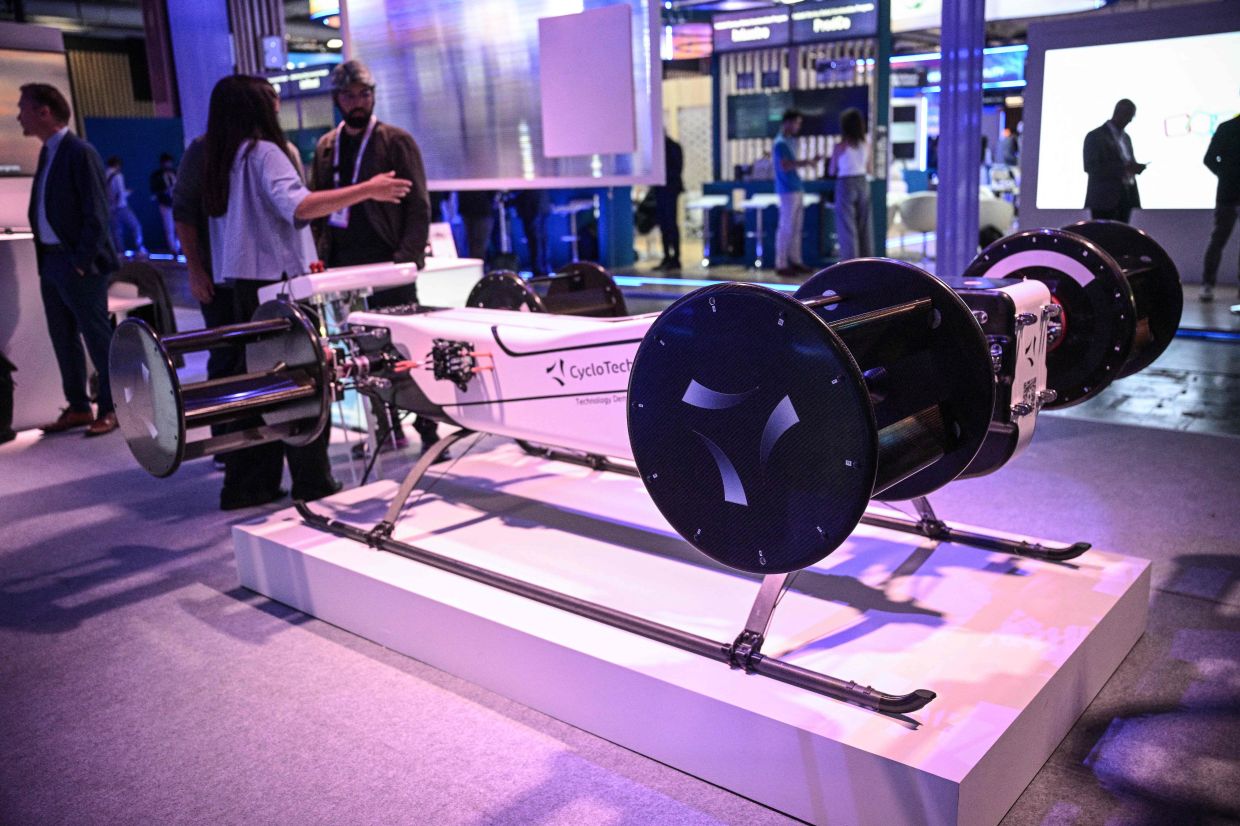
While medical technology addresses internal healing, innovations in aerial mobility are expanding possibilities for urban logistics and emergency response. Austrian startup CycloTech has developed unconventional motors featuring open-cylinder designs with wing-shaped blade structures that fundamentally alter what quadcopter drones can accomplish. Marketing chief Andrea Marchsteiner outlined the operational advantages: machines equipped with these motors can transition seamlessly between helicopter-style hovering, forward flight resembling conventional aircraft, rapid mid-air braking, and reverse movement. Such agility opens applications in congested urban environments where traditional delivery vehicles face severe limitations, from package transport in densely populated districts to potential human air mobility systems.
CycloTech's funding trajectory underscores investor confidence in the technology. The 65-person company has already secured €40 million (USD 46 million/RM189.3 million) and continues pursuing additional capital alongside strategic partnerships. The company seeks aviation manufacturers and technology firms willing to integrate CycloTech's proprietary motors into their existing platforms. Beyond commercial deliveries, the technology carries military applications, a reality highlighted by demonstrated use of advanced drones in recent conflicts including the Ukraine war. For a region like Southeast Asia, characterized by archipelagic geography and infrastructure gaps, such innovations could eventually transform emergency medical transport, disaster response coordination, and connectivity to remote communities.
As artificial intelligence becomes increasingly sophisticated, so too does the potential for malicious misuse. French company Whispeak initially gained traction as a voice-recognition identity verification tool for banking and financial services, but the technology's focus has shifted dramatically following the emergence of generative AI systems capable of producing convincing audio deepfakes. Chief executive Florent Van Calster revealed that contemporary deepfake technology requires less than ten seconds of voice sample to create convincing imitations, often using freely available tools. This capability poses existential threats to voice-based authentication systems and creates unprecedented fraud risks for elderly populations and vulnerable groups susceptible to social engineering attacks.
Whispeak has invested three years developing detection algorithms specifically designed to identify audio deepfakes with remarkable precision. Van Calster claimed the company now operates "the best detector of audio deepfakes in the world," supported by victories in multiple international detection competitions. Current performance metrics show error rates below one percent across available training datasets. However, Van Calster acknowledged the inherent limitation of such security measures: deepfake technology continuously advances, creating an endless competitive dynamic between detection and deception capabilities. Whispeak is currently collaborating with French telecommunications operator Bouygues to screen incoming calls and alert users when deepfake audio is detected, providing crucial warning before users might transfer funds or divulge sensitive information.
Beyond voice-based threats, the authentication landscape extends into biometric territory. Hong Kong-based startup PointFit is revolutionizing athlete performance monitoring through minimally invasive technology. Rather than relying on traditional blood tests or heart rate monitors, PointFit has developed adhesive patches containing microscopic sensors that analyze biomarkers present in skin sweat. Chief executive Kenny Oktavius began developing this technology in 2019 while still a student, recognizing fundamental limitations in conventional performance measurement approaches. The system measures glucose and cortisol levels among other biomarkers, establishing what Oktavius termed a personalized "sweat index" adjusted for individual demographic factors and environmental conditions including ambient temperature.
Oktavius highlighted a critical vulnerability in existing elite athlete monitoring: professional marathon runners sometimes collapse despite wearing expensive, sophisticated sensor systems. Heart rate data, he observed, provides an incomplete picture of physiological status. Hospital physicians rely on biomarker analysis when diagnosing acute conditions, not cardiac rate alone. PointFit's approach bridges this gap, offering continuous non-invasive biomarker monitoring through wearable technology. The company has already partnered with Red Bull's Athlete Performance Centre and integrated its technology into Puma's Nitro Labs research programs. Oktavius indicated ambitions to transition from professional sports applications toward consumer retail partnerships, citing potential collaborations with major sporting goods retailers including Decathlon and eyewear manufacturer EssilorLuxottica.
For Malaysia and Southeast Asia broadly, the convergence of these innovations—regenerative medicine, advanced robotics, deepfake detection, and wearable biosensing—signals a fundamental technological realignment across healthcare, security, and logistics sectors. Many Southeast Asian nations currently lack cutting-edge medical facilities and depend heavily on imported healthcare solutions at premium pricing. Similarly, cybersecurity threats including voice-based fraud disproportionately affect populations with limited digital literacy. Technology transfer mechanisms, licensing agreements, and manufacturing partnerships between European and Southeast Asian firms could substantially accelerate regional adoption of these innovations, potentially addressing persistent healthcare access gaps, strengthening defenses against emerging fraud threats, and enabling more efficient logistics networks in an era of rapid urbanization and rising e-commerce demand.
%22%2F%3E%3C%2Fpattern%3E%3C%2Fdefs%3E%3Crect%20width%3D%22100%25%22%20height%3D%22100%25%22%20fill%3D%22url(%23ph47hsg)%22%2F%3E%3Crect%20width%3D%22100%25%22%20height%3D%22100%25%22%20fill%3D%22url(%23ph47hsp)%22%2F%3E%3Ctext%20x%3D%2250%25%22%20y%3D%2250%25%22%20text-anchor%3D%22middle%22%20dominant-baseline%3D%22central%22%20fill%3D%22rgba(255%2C255%2C255%2C0.95)%22%20font-family%3D%22Georgia%2C%20'Times%20New%20Roman'%2C%20serif%22%20font-weight%3D%22700%22%20font-size%3D%22226%22%20letter-spacing%3D%22-0.02em%22%3EExists%3C%2Ftext%3E%3C%2Fsvg%3E)
%22%2F%3E%3C%2Fpattern%3E%3C%2Fdefs%3E%3Crect%20width%3D%22100%25%22%20height%3D%22100%25%22%20fill%3D%22url(%23ph4jpltg)%22%2F%3E%3Crect%20width%3D%22100%25%22%20height%3D%22100%25%22%20fill%3D%22url(%23ph4jpltp)%22%2F%3E%3Ctext%20x%3D%2250%25%22%20y%3D%2250%25%22%20text-anchor%3D%22middle%22%20dominant-baseline%3D%22central%22%20fill%3D%22rgba(255%2C255%2C255%2C0.95)%22%20font-family%3D%22Georgia%2C%20'Times%20New%20Roman'%2C%20serif%22%20font-weight%3D%22700%22%20font-size%3D%22151%22%20letter-spacing%3D%22-0.02em%22%3EMalaysian%3C%2Ftext%3E%3C%2Fsvg%3E)