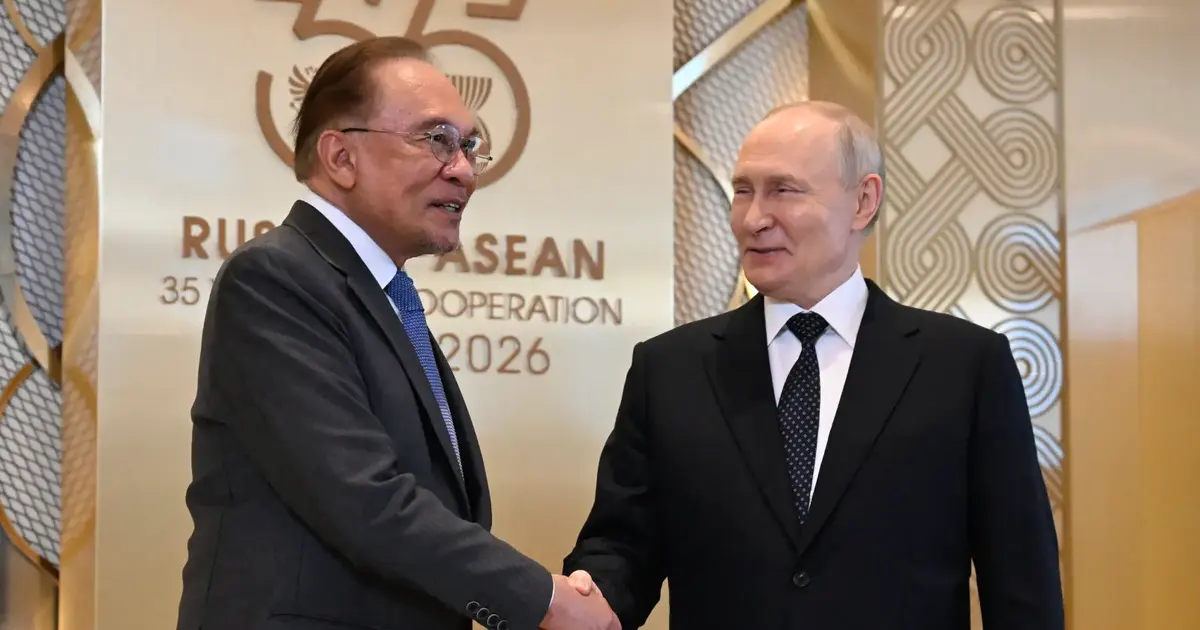
Malaysia has secured a significant long-term commitment from Russia for continued supplies of oil and gas stretching across the next two decades, Prime Minister Anwar Ibrahim announced, underlining Kuala Lumpur's strategy to diversify energy partnerships at a time of mounting geopolitical tension in traditional supply regions. The assurance from President Vladimir Putin arrives as energy security remains a pressing concern for Southeast Asian nations seeking reliable sources amid shifting global market dynamics and supply chain vulnerabilities exposed by recent international conflicts.
Anwar's diplomatic engagement signals Malaysia's pragmatic approach to maintaining energy stability while navigating the complex international landscape. By securing long-term commitments from major suppliers like Russia, Malaysia aims to insulate itself from sudden price volatility and supply disruptions that could undermine its manufacturing sector and economic growth. The two-decade guarantee provides predictability for energy-intensive industries and power generation planning, allowing Malaysian policymakers to design infrastructure investments with greater confidence in future resource availability.
Beyond the energy agreement, Anwar's regional tour encompassing Turkmenistan reflects Malaysia's broader economic strategy to capitalise on expanding trade corridors connecting Southeast Asia with Central Asia and beyond. The Prime Minister's visit to Turkmenistan specifically targets strengthening export pathways to major Asian economies, particularly China, Japan and South Korea, which collectively represent enormous markets for Malaysian manufactured goods, agricultural products and processed materials. This approach recognises that energy security and export competitiveness are intertwined—stable energy costs directly influence Malaysia's manufacturing competitiveness in global markets.
The Russian supply arrangement also positions Malaysia within a reconfigured geopolitical and economic landscape where traditional Western-centric trade relationships face increasing strain. As Western nations impose sanctions on Russian energy exports, alternative buyers in Asia have gained negotiating leverage. Malaysia's willingness to maintain energy partnerships with Moscow reflects not ideological alignment but economic pragmatism—the nation requires affordable, stable energy supplies to sustain its industrial base and export-driven growth model. This commercial calculus differs markedly from security considerations that drive Western energy policies.
For Malaysian energy consumers and businesses, the long-term commitment potentially moderates price inflation concerns that have plagued Asian economies. Global energy markets remain volatile, with supply shocks in traditional producing regions creating uncertainty. A guaranteed supply arrangement with Russia, while not insulating Malaysia entirely from international price movements, provides a degree of stability that allows domestic energy pricing strategies to be more predictable. Industrial planners can factor in stable energy costs when making capital investment decisions, potentially attracting foreign manufacturers seeking reliable operating environments.
The Central Asian component of Anwar's tour underscores Malaysia's recognition of emerging trade opportunities often overlooked by traditional Western-focused business analysis. Turkmenistan and neighbouring Central Asian states possess substantial natural resources and growing middle-class consumer populations increasingly integrated into regional supply chains centred on China. By establishing stronger trade relationships and export channels through these economies, Malaysia positions itself as a supply node within broader Asian economic integration networks. This strategy diversifies Malaysia's export markets beyond traditional partners in Europe and North America, where demand growth remains subdued.
The emphasis on reaching Chinese, Japanese and South Korean markets through Central Asian connections reflects sophisticated understanding of contemporary Asian trade architecture. China's Belt and Road Initiative and broader regional integration initiatives have created new logistics corridors and economic interdependencies that bypass traditional Western-dominated routes. Malaysian exporters capable of accessing these regional networks gain access to billions of consumers and industrial buyers whose purchasing power continues expanding. Central Asian states serve as both markets and transit points for these broader Asian supply chains.
For Japan and South Korea, both major manufacturers themselves, their presence in Malaysian trade calculations reflects supply chain integration in electronics, automotive, petrochemicals and advanced manufacturing sectors. These nations increasingly source components and raw materials from Southeast Asia, and Malaysia's geographic position and established industrial base make it a preferred partner. Stronger export channels through Central Asia can complement traditional Southeast Asian and Pacific trade routes, reducing dependency on any single pathway and enhancing supply chain resilience.
The twin-track approach—securing energy supplies while expanding export markets—represents Malaysia's strategy for balancing economic growth with resource security. Neither objective can succeed in isolation. Manufacturing growth requires both affordable energy inputs and access to markets willing to purchase Malaysian products. By pursuing both simultaneously, Anwar signals that Malaysia intends to remain a significant player in regional economic integration despite global uncertainties and shifting power dynamics. The commitment from Russia and outreach across Asia demonstrate that Malaysia refuses to be locked into exclusive economic arrangements but instead maintains relationships across multiple major powers and regions.