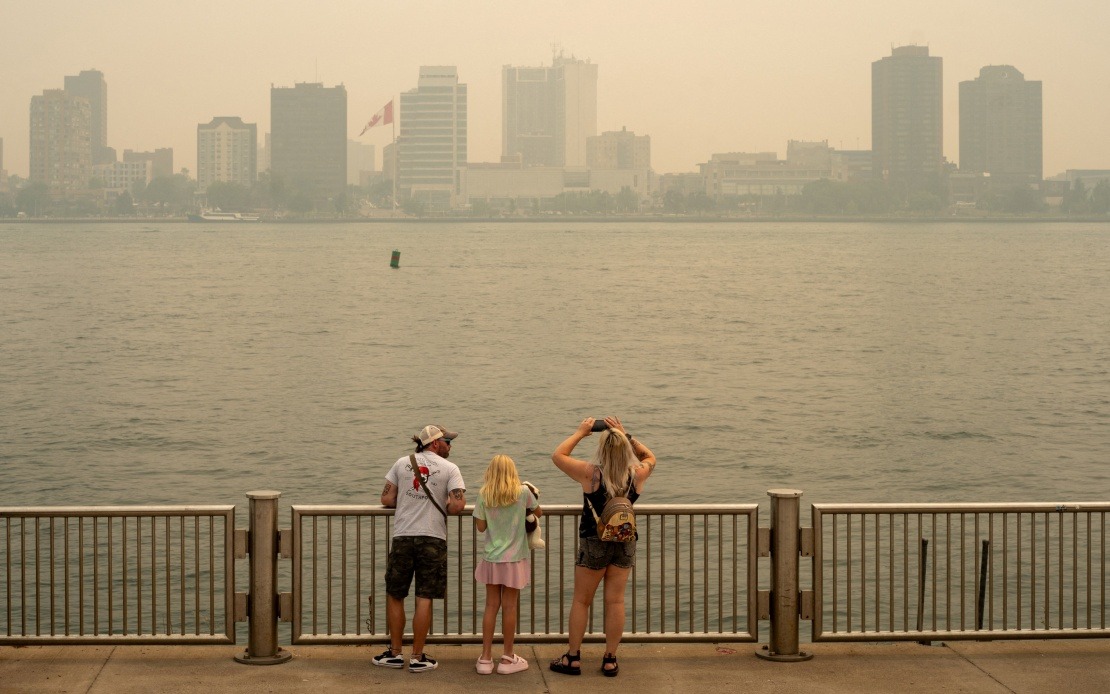
A significant wildfire in British Columbia continues to defy containment efforts, though emergency officials reported on Sunday that the pace of its expansion is beginning to moderate. The blaze, which has already charred an area exceeding 100 square kilometres, has displaced more than 20,000 residents from their homes and poses an ongoing threat to communities across the region.
The fire's westward movement has now reached Okanagan Lake, a geographical feature that is helping to slow its progression through the landscape. This natural boundary offers some respite from the rapidly advancing flames that have threatened populated areas in recent days. Nonetheless, emergency response teams remain at elevated alert levels, with firefighting operations concentrated on protecting the outskirts of Summerland, a town of approximately 12,000 residents that sits directly in the fire's path.
The human toll of the disaster has already been significant. Around 10,000 properties across the affected region remain under evacuation orders, with thousands of residents still unable to return to their homes. In a dramatic rescue operation, authorities deployed helicopters to extract more than 50 people who became trapped by advancing flames. Police are also investigating reports of at least one potential fatality linked to the fire, though confirmatory details remain pending.
Weather conditions have emerged as a critical obstacle to fire suppression efforts. The combination of elevated temperatures, persistently dry air, and thick smoke has created an environment in which the flames can spread with relative ease. These atmospheric conditions continue to frustrate the work of ground crews and aerial firefighting teams, limiting visibility and slowing progress toward containment. The forecast offers little immediate relief, as the hot, arid pattern is expected to persist in coming days.
In response to the crisis, the Canadian federal government has committed material support to the affected province. Minister of Emergency Preparedness Eleanor Olszewski announced on X that Ottawa had approved British Columbia's request for federal assistance, pledging to provide temporary housing and other critical services for evacuees. This federal intervention underscores the scale of the emergency and the strain it has placed on provincial resources.
International cooperation has also played an important role in the firefighting response. Emergency personnel from Mexico, Australia, and New Zealand have been mobilized to assist Canadian crews. This multinational effort reflects both the severity of the situation and the collaborative frameworks that exist among Commonwealth and neighbouring nations to address catastrophic natural disasters. The deployment of foreign expertise and resources demonstrates how challenging this particular fire has proven for domestic responders alone.
The broader context reveals that British Columbia is grappling with a wildfire crisis of unprecedented scope. Provincial authorities declared a state of emergency on Saturday as more than 100 separate fires were recorded burning across the province. Approximately half of these fires remain uncontrolled, suggesting that the current Summerland-area blaze is merely one manifestation of a systemic wildfire emergency gripping the entire region. This multiplicity of fires has stretched emergency services thin and created competition for limited firefighting assets.
The wildfire emergency extends beyond British Columbia's borders. Other major Canadian provinces, including Ontario and Quebec, have also battled significant fires during the current season. This coast-to-coast pattern of destructive wildfires reflects broader climate and weather trends affecting North America, with implications for regional air quality, long-term forest health, and disaster preparedness systems. For regional observers in Southeast Asia, the Canadian experience serves as a cautionary reminder of how climate variability and seasonal conditions can overwhelm even well-resourced firefighting infrastructure.
The situation in British Columbia also highlights the growing importance of international disaster response protocols and mutual aid arrangements. As climate change intensifies extreme weather events globally, nations are increasingly relying on cross-border assistance and expertise-sharing to manage catastrophes. The arrival of firefighting personnel from Australia and New Zealand—countries with extensive experience battling massive wildfires—demonstrates how international cooperation has become essential to national resilience. For Malaysia and Southeast Asia, which face their own seasonal fire risks particularly in peatland regions, the British Columbia experience underscores the value of building robust international networks for disaster management and recovery support.
Looking ahead, the immediate priority for British Columbia remains establishing full containment of all active fires and ensuring the safety of remaining residents in threatened areas. Longer-term challenges will include assessing structural damage, managing displaced populations, and addressing the ecological consequences of such extensive burning. The coordination between federal and provincial authorities, coupled with international assistance, will be crucial in determining how quickly the region can transition from emergency response to recovery and rebuilding.

