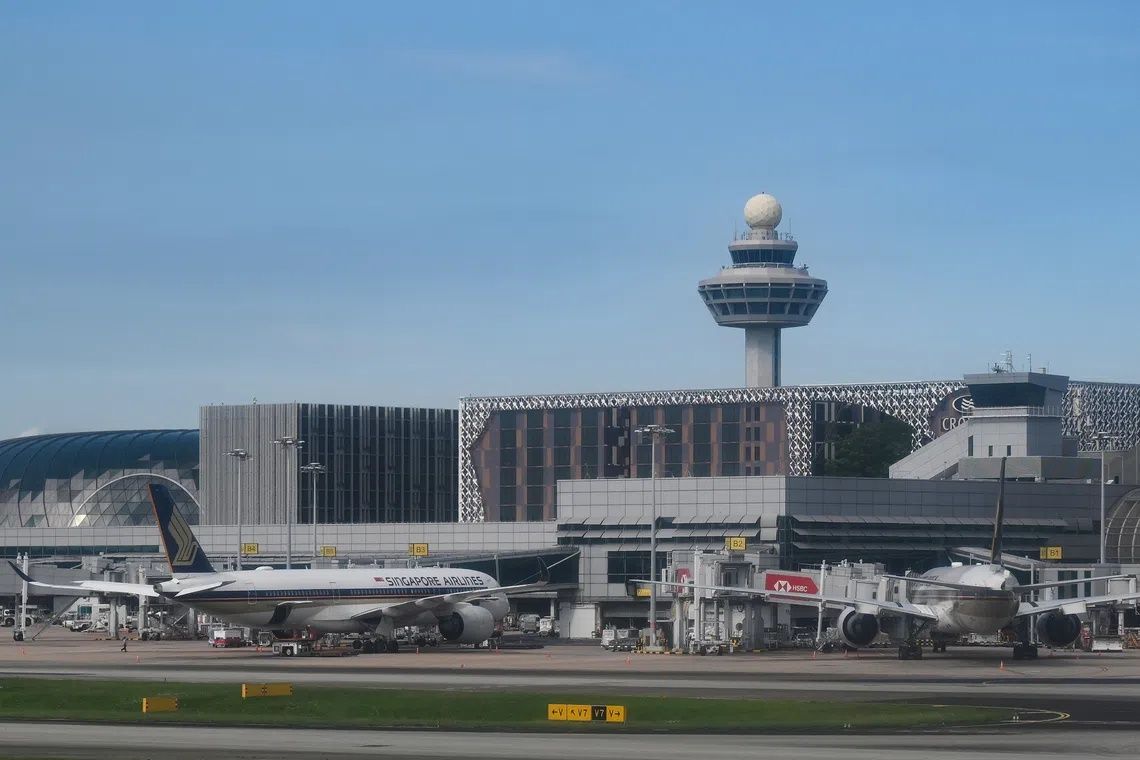
A British national will appear before Singapore's courts to answer charges stemming from a disruptive incident that brought operations at Changi Airport to a temporary halt on July 20. The 25-year-old man allegedly caused significant disruption at a Terminal 1 boarding gate, ultimately delaying a flight to Kuala Lumpur by 45 minutes while creating a security breach within the airport's restricted zones.
According to a police statement released on August 11, authorities responded to a report of passenger misconduct at the boarding gate around 4.05pm on the date in question. Investigators determined that the man, believed to be intoxicated, had been creating a disturbance through loud and aggressive behaviour that extended to other travellers waiting to board the aircraft destined for Malaysia's capital. His conduct had begun affecting the passenger experience well before the situation escalated to its more serious dimensions.
When airline staff members approached the individual to address his behaviour, the situation deteriorated rapidly. Rather than cooperating with their requests, he responded with hostility and directed obscenities at one of the staff members. This initial confrontation led the airline to make the decision to remove him from the passenger manifest, a standard procedure when someone's condition or conduct poses a risk to flight safety and comfort for others aboard.
However, the man's ejection from the flight list triggered a severe escalation. Upon learning of the airline's decision to prevent his boarding, he allegedly became aggressive, pushing forcefully past airport personnel in an attempt to reach the aircraft regardless. During this forceful passage, he entered areas of the airport designated as restricted and requiring proper authorisation. This breach of security protocols resulted in a staff member falling to the ground, sustaining injuries to her left arm and wrist that required attention.
The incident continued to unfold as the man persisted in his aggressive demeanour toward security personnel, resorting to further vulgarities and threatening language. His refusal to comply with airport staff and security officers meant that boarding operations could not proceed safely, resulting in the substantial 45-minute delay. The extended hold-up affected not only the passengers on the Kuala Lumpur flight but also ripple effects throughout the terminal's departure schedule.
Prosecutors will advance three distinct charges against the man when he faces court on August 12. The first charge relates to causing annoyance while intoxicated in a public location, a statute designed to address disruptive behaviour fuelled by alcohol consumption in spaces accessible to the general public. The second charge encompasses using threatening, abusive or insulting words or behaviour, addressing both his verbal conduct toward staff members and security personnel. The third charge addresses his unauthorised entry into the airport's protected area, a serious matter given the heightened security protocols that govern Singapore's aviation facilities.
The penalties associated with each charge reflect the seriousness with which Singapore's legal system treats such breaches. A conviction on the intoxication-related annoyance charge could result in a fine of up to S$1,000, imprisonment for up to six months, or a combination of both sanctions. The threatening or abusive behaviour charge carries a potential fine of up to S$5,000, while the most severe potential penalty applies to the unauthorised entry offence, which could result in a fine reaching S$20,000, imprisonment for up to two years, or both.
This incident underscores the escalating challenges that airport operators and airlines face in managing passenger conduct, particularly involving alcohol-related incidents. The requirement for immediate decision-making when passengers pose risks to flight safety, combined with the enclosed environment and heightened security protocols of modern airports, creates situations where minor infractions can quickly spiral into criminal matters. For Malaysian readers, the event serves as a reminder of Changi's critical role as a regional hub and the importance of maintaining security standards across Southeast Asia's aviation network.
The case also highlights the vulnerability of airline and airport staff members who must de-escalate confrontations with intoxicated passengers while maintaining safety. The injury sustained by the staff member in this instance represents a tangible harm that increasingly concerns industry associations and worker advocacy groups across the region. Airlines operating on routes between Singapore and Malaysia have expressed growing concerns about passenger misconduct, particularly on afternoon departures when alcohol consumption may be involved.

