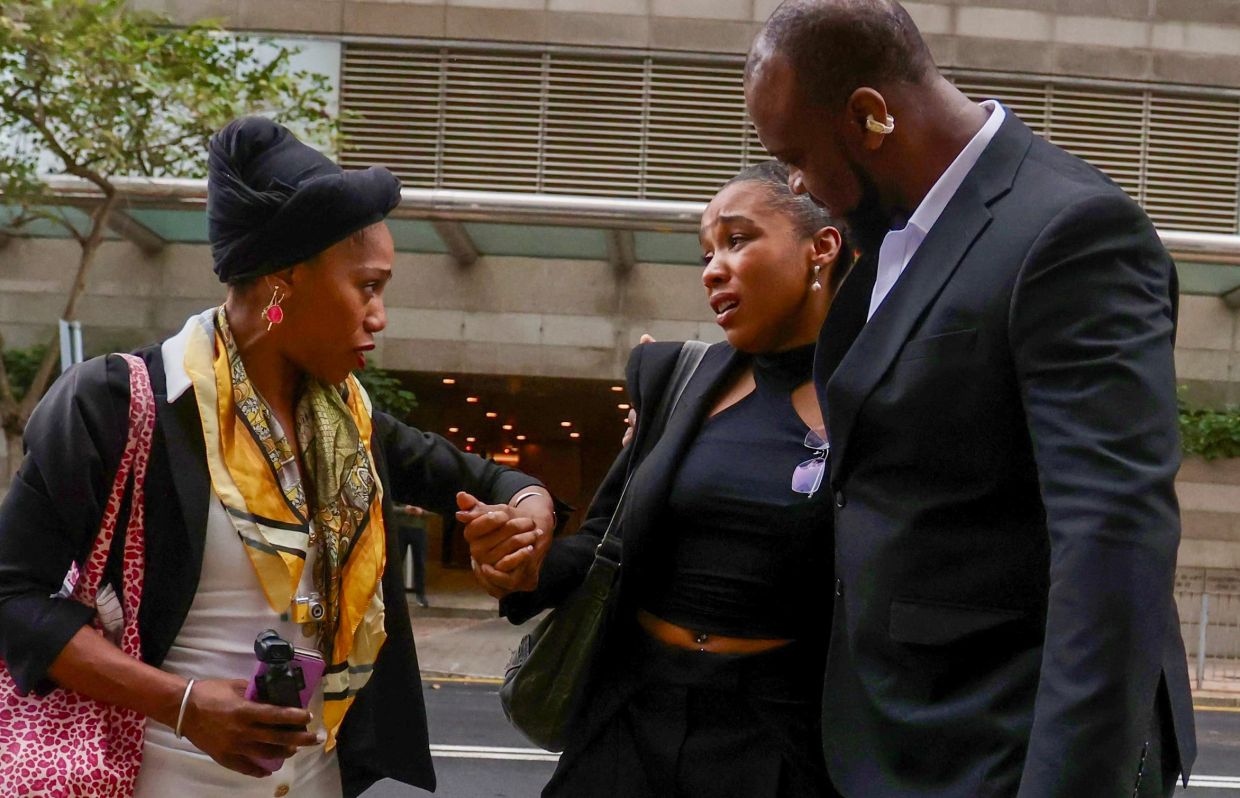
A Hong Kong District Court has sentenced 26-year-old British national Isabel Anonia Barbra Eudora Rose to six years imprisonment after finding her guilty of blackmail and perverting the course of public justice. The case, which concluded with Judge Adriana Noelle Tse Ching's verdict in March, emerged from a series of events that unfolded over just days in early 2024, illustrating how rapidly circumstances can deteriorate when allegations become intertwined with financial demands.
Rose, an event management professional based in London, arrived in Hong Kong on January 31, 2024, to visit a man she had met while travelling in Thailand the previous month. The pair had arranged to meet at his one-bedroom apartment in Central, where Rose later claimed she had been assaulted. The following morning, they began exchanging messages that would eventually become central to the case—messages that the judge determined contradicted Rose's account of what had transpired between them.
The immediate aftermath of their encounter saw the two discussing both the incident itself and questions of financial settlement, a progression that proved damaging to Rose's credibility. When she wrote that the man had "basically raped" her, his response expressed genuine shock and distress, stating that such behaviour was completely contrary to his character. Despite these initial exchanges, Rose proceeded to file a police report on February 3, claiming she had been sexually assaulted. The man was arrested and questioned, but within 24 hours, investigators had shifted their focus and arrested Rose instead, eventually charging her with blackmail rather than accepting her complaint at face value.
Judge Tse's analysis of the evidence revealed significant inconsistencies in Rose's account. The man maintained that while he had requested oral sex, Rose refused and he accepted this refusal without coercion. He acknowledged apologising for what he described as misreading her signals and moving too quickly. Rose's response—asking whether he was upset about her unwillingness to engage in full intercourse—seemed at odds with her subsequent claim of criminal assault. The judge found these conversational exchanges particularly telling, as they suggested a negotiation between consenting adults rather than a situation involving violence or genuine fear. A forensic examination discovered bruising on Rose's neck but detected no genital injuries, further undermining the characterisation of events as constituting rape.
What transformed the case from a disputed encounter into a criminal matter was the escalating pattern of financial demands. Initially, the pair discussed Rose's costs for accommodation and travel, a reimbursement framework the man appeared willing to address. He agreed to pay £2,000 when asked, but Rose subsequently raised her request to £5,000. Her messages grew increasingly confrontational, with one stating: "You've given 10 per cent of what I'm owed, 100 per cent of my soul gone," signalling that far larger sums were expected. Messages recovered from their exchange showed the man explicitly stating he could not produce £100,000, yet Rose allegedly persisted in demanding this amount through disappearing messages that left no permanent record.
The court accepted that Rose had threatened to report the man to authorities unless he paid the substantial sum by a specified deadline. Judge Tse characterised this conduct as a deliberate exploitation of the man's vulnerability, describing the offence as "cruel and evil." The judge noted that Rose appeared to have been targeting his financial resources from the moment she arrived in Hong Kong, and the blackmail scheme developed with remarkable speed—unfolding entirely within her first two days in the territory. The verdict established that Rose weaponised both the allegation of sexual misconduct and the threat of police involvement as leverage to extract money.
In determining the sentence, Judge Tse set the starting point for the blackmail charge at five years, with an additional consecutive year imposed for the perverting course of justice conviction, bringing the total to six years. The judge's remarks emphasised that Rose bore responsibility for her own predicament, characterising her false police report as "vengeful and wicked behaviour" designed to punish the man for refusing to capitulate to her financial demands. This framing proved significant for observers in Hong Kong and beyond, as it positioned the false allegation not merely as a misunderstanding but as a calculated component of an extortion strategy.
Rose's reaction to the guilty verdict in March proved dramatic, with the defendant breaking down in tears in the dock before being remanded in custody. In a subsequent interview with the South China Morning Post, she expressed disbelief at the turn of events, claiming she had arrived in Hong Kong as a tourist and found herself ensnared in a legal process she felt was unjust. She remarked that police had indicated they would prioritise the blackmail investigation over the sexual assault allegation, a shift she appeared to view as a betrayal. Her statement that "within 24 hours, there was no rape any more" reflected her perception that the authorities had simply discredited her account rather than pursuing both matters in parallel.
The case carries broader implications for how Hong Kong authorities approach competing allegations of sexual assault and extortion, particularly in contexts involving foreign nationals unfamiliar with local legal procedures. The speed with which the narrative shifted—from Rose as a victim reporting a crime to Rose as a defendant accused of weaponising victimhood—raises questions about investigative methodology and the challenges authorities face when dealing with allegations that later appear connected to financial demands. For Malaysian readers and Southeast Asian observers, the case illustrates the significant legal and personal consequences of fabricating serious allegations, even in jurisdictions with different legal frameworks from those in the region.
The verdict also underscores how circumstantial evidence and contextual communication can prove more persuasive than conflicting versions of events. Judge Tse's reliance on the tone and content of messages between the parties, combined with forensic findings and the man's account, created a narrative that the judge found more credible than Rose's characterisation. The case will likely become a reference point in Hong Kong jurisprudence regarding blackmail cases involving false allegations, particularly those occurring in the early stages of interactions between individuals from different countries. Rose's imprisonment represents a cautionary outcome for anyone considering using fabricated claims as leverage in personal disputes.

