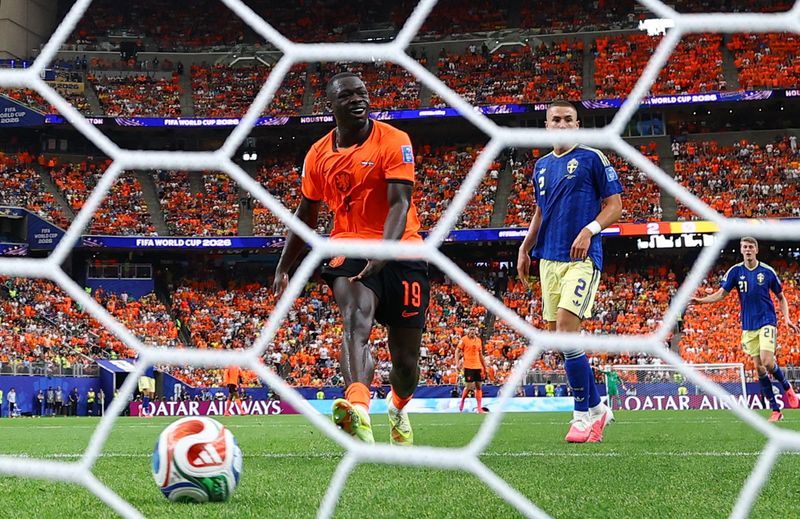
Ronald Koeman's tactical decisions have proved decisive once again. After facing considerable criticism for his substitution choices during the Netherlands' opening Group F fixture against Japan in Dallas, which ended in a frustrating 2-2 stalemate, the Dutch coach orchestrated a masterclass at the weekend. His selection of Brian Brobbey to spearhead the attack in Saturday's match proved inspired, culminating in a convincing 5-1 demolition of Sweden that moved the Netherlands to the top of their group. The turnaround underscores how quickly fortunes shift in international football, where a manager's reputation can swing from embattled to celebrated within the space of a single match.
Brobbey's explosive start to the contest left no doubt about Koeman's acumen. The 24-year-old Ajax player struck twice within the opening seventeen minutes, establishing dominance that the Netherlands never relinquished. This performance represents a watershed moment for a player who has only recently returned to the international fold. After spending the 2022 qualifying campaign on the periphery of Koeman's plans, Brobbey disappeared from the squad entirely before receiving a recall to the setup in March following a year-long absence. His rehabilitation into the team appeared complete when named to start against the Swedes, and he repaid the faith immediately with a clinical display that suggested he could develop into the Netherlands' premier attacking threat.
The trajectory of Brobbey's career has been unconventional. His exclusion from the qualifying rounds for the 2026 World Cup cycle raised questions about his standing within the coaching staff, yet a productive season in English football has fundamentally altered his trajectory. His stint with Sunderland in the Premier League has evidently sharpened his technical abilities and physical attributes, transforming him from a promising prospect into a genuinely competitive option for the top of the formation. When speaking to reporters at the Dutch training facility this month, Brobbey articulated the nature of his evolution with precision. He emphasized that his development transcends mere physical superiority against opposition defenders. Instead, he has refined his movement off the ball, developed a more sophisticated understanding of space deployment, and cultivated the capacity to operate deeper in the attacking structure to facilitate team play.
For Malaysian readers and Southeast Asian football enthusiasts, Brobbey's resurgence carries particular significance given the regional appetite for tracking European club-to-country pipeline development. The narrative mirrors broader patterns visible across Asian football, where overseas experience—particularly in competitive European leagues—frequently catalyzes marked improvements in technical proficiency and positional awareness. Brobbey's specific emphasis on improving his off-ball running and spatial awareness reflects coaching philosophies increasingly prevalent throughout elite football, prioritizing tactical intelligence alongside traditional striking prowess.
The supporting cast provided by the Netherlands' midfield and wing players creates an exceptionally fertile environment for any leading attacker. Cody Gakpo, operating from the left flank, provides sophisticated crossing opportunities, while Denzel Dumfries' overlapping runs from the right fullback position guarantee additional attacking impetus down the flanks. The introduction of Crysencio Summerville as an attacking component adds further creative depth to the Dutch's offensive arsenal. This constellation of attacking talent suggests that any striker capable of executing positioning adjustments and demonstrating composure in front of goal stands to benefit substantially from the creative volume generated by the team's wider players.
The positioning of Brobbey as potential successor to Memphis Depay addresses a structural challenge that has occupied Koeman's strategic thinking for some time. Depay remains the Netherlands' all-time leading scorer, yet his recent trajectory has been complicated by extended periods of injury recuperation that have inevitably affected match sharpness. While Depay retains the experience and tactical intelligence acquired through years at the international level, his current physical condition cannot match the explosive athleticism that Brobbey demonstrated against Sweden. The two-goal performance therefore carries significance beyond the immediate contest, effectively serving as an audition for the principal attacking position throughout the tournament.
Coeman's willingness to deploy Brobbey represented something of a selection gamble, given the player's limited recent exposure to international competition. However, the strategic calculation appears sound when evaluated against alternative options available to the Dutch coaching staff. Brobbey's demonstration of technical security, combined with his evident hunger to establish himself at the international level following his period of exclusion, proved more consequential than the potential stabilizing influence of a more established player. This decision-making reflects confidence in Koeman's player assessment capabilities, a quality that has periodically rescued his international coaching record despite periodic tactical controversies.
The Netherlands' commanding performance against Sweden establishes multiple competitive advantages heading deeper into the tournament structure. Beyond the three points secured and the goal differential improvement, the establishment of attacking fluency builds psychological momentum for a squad that appeared somewhat disjointed during the Japan encounter. The confidence derived from controlling a match so thoroughly, particularly at an advanced tournament stage, typically translates into improved technical execution in subsequent encounters. For Brobbey personally, the magnitude of his individual contribution ensures heightened media scrutiny and consequently elevated pressure in upcoming fixtures, yet elite strikers frequently thrive under such conditions when confidence levels are appropriately calibrated.
The broader context for Netherlands supporters involves recognizing that the discovery of a credible long-term solution at center-forward represents a substantial tactical achievement for Koeman. International football frequently demands that coaching staffs identify emerging talent capable of shouldering responsibility during crucial tournament phases, and Brobbey's weekend performance suggests he possesses the requisite mentality and technical foundation. Whether he can sustain this elevated level of performance throughout an extended tournament campaign remains the critical outstanding question, yet the foundation has been solidly established.
%22%2F%3E%3C%2Fpattern%3E%3C%2Fdefs%3E%3Crect%20width%3D%22100%25%22%20height%3D%22100%25%22%20fill%3D%22url(%23ph47hsg)%22%2F%3E%3Crect%20width%3D%22100%25%22%20height%3D%22100%25%22%20fill%3D%22url(%23ph47hsp)%22%2F%3E%3Ctext%20x%3D%2250%25%22%20y%3D%2250%25%22%20text-anchor%3D%22middle%22%20dominant-baseline%3D%22central%22%20fill%3D%22rgba(255%2C255%2C255%2C0.95)%22%20font-family%3D%22Georgia%2C%20'Times%20New%20Roman'%2C%20serif%22%20font-weight%3D%22700%22%20font-size%3D%22226%22%20letter-spacing%3D%22-0.02em%22%3EExists%3C%2Ftext%3E%3C%2Fsvg%3E)
%22%2F%3E%3C%2Fpattern%3E%3C%2Fdefs%3E%3Crect%20width%3D%22100%25%22%20height%3D%22100%25%22%20fill%3D%22url(%23ph4jpltg)%22%2F%3E%3Crect%20width%3D%22100%25%22%20height%3D%22100%25%22%20fill%3D%22url(%23ph4jpltp)%22%2F%3E%3Ctext%20x%3D%2250%25%22%20y%3D%2250%25%22%20text-anchor%3D%22middle%22%20dominant-baseline%3D%22central%22%20fill%3D%22rgba(255%2C255%2C255%2C0.95)%22%20font-family%3D%22Georgia%2C%20'Times%20New%20Roman'%2C%20serif%22%20font-weight%3D%22700%22%20font-size%3D%22151%22%20letter-spacing%3D%22-0.02em%22%3EMalaysian%3C%2Ftext%3E%3C%2Fsvg%3E)