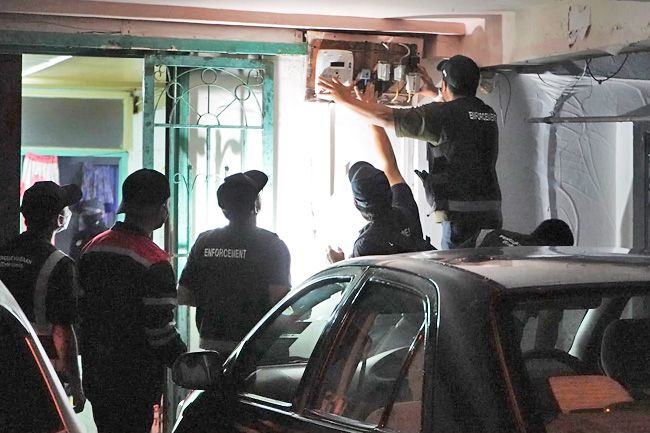
Brunei's security and regulatory agencies have concluded a major coordinated operation that exposed a range of breaches across the capital's commercial and residential sectors. The initiative, spanning two distinct sites in Bandar Seri Begawan, demonstrated the government's determination to maintain compliance with national law while protecting the welfare of residents and migrant workers throughout the Brunei-Muara District.
Immigration enforcement proved particularly productive during the sweep. Officials from the Immigration and National Registration Department (INRD) took into custody one male foreign national and one female foreign national, both of whom are facing investigation under provisions of the Immigration Act. The specific nature of their alleged infractions has not been disclosed, though such operations typically target documentation irregularities, visa violations, or unauthorised residence within the sultanate.
Labour standards formed a significant component of the regulatory findings. Inspectors from the Labour Department identified five separate breaches across multiple employers. Three offences were recorded under Section 81, which governs employer obligations to provide adequate worker housing and maintain acceptable environmental standards at accommodation facilities. These provisions represent foundational protections within Brunei's labour framework, designed to prevent exploitative conditions affecting both local and foreign workers. An additional two violations were documented under Section 86, specifically involving employers' failure to declare worker accommodation details on their Foreign Worker Licences, suggesting paperwork deficiencies that obscure the housing arrangements of migrant employees.
Electrical safety issues also featured prominently in the enforcement results. The Department of Electrical Services identified two violations under the Electricity Act, Chapter 71, indicating unsafe or non-compliant electrical installations or maintenance practices among the checked premises. Such breaches carry particular significance in a tropical nation where electrical infrastructure faces intensive use and weather-related stress.
Human trafficking concerns, an area of increasing Southeast Asian focus, received dedicated attention throughout the operation. The Royal Brunei Police Force's Human Trafficking Investigation Unit conducted individual interviews with nineteen persons across both locations, reflecting heightened vigilance regarding modern slavery and coerced labour within the sultanate. Despite the scale of these interviews, no human trafficking offences were substantiated during this particular operation, though authorities maintained readiness to pursue such allegations had evidence emerged.
The operation represented a substantial deployment of institutional resources and personnel. Over two hundred enforcement officers participated, drawn from multiple branches of Brunei's government apparatus. Beyond the police force and immigration authorities, the operation involved representation from the Narcotics Control Bureau, Royal Customs and Excise Department, Internal Security Department, Department of Electrical Services, Bandar Seri Begawan Municipal Department, and the Religious Enforcement Division. This inter-agency coordination reflects contemporary governance approaches across Southeast Asia, where integrated task forces bring specialist expertise to bear on compliance challenges that transcend any single regulatory body's mandate.
The operation was directed by Superintendent Mohamad Noor Abd Rahman, Acting Commanding Officer of the Brunei-Muara Police District. His leadership of such a complex, multi-agency initiative underscores the police force's expanded role in coordinating broader regulatory enforcement beyond traditional crime investigation.
From a regional perspective, Brunei's commitment to workplace standards and labour compliance aligns with broader efforts across Southeast Asia to raise employment conditions and reduce exploitation within the migrant worker sector. Violations involving inadequate accommodation and missing documentation represent precisely the categories that international observers and workers' rights advocates highlight as common vulnerabilities within the region's labour markets.
The enforcement environment in Brunei reflects specific governance priorities within the sultanate. Strong inter-agency coordination, as demonstrated in this operation, enables authorities to address compliance gaps across sectors simultaneously rather than through fragmented, single-department approaches. This model has gained traction across Southeast Asia as governments grapple with enforcement challenges spanning multiple regulatory domains.
Future enforcement outcomes will depend partly on whether these initial detentions and identified violations result in successful prosecutions and corrective action orders. The visibility of such operations may also encourage greater voluntary compliance among employers and facility operators who understand that regulatory scrutiny remains active and multi-faceted. For migrant workers operating within Brunei, heightened enforcement around accommodation standards and documentation requirements potentially strengthens protections, though effectiveness ultimately depends on sustained implementation and penalties that deter future violations.
The operation's scope and coordination signal that Brunei's authorities view regulatory compliance as integral to public safety and economic governance. As the sultanate continues balancing economic productivity with protective standards for its workforce, multi-agency enforcement will likely remain a cornerstone strategy for achieving both objectives.

