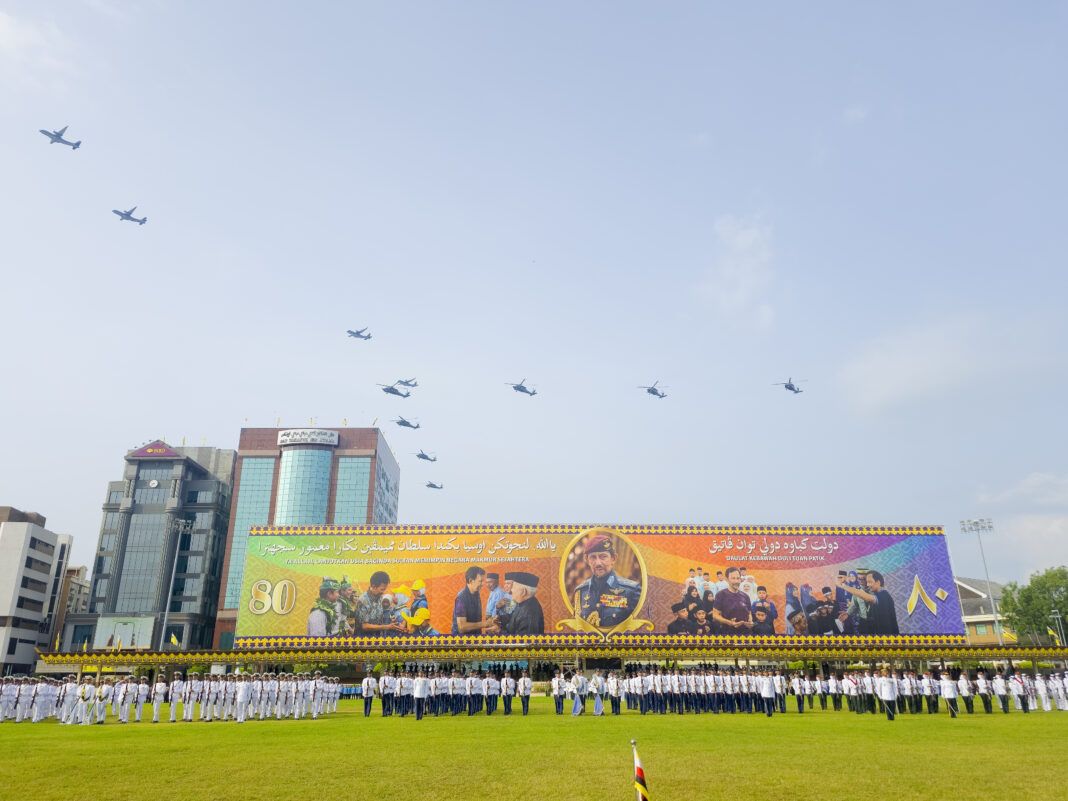
Brunei moved closer to staging one of its most significant state occasions this week, as planners conducted comprehensive final rehearsals for a grand ceremonial guard of honour parade dedicated to marking His Majesty Sultan Hassanal Bolkiah, Sultan and Yang Di-Pertuan of Brunei Darussalam, reaching his 80th birthday. The extensive dry run took place at Taman Haji Sir Muda Omar 'Ali Saifuddien in Bandar Seri Begawan on Saturday, July 11, bringing together the kingdom's protocol machinery and defence infrastructure to ensure the formal proceedings unfold without disruption.
The milestone celebration represents more than a personal tribute to the Brunei ruler, who has guided the sultanate through decades of modernisation while preserving its Islamic heritage and constitutional monarchy framework. In the Southeast Asian context, such royal ceremonies carry profound diplomatic weight, often serving as platforms for reinforcing national identity, demonstrating governmental coordination, and hosting regional dignitaries. The 2026 observance will occur at a moment when Brunei continues strengthening its role within ASEAN and positioning itself as a voice for Islamic principles in regional governance.
Overseen by Chief of Adat Istiadat Negara Yang Amat Mulia Pengiran Indera Setia Diraja Sahibul Karib Pengiran Anak Idris Pengiran Maharaja Lela Pengiran Muda Abdul Kahar, who simultaneously serves as co-adviser for the National Committee for His Majesty's 80th Birthday Celebration for 2026, the rehearsal engaged Brunei's highest-ranking officials in a coordinated test of ceremonial protocols. Protocol expertise proved essential, given the complex choreography required to present a military and civilian guard of honour that reflects both traditional court practices and contemporary state ceremony standards.
The scope of governmental engagement reflects the event's national importance. Five ministerial co-chairs from the National Committee attended the rehearsal, each bringing their departmental expertise to bear on different facets of the celebration. Coordinating Minister for Social Policies and Manpower and Minister of Home Affairs Datuk Seri Setia Awang Ahmaddin Abdul Rahman supervised dimensions affecting public participation and domestic coordination. Coordinating Minister for National Security, Minister at the Prime Minister's Office and Minister of Defence II Pehin Datu Lailaraja Major General (Rtd) Datuk Paduka Seri Awang Halbi Mohd Yussof oversaw defence and security arrangements, a particularly sensitive portfolio given Brunei's strategic position along major Southeast Asian sea lanes.
Minister at the Prime Minister's Office (Public Service Governance) Datuk Seri Setia Awang Nazmi Awang Mohamad contributed administrative oversight ensuring civil service mobilisation proceeded smoothly. Minister of Health Datuk Seri Setia Dr Mohd Isham Jaafar factored health considerations into planning, while Minister of Culture, Youth and Sports Pengiran Datuk Seri Setia Shamhary Pengiran Datuk Paduka Mustapha brought cultural authenticity and youth engagement dimensions to the preparations. This inter-ministerial approach reflects how modern states orchestrate major state occasions by integrating security, protocol, administration, health, and cultural considerations into unified operational frameworks.
The choice of Taman Haji Sir Muda Omar 'Ali Saifuddien as the venue carries historical resonance. Named after Brunei's former sultan and dedicated as a significant public space, the location carries symbolic weight appropriate for honouring the current monarch's octogenarian milestone. The garden setting provides spatial capacity for deploying ceremonial guards, accommodating official delegations, and arranging formal formations that dignify the occasion while maintaining the pageantry expected at royal events across the Islamic world.
From a Malaysian perspective, the Brunei celebration demonstrates how neighbouring sultanates maintain elaborate state ceremonial traditions while adapting them to contemporary governance structures. While Malaysia itself conducts similar royal ceremonies, Brunei's approach reflects the particular constitutional arrangements of an absolute monarchy where the Sultan exercises both spiritual and temporal authority. Regional observers will note how Brunei carefully preserves courtly traditions while maintaining international diplomatic protocols.
The Wednesday morning parade will represent the culmination of months of planning and coordination, condensed into moments of carefully orchestrated splendour. Such events require rehearsal not merely for aesthetic perfection but to identify logistical vulnerabilities, test communication systems, and ensure security personnel understand their roles precisely. The full dress rehearsal on July 11 allowed officials to address any shortcomings before the actual ceremony, a standard practice among nations hosting state occasions that demand flawless execution.
Beyond ceremonial considerations, the 80th birthday celebration offers Brunei an opportunity to reaffirm its place within regional affairs at a time of significant geopolitical shifts in Southeast Asia. The gathering of senior officials and military commanders demonstrates governmental unity and the monarchy's centrality to national identity. Such occasions historically provide opportunities for policy announcements, strategic messaging, and reinforcing public connection to state institutions during periods of rapid regional change.
The forthcoming Wednesday ceremony at Taman Haji Sir Muda Omar 'Ali Saifuddien will represent a demonstration of institutional capability and national pride. For Brunei's government, orchestrating such an event successfully underscores administrative competence and social cohesion. For regional observers, the occasion offers insights into how Islamic monarchies conduct state business and maintain ceremonial traditions in the contemporary era.

