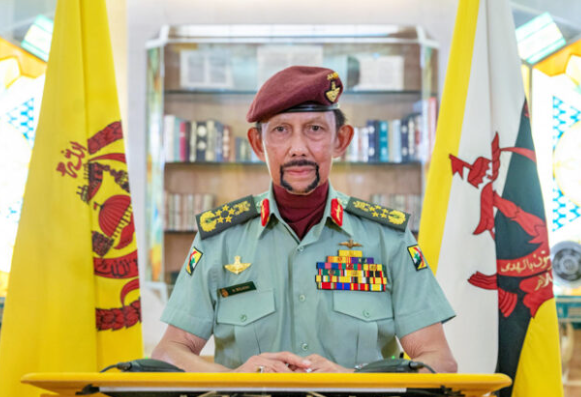
Brunei's Sultan Hassanal Bolkiah used his address marking the arrival of the Islamic New Year 1448 Hijrah to impart a message centred on collective responsibility and sustained effort rather than passive celebration. The monarch framed the occasion as an opportunity for individuals and institutions to reaffirm their dedication to advancing the sultanate across multiple dimensions of national life, establishing a philosophical foundation for the year ahead that emphasises continuity of purpose over symbolic fresh starts.
The Sultan articulated a comprehensive vision of national development that spans both tangible and intangible spheres of achievement. Economic progress and physical infrastructure projects form the material pillar, while intellectual advancement, formal education systems and Islamic propagation efforts constitute the spiritual dimension. This dual-track approach reflects the broader Southeast Asian development philosophy that increasingly recognises prosperity cannot rest solely on economic metrics but must be anchored in moral and cultural foundations. The Sultan's framing acknowledges that sustainable progress demands intentional cultivation across these domains simultaneously.
Central to the monarch's message was a subtle yet significant reframing of how societies should approach new year observances. Rather than viewing the calendar transition as a moment to initiate substantive change, he positioned it as occasion for deepening existing commitments and intensifying resolve already underway. This conceptualisation differs markedly from Western new year traditions that often emphasise radical fresh starts, instead suggesting that meaningful development flows from consistent, incremental advancement rooted in prior foundations. The philosophical distinction carries implications for how policymakers and citizens in Brunei and neighbouring nations structure their planning and expectations.
The Sultan extended his gratitude for Brunei's continued insulation from the most severe geopolitical and environmental disruptions affecting other regions globally. His acknowledgement that conflict elsewhere produces widespread suffering and instability serves implicitly as both reassurance and cautionary note—reassurance that Brunei's peace remains a tangible blessing, and a warning that such stability cannot be assumed permanently. In the contemporary Southeast Asian context, where maritime tensions, trade disputes and regional rivalries create periodic uncertainty, the Sultan's emphasis on gratitude for peace reflects the genuine vulnerability many nations in the region experience regarding their strategic position.
Yet the monarch tempered his optimistic framing by identifying what he characterises as an emerging internal challenge demanding urgent collective response. Crime, particularly drug-related offences and theft, presents a threat to social cohesion and national reputation that the Sultan positioned as incompatible with Islamic values and national dignity. This explicit acknowledgement of security concerns suggests that Brunei, like many Southeast Asian nations, faces pressures from transnational criminal networks and shifting patterns of domestic crime that require sustained institutional attention and community engagement.
The Sultan's approach to addressing crime departures from purely enforcement-oriented strategies by emphasising the role of religious education and Islamic propagation as preventative mechanisms. By calling on both security agencies and religious institutions to collaborate, he invoked a two-pronged strategy that combines deterrence with moral persuasion. This framework aligns with emerging scholarship across Southeast Asia suggesting that purely punitive approaches to crime prevention often prove insufficient without complementary efforts to strengthen spiritual awareness and ethical reasoning within communities, particularly among young people vulnerable to criminal recruitment.
The Sultan specifically called upon religious authorities and educators to intensify dakwah—Islamic propagation—efforts aimed at cultivating societal rejection of criminal conduct and substance abuse. This represents a deliberate attempt to mobilise religious institutions as partners in governance and social stabilisation, acknowledging their influence over moral frameworks and community standards. For Malaysia and other Muslim-majority Southeast Asian nations grappling with similar challenges, the Sultan's approach offers a model emphasising state-civil society-religious institution collaboration rather than top-down enforcement alone.
The monarch invoked spiritual practice—particularly prayer and remembrance of Allah—as essential complements to institutional action in pursuing national security and stability. By framing supplications and religious devotion as active contributions to nation-building, rather than as private spiritual matters, the Sultan embedded Islamic practice within a nationalist framework. This rhetorical positioning strengthens both religious authority and state legitimacy simultaneously, suggesting that national welfare and divine blessing are inseparably intertwined.
Central to the Sultan's message was the concept of shared responsibility across all segments of society. He rejected frameworks that burden government alone with maintaining security and social order, instead distributing accountability across citizens, religious scholars, security personnel, and community leaders. This call for collective vigilance particularly emphasises sustained alertness—what he termed avoiding negligence or complacency—suggesting that threats to national stability require permanent organisational attention rather than cyclical responses to crises. For Southeast Asian nations confronting transnational criminal networks, climate risks, and geopolitical uncertainties, the Sultan's emphasis on perpetual vigilance reflects realistic assessments of contemporary security landscapes.
The Sultan's invocation of both material and spiritual progress, combined with his emphasis on crime prevention through moral and religious means, articulates a vision of Islamic governance distinct from purely secular development models. As Muslim-majority nations throughout Southeast Asia navigate questions about integrating Islamic principles with modern governance, economic policy and social management, Brunei's model of state-endorsed religious engagement in addressing contemporary challenges provides instructive—if sometimes contested—reference points for policymakers and religious authorities elsewhere in the region.
The royal family's extension of new year greetings to all citizens and residents, regardless of faith, demonstrated inclusive national symbolism even while the address itself remained anchored in Islamic theological and normative frameworks. This balance reflects Brunei's position as a multicultural nation where Islam constitutes the official faith and primary normative foundation, yet where non-Muslim communities require acknowledgement and integration. The inclusive gesture, paired with religiously-grounded security messaging, encapsulates the ongoing tension across Southeast Asia between asserting religious identity and maintaining pluralistic social cohesion.