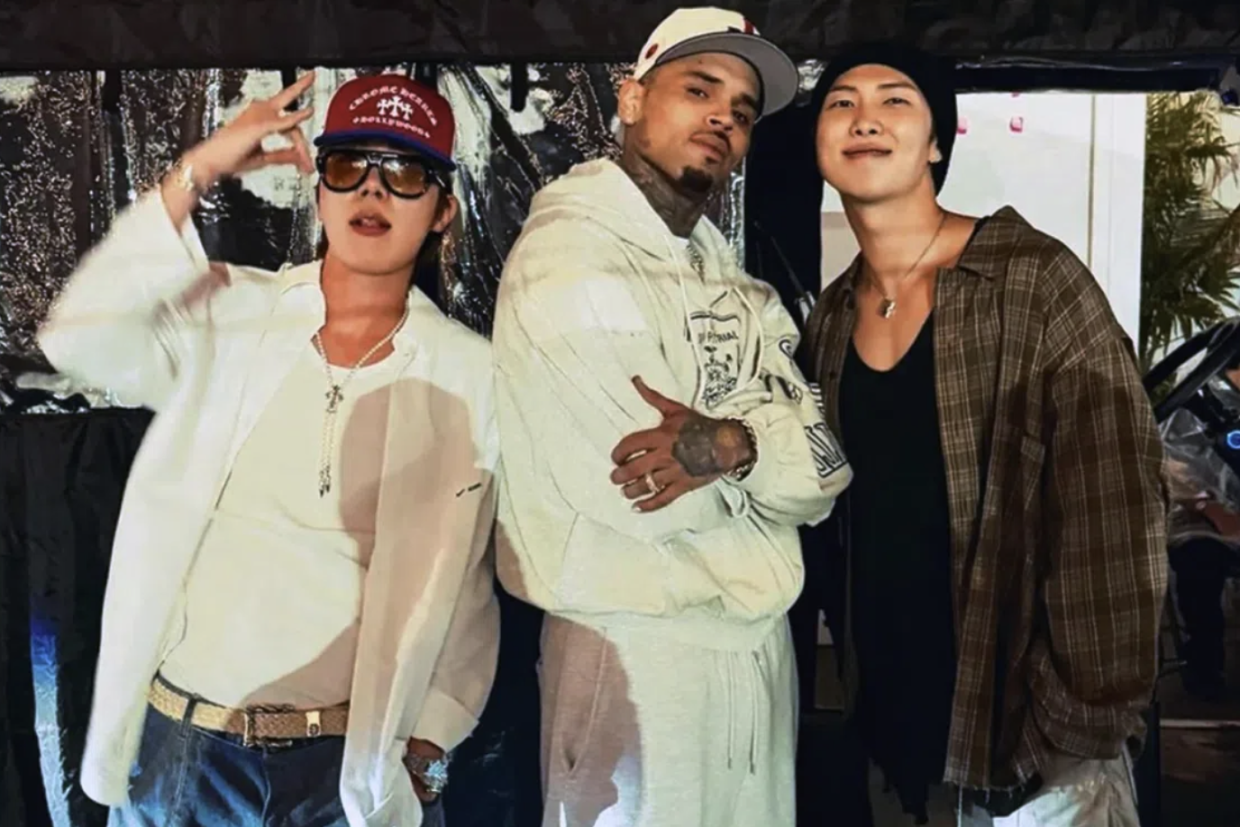
The K-pop phenomenon BTS found itself at the centre of a contentious social media firestorm when two of its members attended a concert by American musician Chris Brown in Canada last month, a move that prompted widespread condemnation from fans and sparked broader conversations about celebrity accountability and moral responsibility.
Brown, whose three-decade career has been marked by repeated controversies and legal entanglements, was pictured with BTS leader Kim Namjoon (RM) and rapper Jung Hoseok (J-Hope) in a photograph posted on August 13. The image circulated rapidly across social platforms, triggering immediate backlash from the group's global fanbase, particularly among supporters who have grown increasingly conscious of the ethical implications of their idols' associations.
The controversy centres on Brown's troubling track record, which extends far beyond his widely-known 2009 conviction for assaulting his then-partner Rihanna. In 2016, authorities arrested the musician after he allegedly threatened a woman with a firearm at his Los Angeles residence, though he was subsequently released on bail. Two years later, he faced accusations of sexual assault conspiracy involving guests at his home, allegations that were ultimately abandoned following an out-of-court settlement. The pattern continued when Brown was detained in Paris after a woman accused him of rape—charges that were later withdrawn and dismissed. Most recently, in 2022, a woman identified as Jane Doe alleged that Brown had drugged and sexually assaulted her aboard a yacht in Miami, claiming she feared for her safety throughout the incident. Adding to this litany of allegations, a Los Angeles court determined in 2023 that Brown bore financial liability of US$12.9 million to the sister of his housekeeper after his dog attacked her.
The revelation of the BTS members' attendance at Brown's concert prompted an immediate and visceral response from the group's fanbase, commonly known as ARMY. Many supporters expressed that their perception of the band had fundamentally shifted upon learning that members had associated with someone with such a documented history of violence against women. Some ARMY members, particularly those with personal experiences of sexual assault or domestic violence, articulated feelings of betrayal, describing a collision between their identity as women and their allegiance to the group. One such fan expressed her dismay bluntly: the act of supporting an artist with Brown's history felt like a disavowal of her own experiences and dignity.
The fanbase fragmented sharply in response. While some ARMY members rushed to defend their idols online, characterising the attendance as a private choice deserving of understanding, a countervailing group of fans and observers pushed back forcefully against this framing. Critics on social media platforms highlighted what they saw as the danger in defending celebrities when their actions sent harmful messages to vulnerable followers. One prominent voice questioned the utility of public defences that the artists themselves would never encounter, while noting that such posts would inevitably reach fellow fans with their own histories of abuse—a reality that complicated the supposed privacy of the choice.
Defenders of BTS argued that celebrities were ordinary people entitled to enjoy entertainment without constant moral scrutiny. However, this argument found little purchase among those who countered that all individuals carry a fundamental ethical obligation to refuse support for those credibly accused of abuse. The weight of this responsibility, critics contended, multiplies exponentially for artists commanding massive global platforms and devoted followings. BTS's position as one of the world's most influential musical acts meant that their choices carried implications beyond personal preference—they constituted implicit endorsements that reverberated through their fanbase.
The debate evolved into more sophisticated discussions about complicity and silence. Several observers articulated the distinction between active perpetration of harm and passive enablement, unpacking how men—and by extension, public figures—who remain silent in the face of misogyny often escape accusation despite benefiting from systems of male privilege. These commentators argued that platform and visibility intensified this dynamic. When celebrities with enormous reach associate with accused abusers, they tacitly signal that such associations carry no meaningful cost, potentially normalising the behaviour within their spheres of influence.
The controversy drew further attention to comparative examples. Some fans referenced Swedish singer Zara Larsson, who had previously collaborated with BTS, and cited her explicit public stance of blocking abusive artists on streaming platforms—including Brown. Larsson's documented principled stand provided a counterpoint to the silence and attendance of the BTS members, suggesting that deliberate ethical positioning was possible even for those embedded in interconnected entertainment industries.
The incident compounds a pattern of recent controversies surrounding BTS. The group had already drawn ire from environmentally conscious fans over a joint project with Google's artificial intelligence system Gemini. The collaboration, which aired on the Las Vegas Sphere and aimed to demonstrate "the new possibilities that technology and art can create," drew criticism for seemingly disregarding the substantial environmental costs associated with AI development and deployment. This fresh controversy arrives as the group navigates broader questions about its social responsibilities and the values its members visibly embody through their public associations and choices.

