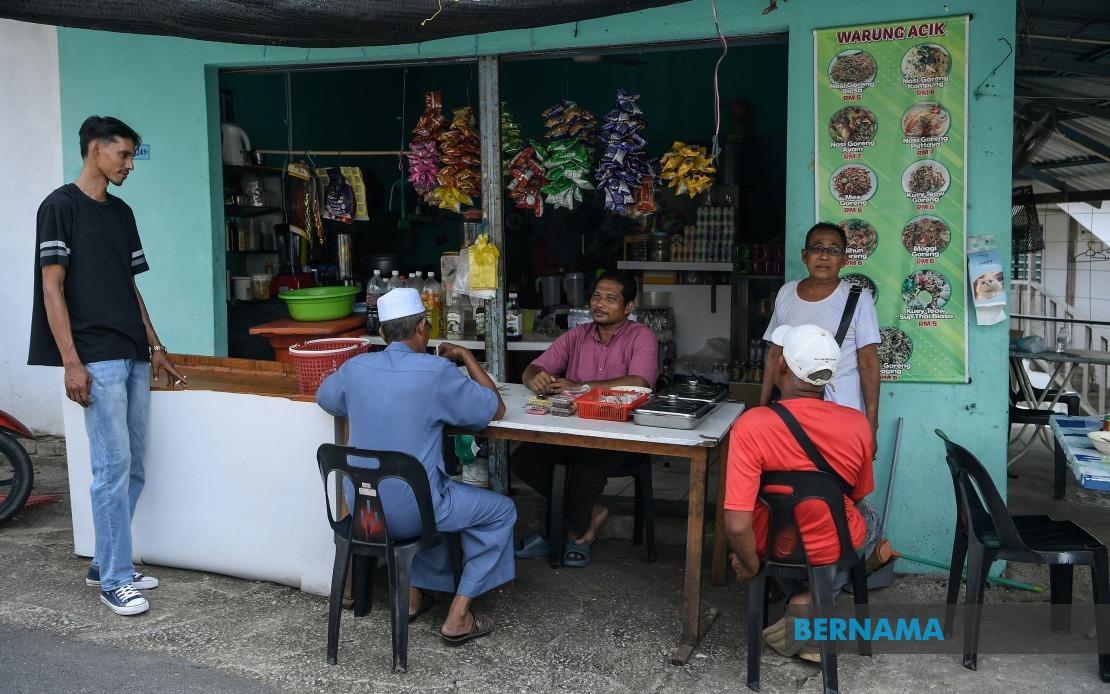
The seaside neighbourhood of Bukit Malut in Langkawi has become synonymous with unauthorised refugee activity in public discourse, a reputation its residents say bears no resemblance to reality. Speaking in the island district on August 6, community representatives outlined their frustration with relentless accusations that have shadowed the settlement for years, contending that unfounded claims about illegal immigrants have become a reflexive scapegoat whenever migration-related issues surface anywhere in Langkawi.
According to Mohamad Fadzli Abdullah, chairman of the Bukit Malut Neighbourhood Watch, the community has absorbed wave after wave of damaging allegations without substantiation. His assertion that suspicion falls on Bukit Malut by default whenever refugee landings are reported highlights how geographical proximity can breed reputational damage regardless of factual basis. The association has persisted despite considerable counterevidence, suggesting that once negative narratives take hold in a locality, they prove extraordinarily difficult to dislodge.
The geography of Bukit Malut itself presents a curious paradox to the refugee settlement narrative. The neighbourhood sits in close proximity to major Malaysian security installations, including operational bases of the Malaysian Maritime Enforcement Agency, the Royal Malaysian Customs Department, and the Royal Malaysian Navy. This concentration of maritime surveillance assets would substantially complicate any systematic use of the area as a landing point for unauthorised arrivals. The presence of these agencies suggests heightened official scrutiny of surrounding waters, making covert smuggling operations of the scale implied by community accusations logistically improbable.
Residents have also pushed back against claims that the area operates under informal restrictions or remains unsafe for ordinary members of the public. Mohamad Fadzli explicitly refuted suggestions that access to Bukit Malut is controlled or that security conditions justify public wariness. He characterised the negative perceptions as artifacts of misinformation rather than reflections of actual conditions, attributing their persistence to inaccurate reporting circulated through social media channels where verification mechanisms are minimal and sensational narratives propagate rapidly.
The demographic profile of Bukit Malut tells a different story from the one circulating in broader public conversation. Approximately 85 percent of residents work in fishing, an occupation deeply rooted in Kedah's coastal economy and requiring legitimate documentation and licensing from maritime authorities. The remainder comprise traders, vehicle rental operators, civil servants, uniformed personnel, and university-educated workers distributed across various employment sectors. This occupational diversity suggests an established, integrated community with substantial stakes in Malaysia's formal economy rather than a transient population or irregular settlement.
Hasanah Zakaria, a 42-year-old resident of more than two decades, offered a counter-narrative grounded in lived experience. She characterised Bukit Malut as resembling any conventional village community, noting the absence of serious crime issues that might justify public apprehension. Her observation that she actively discourages her boarding school child from internalising negative stereotypes about their home neighbourhood reveals how reputational damage extends beyond the community itself, affecting the psychological wellbeing and social integration of young residents. The impact on educational experiences underscores how stigmatisation creates tangible harms beyond economic or social friction.
Abas Salam, a 62-year-old who counted himself among the settlement's earliest settlers in Kampung Tanjung Lembung, provided historical testimony spanning more than thirty years of residence. His emphatic denial that Rohingya or other Myanmar nationals have established themselves in Bukit Malut carries particular weight given his decades of continuous presence through the period when refugee pressures in Southeast Asia intensified sharply. Salam's assertion of exclusive Malaysian citizenship within the community directly confronts the implicit suggestion that the neighbourhood harbours undocumented foreigners.
The pioneers' construction narrative that Salam recounted—building homes, mosques, and religious schools with minimal external assistance during the settlement's early phases—speaks to a history of community self-reliance and institutional establishment. These efforts reflect characteristics inconsistent with a population lacking legal status or formal recognition. The subsequent improvement in living conditions and educational opportunities for subsequent generations represents intergenerational advancement typical of settled Malaysian communities rather than the patterns associated with irregular populations.
The Bukit Malut residents' push against stigmatisation must be understood within broader Southeast Asian migration patterns. Malaysia's porous maritime borders and geographic proximity to Myanmar have created legitimate policy challenges around irregular arrivals, lending surface plausibility to the refugee settlement narrative. However, this regional context has apparently permitted sweeping generalisations about specific communities without proportionate scrutiny of evidence. The reflexive association of particular neighbourhoods with irregular migration reflects how security anxieties can crystallise into geographical prejudice.
The residents' emphasis on their identity as "Kedah Malay-Muslims and legitimate Malaysian citizens" directly rebuts the implicit foreignness embedded in refugee settlement allegations. This assertion of established national identity and religious belonging underlines a fundamental disconnect between community reality and public perception. The specificity of claiming Kedah identity rather than generic Malaysian citizenship suggests a deeper rootedness in the state's local history and structures.
Social media's role in perpetuating these allegations warrants particular attention. Hasanah Zakaria's specific reference to misinformation circulating through social platforms indicates how digital communication enables rapid dissemination of unverified claims without gatekeeping mechanisms that traditional journalism maintained. The absence of professional editorial filtering creates environments where allegations, once articulated, can achieve widespread credibility through repetition alone, independent of empirical verification.
The residents' campaign reflects a broader Southeast Asian challenge: how communities navigate the intersection of legitimate national security concerns and the protection of vulnerable populations from collective blame. Bukit Malut residents are not arguing that Myanmar's humanitarian crisis is imaginary or that Malaysia faces no irregular migration pressures. Rather, they contend that their specific community should not be presumed guilty by geographical association. This distinction between acknowledging genuine policy challenges and resisting unfounded localised accusations remains critical for maintaining social cohesion.
Moving forward, the Bukit Malut case suggests that addressing security-related stigmatisation requires both community advocacy and institutional responsibility. When security agencies operate within a neighbourhood, their continued presence and the absence of major enforcement actions should carry evidential weight in public discourse. Residents' invitations for public visitation represent an understated but significant gesture of transparency, challenging potential visitors to verify community conditions themselves rather than relying on digital rumours. The outcome of this reputational struggle will likely influence how other Malaysian communities contend with similar accusations.

