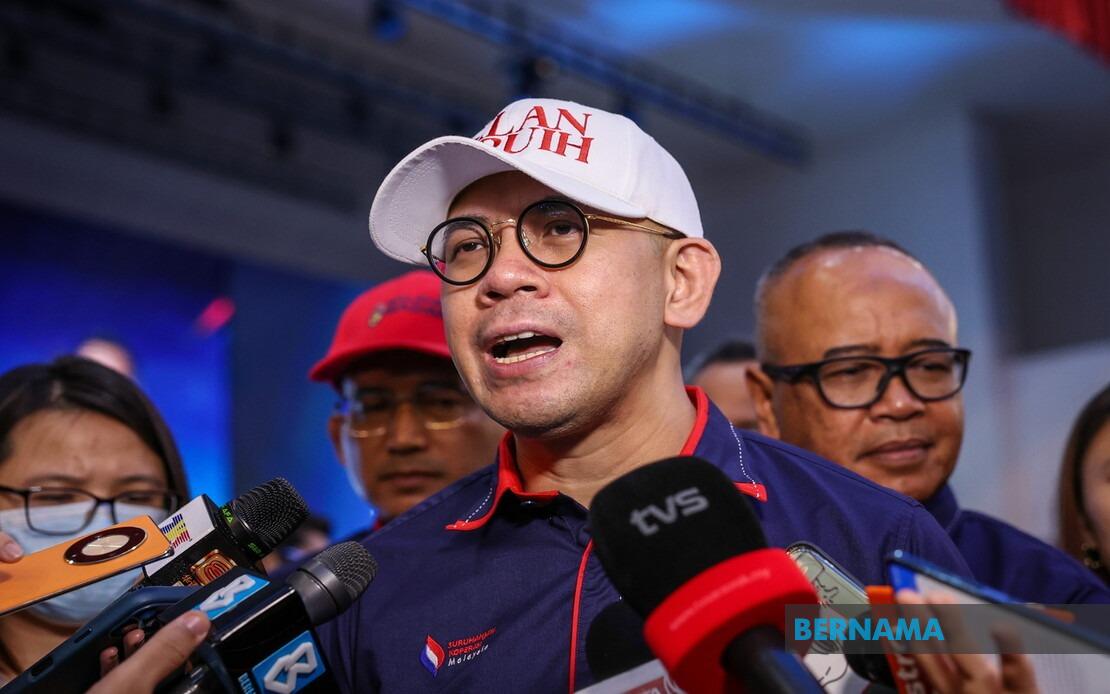
Malaysia's Entrepreneur and Cooperatives Development Minister Steven Sim has issued a pointed warning to the business community: deploying artificial intelligence as a quick route to workforce reduction will ultimately weaken competitive advantages and inflate long-term technology expenses. Speaking at the 11th CHT International Award 2026 ceremony in Petaling Jaya, Sim articulated a vision of AI adoption that prioritises human capital alongside technological investment, a position that carries particular weight given Malaysia's ongoing efforts to position itself as a technology-enabled economy competing for regional influence.
The minister's message directly challenges a prevailing corporate narrative in which artificial intelligence serves primarily as an instrument for slashing operational costs. Treating human talent as a mere expense rather than a strategic asset, Sim cautioned, erodes the intuitive thinking, imaginative problem-solving, and interpersonal qualities that differentiate successful enterprises from their competitors. This perspective reflects growing concerns across the Southeast Asian business landscape about the societal implications of untempered automation, particularly in a region where employment remains a critical policy priority.
Simultaneously, Sim pointed to the employment strategies of Silicon Valley's most influential technology firms as evidence supporting his position. Major global software companies continue to recruit experienced developers and technical talent at substantial scale despite deploying advanced artificial intelligence systems. This pattern suggests that technology leaders view human expertise and machine capability as complementary rather than substitutive—a model that Malaysian businesses would be wise to emulate rather than reject.
The consequences of ignoring this approach, according to Sim, extend beyond workforce morale. Organisations that hastily divest from human development programmes will discover that critical competency gaps emerge, ultimately forcing them into expensive remediation cycles as they attempt to rebuild in-house expertise. The false economy of short-term redundancies thus becomes a long-term liability, generating both recruitment costs and the expenses associated with retraining depleted teams.
Beyond the narrow question of employment policy, Sim's remarks signal a broader concern about Malaysia's capacity to navigate accelerating technological and cultural transformation. The minister challenged businesses to move beyond passive adaptation to emerging technologies and shifting consumer preferences, instead positioning themselves as active shapers of market direction. This distinction carries significance for Malaysia's competitive positioning: companies that merely react to external change risk marginalisation, while those that anticipate and influence emerging trends can establish durable market advantages.
The metaphor Sim employed—that businesses drifting passively with market currents risk sinking—proved particularly apt given the scale of disruption affecting contemporary global commerce. The past decade has witnessed the emergence of reusable rocket technology and generative artificial intelligence, both fundamentally restructuring assumptions about feasibility and cost across numerous sectors. Yet Sim suggested the true challenge extends beyond technological adoption; rapidly evolving consumer attitudes, cultural preferences, and social expectations now constitute equally consequential competitive terrain.
Sim also identified family-operated small and medium enterprises as a substantially undervalued component of Malaysia's economic foundation. These businesses, characterised by strong internal value systems and tightly integrated ownership structures, have demonstrated considerable resilience through economic cycles. Their persistence reflects organisational qualities that transcend the mechanistic efficiency metrics often favoured by consultants and spreadsheet-driven decision-makers.
Recognising this potential, Sim's ministry is exploring a structured research initiative through SME Corp Malaysia designed to rigorously examine both the distinctive strengths and the particular constraints facing family-controlled enterprises. The proposed study would generate evidence-based findings to inform policy interventions and support programmes specifically calibrated to the circumstances and requirements of this crucial business segment. Such targeted assistance could prove instrumental in helping family-owned operations evolve and scale while preserving the cultural and relational attributes that constitute their core competitive advantages.
The minister's intervention arrives amid intensifying global competition for technology talent and growing awareness across Southeast Asia that artificial intelligence adoption will reshape labour markets more profoundly than previous technological transitions. His insistence that human expertise remains indispensable, rather than obsolete, provides implicit reassurance to Malaysian workers while also challenging business leaders to adopt more sophisticated thinking about technology implementation. Rather than viewing artificial intelligence as a replacement for human capabilities, companies would benefit from recognising it as an expansion tool that amplifies what experienced teams can accomplish. This reframing—from substitution to multiplication—may prove crucial to Malaysia's ability to maintain social stability while embracing technological progress.

