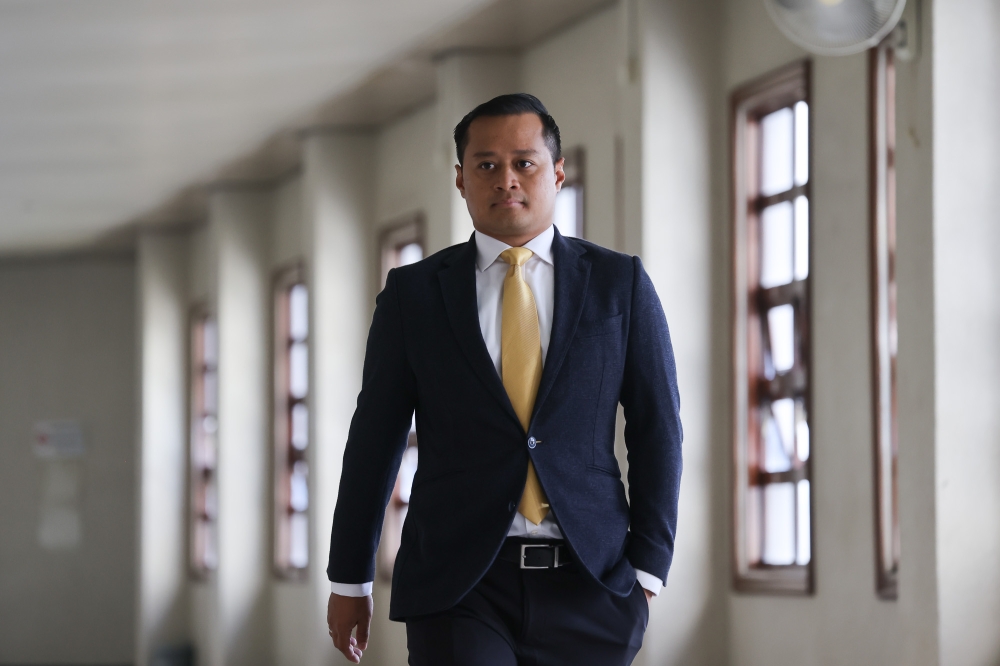
A significant admission has surfaced in the ongoing trial of former Prime Minister Muhyiddin Yassin, as businessman Shahrin Shamsuddin disclosed that he was completely unaware his elder brother had transferred a substantial portion of company resources to the Bersatu political party. This disclosure centres on funds totalling RM13.7 million, with Shahrin revealing he only stumbled upon the transfer when investigating discrepancies in the company's financial records.
The revelation has become a cornerstone of the prosecution's narrative in the high-profile case being heard at the High Court in Kuala Lumpur. Shahrin's testimony suggests that the transaction was conducted without proper authorization from co-shareholders or the company's board, raising questions about corporate governance and the mechanisms through which political donations may have been facilitated. The businessman's account indicates he had no involvement in the decision to channel company assets toward the political organization.
This case carries particular significance for Malaysia's political landscape, as it touches upon the sensitive intersection of corporate finance and political funding. The trial has already drawn substantial public attention given Muhyiddin's prominent role as former Prime Minister and his association with Bersatu, which he founded and has maintained strong ties with throughout his political career. The evidence being presented suggests a pattern that warrants scrutiny regarding how political organizations may acquire capital from business entities.
For Malaysian readers closely monitoring governance and financial accountability, the trial underscores ongoing concerns about transparency in political funding mechanisms. Unlike many developed democracies with robust disclosure requirements, Malaysia's regulatory framework for political donations has historically lacked comprehensive oversight, creating opportunities for substantial transfers to occur with minimal public visibility. This particular case may influence how regulatory bodies approach monitoring such transactions in future.
The RM13.7 million in question represents a considerable sum that could have significant implications for the company involved and its stakeholders. Shahrin's position as a co-owner gives his testimony considerable weight, as he can speak directly to whether proper procedures were followed and whether he authorized such transfers. His apparent surprise at discovering the donation suggests either a serious breach of corporate protocol or a deliberate circumvention of checks and balances that should have prevented unauthorized transactions.
The trial also illuminates broader questions about how business figures navigate their relationships with political parties, particularly when those parties are led by or closely associated with government officials. The power dynamics inherent in such relationships can create pressure—either explicit or implicit—for business owners to contribute financially to political causes. Understanding whether Shahrin's brother acted independently or under some form of influence remains crucial to interpreting the significance of his actions.
From a Southeast Asian perspective, Malaysia's experience reflects challenges common across the region where the boundaries between private commerce and political activity can become blurred. Countries throughout ASEAN have grappled with similar issues involving corporate-political connections, and the outcomes of high-profile cases like this one often set precedents influencing how governments and businesses approach such relationships. The trial may provide insight into enforcement mechanisms and judicial willingness to scrutinize financial transactions involving political parties.
The timing of Shahrin's discovery also matters considerably for the case's trajectory. Whether he immediately reported the unauthorized transfer to authorities, attempted to recover the funds, or took other steps to address the breach speaks to the seriousness with which the matter was treated internally. His testimony will likely explore these details, painting a clearer picture of how the donation came to light and what efforts, if any, were undertaken to prevent similar occurrences.
Prosecutors have constructed their case around documentary evidence and witness testimony establishing a chain of transfers, with Shahrin's account providing crucial corroboration that the funds moved without appropriate authorization. His background as a businessman with direct knowledge of the company's operations lends credibility to his assertions about what constituted standard procedure and what would have been irregular transactions requiring board approval or shareholder consent.
The broader implications extend to how Malaysia's corporate sector operates and the extent to which directors and majority shareholders can act unilaterally regarding company resources. If courts ultimately find that the transfer violated corporate law or breached fiduciary duties, the precedent could strengthen protections for minority shareholders and establish clearer boundaries around what constitutes permissible use of company assets. Such rulings would affect how Malaysian businesses structure governance and control mechanisms.
Looking forward, this trial may catalyze discussions about reforming Malaysia's political funding architecture. Transparency advocates have long argued for mandatory disclosure of donations above certain thresholds, similar to arrangements in other democratic nations. Shahrin's testimony, combined with other evidence presented in court, provides concrete examples of why such reforms might prove beneficial in preventing future controversies and maintaining public confidence in both business and political institutions.
The case represents an important moment for Malaysia's judicial system to demonstrate its capacity to investigate allegations involving high-ranking political figures and major financial transactions. How the High Court handles the evidence and ultimately rules on the matter will signal the strength of accountability mechanisms in the country and influence perceptions regarding the rule of law. For investors, business owners, and citizens alike, the trial's outcome carries implications beyond the immediate parties involved.

