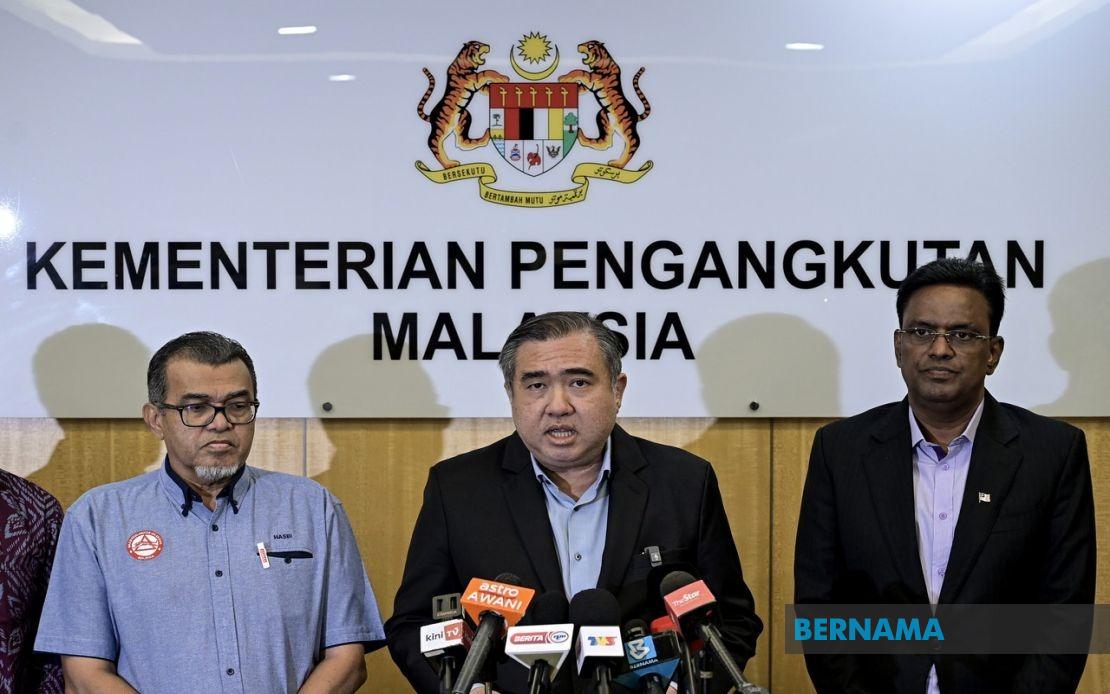
Malaysia's Cabinet has given its backing to proposed amendments to the Road Transport Act 1987 that would empower the courts to mandate financial compensation from road offenders to victims and their families, introducing a new layer of accountability beyond traditional sentencing. Transport Minister Anthony Loke announced the decision on Wednesday, signalling a significant shift in how Malaysia's legal system approaches the human cost of road traffic violations.
The reform represents a substantial departure from current practice, where compensation for road accident victims has typically been pursued through separate civil litigation or insurance claims rather than imposed directly as a court-ordered penalty. By integrating compensation into the criminal sentencing framework, the government aims to create a more holistic approach to justice that acknowledges the lasting financial and emotional burden placed on victims and their dependents. This aligns with evolving international standards in traffic law, where many jurisdictions have moved towards holding offenders directly responsible for restitution as part of their punishment.
The scope of the proposed amendments extends to a broad range of serious traffic offences, with particular emphasis on drink and drug-driving as well as reckless driving behaviour. Rather than imposing a fixed compensation scheme, the government has opted for a discretionary model where judges will determine appropriate compensation amounts based on the specific circumstances of each case. This approach allows the courts to weigh factors such as the gravity of the offence, the extent of injuries or fatalities, documented financial losses incurred by victims, and the offender's capacity to meet payment obligations. Such flexibility is critical in Malaysia's diverse socioeconomic context, where one-size-fits-all compensation figures could prove either punitive or inadequate depending on individual circumstances.
Loke emphasised during his press conference that the compensation mechanism would operate as an additional sanction rather than a replacement for existing penalties. Imprisonment, fines, and driving disqualifications would remain intact, with the new compensation order adding a further dimension to criminal accountability. This stacking of penalties reflects a recognition that traditional punishments, while deterrent in nature, do not address the direct financial suffering experienced by victims. By requiring offenders to actively contribute to victim recovery, the amendment seeks to restore a sense of justice that pure punishment alone cannot provide.
Crucially, the proposed law would not circumvent existing legal remedies available to victims. Those harmed in road accidents would retain their rights to pursue civil claims through the courts and to claim against insurance policies held by offenders. The compensation order would function as a complementary mechanism rather than a substitute, potentially streamlining victim access to financial recovery by embedding it within criminal proceedings. This dual-track approach ensures that victims are not disadvantaged by legislative change and can pursue multiple avenues for recompense simultaneously.
The amendment process will involve substantial consultation with key stakeholders, particularly the insurance industry, whose interests and operational frameworks could be materially affected by the new regime. The Transport Ministry has flagged several technical matters requiring detailed examination before the bill reaches Parliament, including determining which specific offences should trigger compensation orders, establishing clear definitions of serious injury categories, and developing protocols for situations where offenders lack the financial means to meet compensation obligations. These refinements are essential to ensure the law operates fairly and practically across diverse scenarios.
Government intentions to table the bill during Parliament's year-end sitting represent an ambitious timeline, contingent on the completion of inter-ministerial consultations and legislative drafting. Loke has also proposed establishing a special parliamentary select committee to scrutinise the bill in detail, a move designed to build cross-party consensus and ensure the reform enjoys broad political support. Such an approach acknowledges the sensitivity of road safety legislation and the need for legitimacy across the political spectrum, particularly given that traffic law affects all Malaysians regardless of political affiliation.
The retrospectivity principle embedded in the proposal—that amendments would apply only to offences committed after the law's enactment—reflects established legal convention in Malaysia. This ensures that offenders cannot face enhanced penalties for actions taken before legislative change, protecting the rule of law and preventing arbitrary application of new sanctions. However, it also means that victims of historic accidents will not benefit from the new compensation mechanism, a limitation that underscores the importance of moving swiftly through Parliament once drafting is complete.
For Southeast Asia more broadly, Malaysia's move signals growing recognition that road safety requires comprehensive approaches extending beyond enforcement and education. With road traffic injuries remaining a leading cause of death and disability across the region, particularly among young adults, jurisdictions are increasingly exploring innovative regulatory mechanisms to incentivise safer driving behaviour. A compensation-based approach may prove more behaviourally effective than traditional penalties for certain offender populations, particularly those with family financial obligations who will face direct pressure from dependents affected by their driving misconduct.
The amendment also reflects evolving victim-centric perspectives in criminal justice reform. Rather than treating accidents as primarily matters of state punishment, the new framework acknowledges victims as stakeholders entitled to material redress. This philosophical shift has proven influential in developed jurisdictions and is gradually permeating Southeast Asian legal systems seeking to modernise their approaches to justice and accountability. Malaysia's adoption of this principle could influence neighbouring countries considering similar reforms.
Implementation challenges should not be underestimated. Courts will require training to assess offender financial capacity and determine proportionate compensation amounts, enforcement mechanisms must be established for offenders who fail to meet payment orders, and the interaction between compensation orders and civil claims requires careful procedural management. The ministry's engagement with stakeholders will be vital in identifying and resolving these practical obstacles before implementation.
The proposed reforms ultimately reflect an understanding that financial accountability represents a meaningful component of justice for road accident victims. By enabling courts to order offenders to contribute directly to victim welfare, Malaysia is acknowledging that punishment divorced from restitution provides incomplete justice. If successfully implemented, the amendments could establish a model that not only holds dangerous drivers accountable but meaningfully improves outcomes for those who suffer as a result of road traffic violations.

