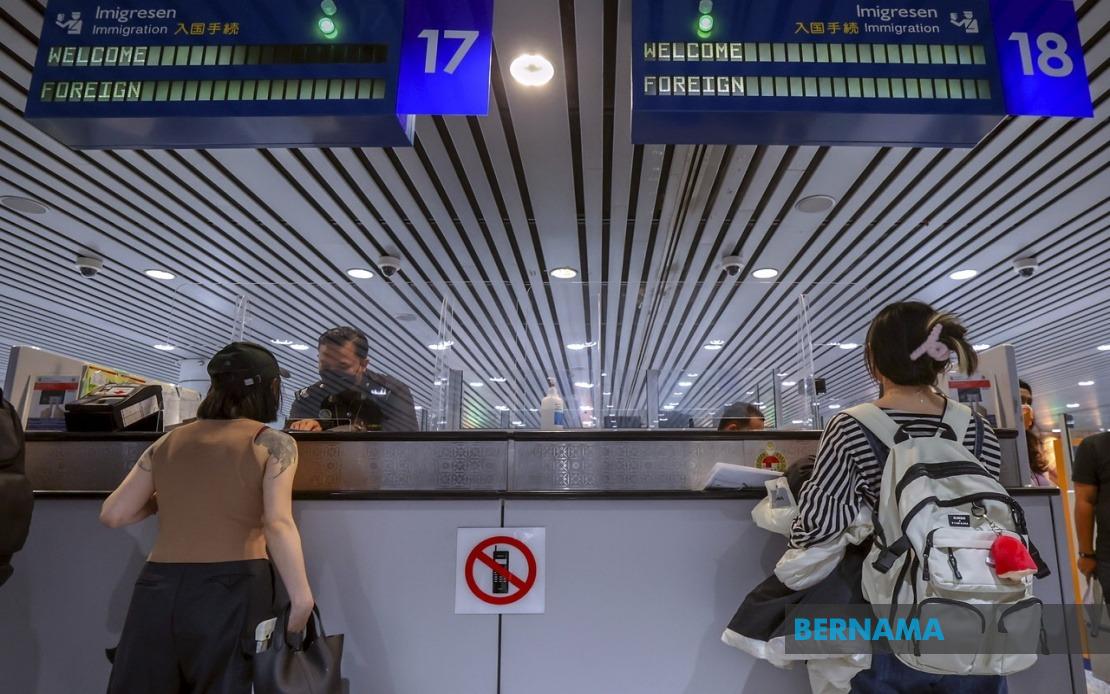
Malaysia's Cabinet has given the green light to an ambitious 17-recommendation framework designed to fortify security protocols, passenger screening procedures and risk assessment mechanisms across Kuala Lumpur International Airport and all of the nation's international entry gateways. The Home Ministry and the Ministry of Transport jointly presented the strategic overhaul to Cabinet yesterday, responding to mounting concerns about gaps in border security that have allowed sensitive breaches to slip through established safeguards.
The comprehensive blueprint unfolds across three distinct implementation phases, each building upon the previous to create a more resilient security ecosystem. The immediate short-term phase focuses on operationalising six priority interventions that can be activated swiftly with existing resources and personnel. The medium-term component zeroes in on systematic modernisation through technology deployment, procurement of equipment and capabilities expansion, while the long-term vision encompasses deep structural reform, cross-agency intelligence sharing frameworks and institutional governance improvements that will be tailored and extended to all international ports of entry based on specific risk profiles and operational circumstances at each location.
The six emergency actions selected for rapid implementation represent the most pressing security vulnerabilities identified in the Cabinet's review. Risk-based targeted screening sits at the forefront, concentrating inspection resources on aircraft, travellers, flight personnel and baggage flagged through intelligence analysis as presenting elevated risk. This intelligence-led approach allows screeners to deploy heightened vigilance where threats are most plausible rather than applying uniform scrutiny uniformly across all transactions.
The second priority addresses access control through enhanced e-vetting protocols for all individuals requiring clearance into restricted airport zones. This encompasses not merely airline crews and pilots but extends to ground staff, maintenance personnel, cargo handlers, contractors undertaking work within secure perimeters and even airport operator employees themselves. By tightening credentialing processes and conducting more rigorous background assessments for this universe of personnel, authorities aim to eliminate pathways through which bad actors might exploit their legitimate access privileges.
Drug screening of aviation staff constitutes the third immediate measure, requiring mandatory pre-employment testing, periodic screening during employment and random sampling to catch those who may have developed substance dependencies while in service. Given that pilots and cabin crew move across international jurisdictions regularly and enjoy certain access privileges within aircraft and terminals, their vulnerability to recruitment by trafficking networks or temptation to engage in smuggling themselves represents a genuine security gap that the new regime explicitly targets.
The remaining three quick-win interventions focus on expanding the visible security footprint, enhancing inter-agency communication channels and establishing a dedicated technical coordination body between the two ministries. These structural and procedural improvements aim to ensure that information flows efficiently between screeners, that security personnel remain constantly present and alert, and that strategic decisions about security evolution receive focused oversight at the highest operational levels.
These six components form the spearhead of a much larger transformation agenda, though the government has strategically chosen to concentrate initial deployment at KLIA before rolling out to secondary airports in subsequent phases. The phased rollout strategy acknowledges capacity constraints and allows the first implementation site to serve as a laboratory for refining procedures and training systems before nationwide expansion. The timing and scope of expansion to other major ports including Penang International Airport, Kuching International Airport and smaller entry points will depend upon current threat assessments, each location's operational traffic patterns and infrastructure readiness.
The Cabinet's decision directly responds to a series of incidents that fundamentally challenged public confidence in Malaysia's border integrity. Most prominently, a Malaysian airline pilot was arrested at Soekarno-Hatta International Airport in Indonesia while allegedly attempting to smuggle approximately 25 kilogrammes of MDMA, the psychoactive component of ecstasy. This high-profile case demonstrated that individuals holding trusted positions within the aviation ecosystem could become vectors for large-scale narcotics trafficking. Additionally, Malaysian nationals have faced charges in Indonesia related to transnational drug smuggling operations, suggesting that criminal networks view Malaysian entry points and transportation workers as exploitable weak links in regional security architecture.
Government spokesman Datuk Seri Fahmi Fadzil framed the Cabinet approval as demonstrating commitment to immediate remedial action, though implementation success will ultimately depend upon adequate funding allocation, recruitment and training of additional security personnel, and sustained political prioritisation even as attention shifts to other policy domains. The joint statement from the Home Ministry and Ministry of Transport emphasises that all implementations will occur within legal frameworks respecting individual rights, data privacy standards and passenger interests, a crucial clarification given that risk-based screening systems sometimes generate concerns about profiling or discriminatory application.
For Malaysia's tourism sector and aviation industry, the security upgrades carry both reassuring and complicating dimensions. Strengthened controls should restore international confidence in Malaysia's gatekeeping capacity, potentially reversing any reputational damage from recent breaches and signalling to foreign travellers and investors that the government takes their safety seriously. Conversely, expanded screening procedures and personnel presence may create modest friction in passenger processing times and operational expenses that the aviation sector must absorb or pass partially to ticket prices.
The regional implications extend beyond Malaysia's borders, as strengthened controls at KLIA create harder entry conditions for transnational criminal networks that previously exploited Malaysian vulnerabilities. Neighbouring countries including Singapore, Indonesia and Thailand facing similar trafficking pressures may view Malaysia's transparency about security gaps and investment in remediation as a template for their own assessments, while also watching whether the 17-point plan actually closes identified vulnerabilities or merely creates administrative procedures that become corrupted or bypassed over time.
Ultimately, the Cabinet's endorsement represents an important acknowledgement that border security requires continuous evolution and investment, particularly for hub airports like KLIA that process hundreds of thousands of international movements annually and therefore present both strategic importance and complex operational challenges. Whether this framework translates into substantive security improvements or devolves into bureaucratic procedures that occupy resources without preventing future incidents will depend on rigorous implementation oversight, adequate resourcing, and the government's willingness to maintain focus beyond initial announcements.

