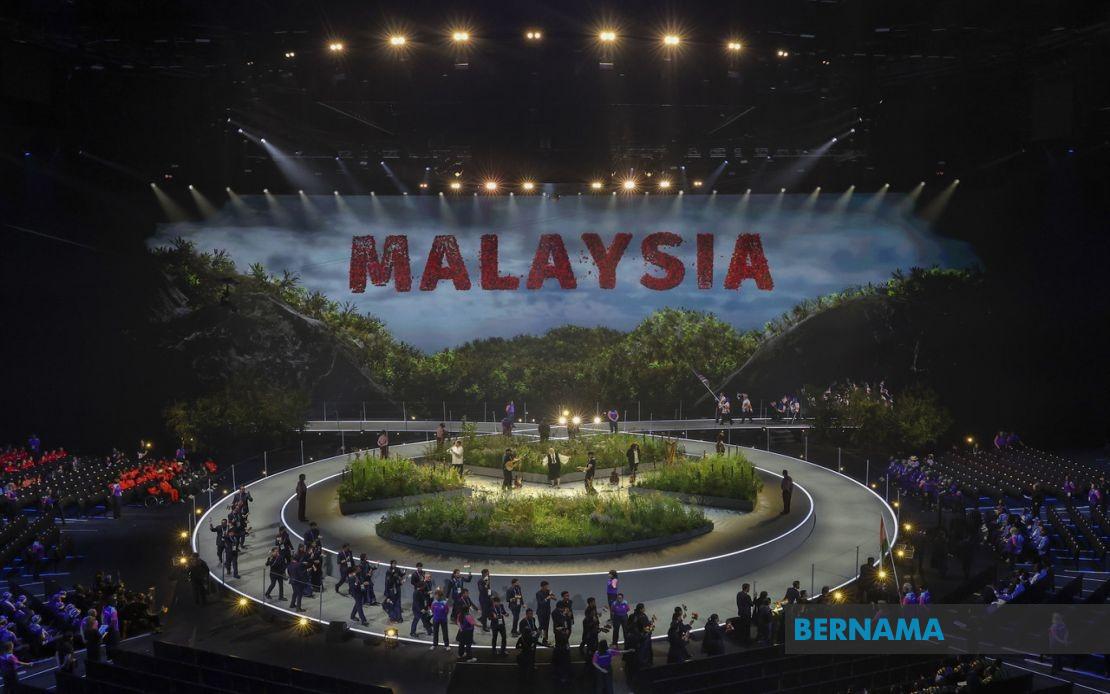
Malaysia's contingent at the Glasgow 2026 Commonwealth Games has drawn formal congratulations from the Cabinet following a medal haul that exceeded national targets, signalling renewed momentum in the country's international sporting profile. The achievement was publicly acknowledged by Communications Minister Datuk Seri Fahmi Fadzil during a post-Cabinet meeting briefing in Putrajaya on August 5, with government officials emphasizing the symbolic importance of the performance for the broader athletic community.
The Malaysian team captured eight gold medals alongside three silver and five bronze medals, a combined total that substantially outperformed the initial expectation of five gold medals at minimum. This result marks a significant turnaround for Malaysian Commonwealth Games participation, reflecting both improved training infrastructure and strategic focus on medal-winning disciplines. The 2026 Glasgow edition now ranks among Malaysia's stronger showings in this quadrennial sporting event, though it falls short of the benchmark set by the 2010 New Delhi Games, when the national contingent secured 12 gold medals—a record that has remained unmatched for nearly two decades.
Fahmi, speaking in his capacity as the government's official communications spokesperson, framed the overseas success as part of a broader narrative of national pride and international representation. He suggested that the Cabinet viewed the athletes' performance as representative of MADANI Government values centered on national achievement and global competitiveness. The formal Cabinet recognition underscores how sporting achievements have become integrated into the government's messaging strategy, with athletic victories positioned as tangible evidence of national capability and progress on the world stage.
The financial recognition accompanying the congratulations reflects government commitment to incentivizing athletic excellence. The Sports Victory Incentive Scheme, locally known as SHAKAM, has allocated RM1.1 million in total rewards to be distributed among the medal-winning athletes. This monetary support serves dual purposes: it provides immediate recognition and material reward for individual and team achievements, whilst also establishing a precedent that may influence future athlete recruitment, training intensity, and retention within Malaysia's sporting ecosystem. The scheme represents a deliberate policy instrument for enhancing competitive performance at international sporting events.
Comparison with Malaysia's historical Commonwealth Games performance reveals both progress and remaining gaps. The 2010 New Delhi result of 12 gold medals remains the highwater mark, achieved when the country's sporting infrastructure was arguably less developed than today. The gap between the Glasgow 2026 performance and the New Delhi benchmark suggests either that competitive standards have intensified globally, or that Malaysia faces ongoing challenges in producing gold medal-winning athletes across a sufficiently broad range of disciplines. Understanding which factor predominates would be valuable for sports administrators planning future investment and talent development strategies.
For Malaysian readers and sports enthusiasts, the Glasgow 2026 result carries implications beyond immediate medal counts. The performance demonstrates that with adequate investment, strategic planning, and athlete support systems, Malaysia remains capable of competing effectively against nations with substantially larger populations and economic resources. This message resonates particularly in Southeast Asia, where regional sporting prowess often reflects broader questions about development capacity and international standing. Malaysia's performance provides a benchmarking point for other regional nations assessing their own athletic potential.
Fahmi's commentary emphasizing inspiration for future athletes points toward the intangible but significant benefits of international sporting success. Medal-winning performances typically generate media coverage, public interest, and aspirational value for younger athletes considering sports careers. By amplifying the Cabinet's recognition through formal statements and press conferences, government officials aim to elevate the cultural status of athletic achievement within Malaysia's broader success narrative. This represents a deliberate attempt to create positive feedback loops wherein public recognition encourages talent identification and athlete development pathways.
The SHAKAM allocation of RM1.1 million requires contextualization within Malaysia's broader sporting budget. While the sum represents meaningful recognition for individual athletes, questions inevitably arise regarding whether Malaysia invests sufficiently in foundational development, grassroots programs, coaching infrastructure, and facility maintenance that ultimately determine long-term competitive capacity. The reward structure operates at the apex of the athletic pyramid; the base determining sustainable excellence extends downward through school sports programs, university athletic systems, and national training centers.
Looking forward, the Glasgow 2026 result provides both momentum and diagnostic information for Malaysian sporting authorities. The achievement offers compelling narratives for promoting sports participation among youth and justifying continued public investment in athletic programs. Simultaneously, the eight-gold performance, while creditable, falls short of the twelve-gold benchmark, suggesting that Malaysia's sports system may be reaching a performance plateau at current investment and organizational levels. Whether future Commonwealth Games yields similar results, improvement, or regression will depend substantially on policy decisions made over the coming years regarding athlete development, coach recruitment, and facility investment.

