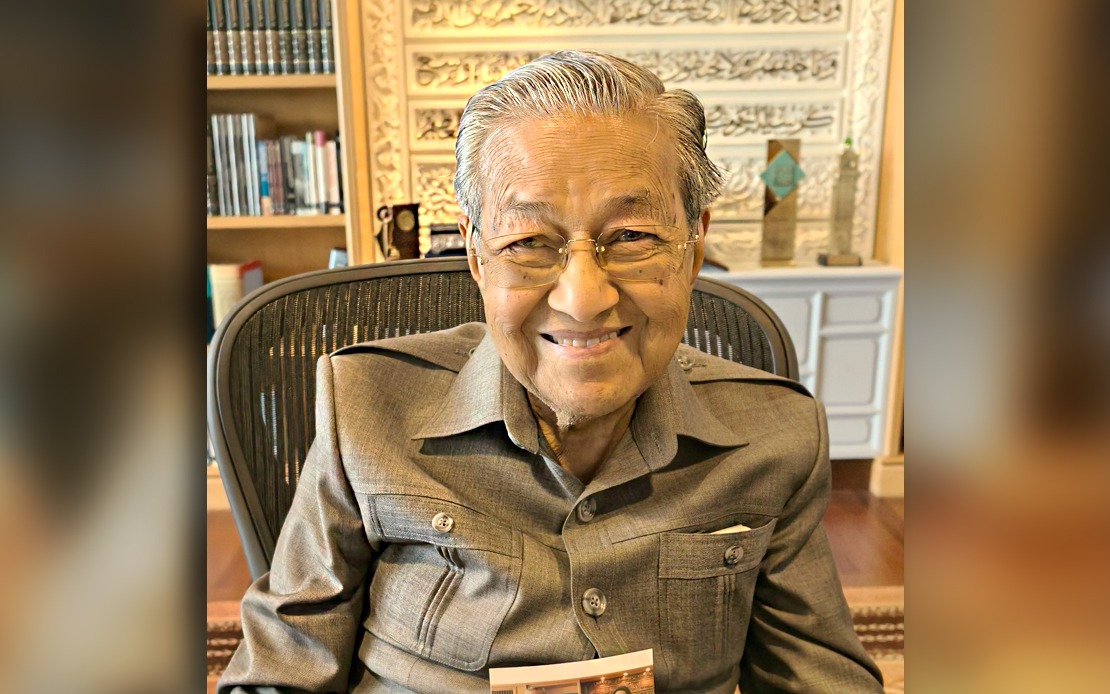
Several members of the current Cabinet have publicly marked the centennial milestone reached by Tun Dr Mahathir Mohamad today, with prominent officials taking to social media to extend warm wishes to Malaysia's longest-serving prime minister. The coordinated acknowledgement underscores the enduring respect accorded to the elder statesman across Malaysia's political establishment, despite the often fractious nature of recent political developments in which Dr Mahathir has played a central role.
Communications Minister Datuk Fahmi Fadzil led the public tributes through a Facebook post that emphasised the momentousness of the occasion. Fadzil's message struck a personal note, praying that Dr Mahathir would enjoy sustained good health alongside continued happiness and divine blessings throughout the coming years. The minister's reference to "an incredible milestone" reflected the genuine rarity of reaching such an advanced age, particularly for a public figure who has remained actively engaged in political and social discourse well into his centennial year.
Two additional Cabinet ministers similarly contributed their birthday greetings. Datuk Seri Azalina Othman Said, who leads the Ministry in the Prime Minister's Department (Law and Institutional Reform), and Datuk Seri Dr Zambry Abd Kadir, the Higher Education Minister, both offered prayers for Dr Mahathir's wellbeing. The consistency in their messaging—each invoking hopes for robust health and divine mercy—suggests a deliberate, respectful tone befitting an occasion that transcends conventional political divisions.
Born on July 10, 1925, in Alor Setar, Kedah, Dr Mahathir has witnessed nine decades of Malaysia's post-independence development and change. His political career spans an extraordinarily long period, encompassing two distinct periods as Prime Minister that together amounted to 22 years of leadership. His initial tenure, extending from 1981 through 2003, established him as a defining figure in Malaysia's modern history, during which he pursued aggressive industrialisation and pursued his Vision 2020 development framework.
Perhaps most remarkably, Dr Mahathir returned to the office of Prime Minister in 2018 at the age of 92, a decision that reverberated through Malaysia's political landscape and international commentary. This comeback positioned him as the world's oldest serving prime minister, breaking previous records and demonstrating that his influence and perceived capacity to govern remained substantial even at an exceptionally advanced age. His 2018 return reflected deep public dissatisfaction with the preceding administration and the belief among significant voter segments that his presence could restore institutional stability.
Dr Mahathir's tenure from 2018 to 2020, though shorter than his previous period in office, proved consequential in Malaysia's political trajectory. His government pursued accountability measures in relation to preceding administrations and attempted to reorient Malaysia's international relationships. However, this second period ultimately proved unstable, with coalition dynamics and health considerations eventually necessitating his stepping down from the premiership.
The birthday greetings reflect a broader Malaysian phenomenon in which elder statesmen, particularly those who have held the highest offices, receive recognitions that transcend partisan boundaries. Dr Mahathir's longevity has allowed him to transition from an active governing role into that of respected senior figure whose pronouncements on national and regional issues continue to command attention. His willingness to remain publicly engaged on matters of governance and policy, even following his departure from formal office, has maintained his relevance across successive administrations.
Reaching 101 years represents a remarkable personal achievement, and for a nation-building figure of Dr Mahathir's stature, the occasion carries symbolic weight regarding Malaysia's own trajectory and resilience. The Cabinet ministers' public acknowledgement acknowledges both the individual's significant lifespan and his substantial contributions to shaping the modern Malaysian state. Their messages, while ceremonial in nature, carry implicit recognition of the debt owed to predecessors who navigated Malaysia through critical periods of nation-building and consolidation.
For contemporary Malaysian political observers, Dr Mahathir's 101st birthday marks a moment to reflect on the continuities and transformations within the nation's leadership structures. His influence on Malaysian politics remains discernible through numerous institutional and policy legacies, even as the political landscape has shifted substantially in the years since his formal retirement from the premiership. The ministers' greetings thus represent not merely personal well-wishes but acknowledgements of historical significance.
Looking forward, the occasion underscores questions about institutional memory and succession planning within Malaysia's political system. Dr Mahathir's exceptional longevity and continued engagement raise broader questions about how nations preserve institutional knowledge while enabling generational renewal. His 101 years encompass periods of profound transformation in Malaysia, Southeast Asia, and the global system—periods through which he exercised considerable agency in shaping outcomes.
The public nature of the birthday wishes, shared through modern social media platforms, reflects how contemporary Malaysian politics operates with simultaneous reference to traditional respect for elders and contemporary communication modalities. The Cabinet ministers' choice to publicly celebrate Dr Mahathir suggests that, despite inevitable disagreements on specific policies or political directions, the foundational respect for his historical role remains largely intact across Malaysia's political establishment.

