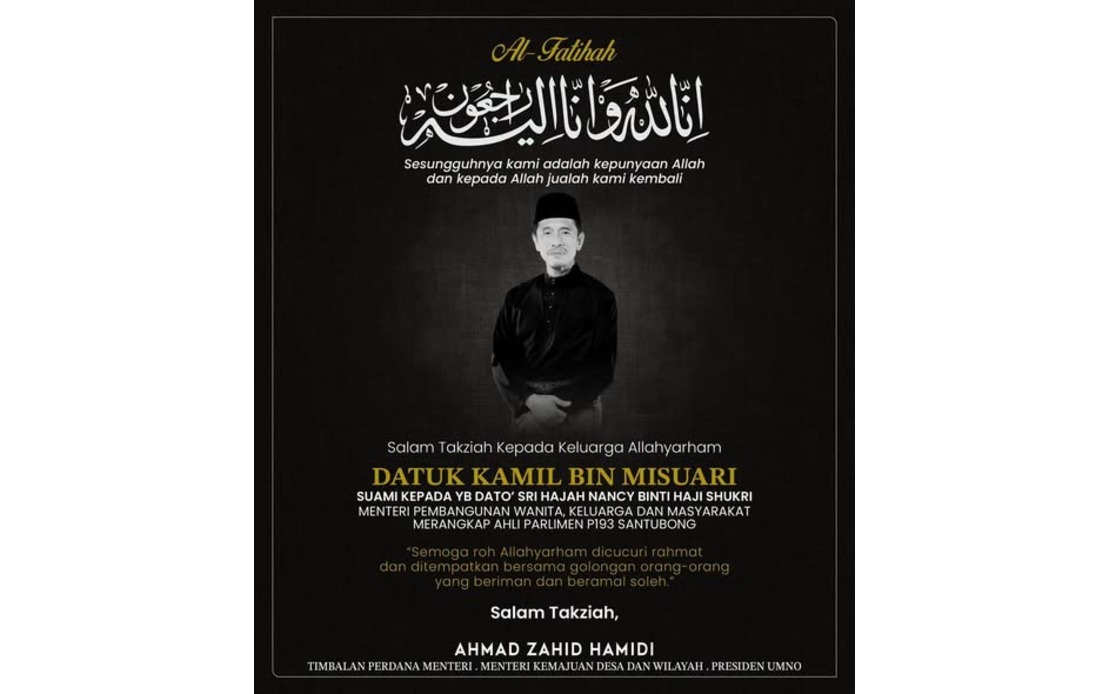
Senior figures across Malaysia's federal government have conveyed heartfelt condolences to Women, Family and Community Development Minister Datuk Seri Nancy Shukri following the death of her husband, Datuk Kamil Misuari, on June 18. The 65-year-old passed away at a hospital in Kuala Lumpur this evening, ending a marriage that had spanned nearly four decades and produced three children. His remains are scheduled for transportation to Kuching tomorrow, where funeral arrangements will conclude at Samariang Muslim Cemetery.
Deputy Prime Minister Datuk Seri Dr Ahmad Zahid Hamidi was among the first to respond publicly, acknowledging the emotional weight of losing a lifelong companion. His tribute, shared via Facebook, framed the loss as a significant spiritual and personal trial for Nancy and her immediate family. Zahid Hamidi's message invoked Islamic prayers, seeking divine forgiveness for the deceased and strength for those navigating grief during this consequential moment in their lives.
Home Minister Datuk Seri Saifuddin Nasution Ismail similarly reached out to Nancy and her extended family circle, emphasising the importance of divine mercy during periods of profound loss. His statement underscored the hope that difficulties would be softened through faith and community support, demonstrating the mutual regard that exists within Malaysia's executive branch. Such expressions from the Home Ministry carry particular weight given its portfolio responsibilities across internal security and administrative governance.
Communications Minister Datuk Fahmi Fadzil offered prayers for Nancy's resilience and spiritual composure, recognising that navigating grief requires both personal fortitude and external encouragement. His message highlighted the importance of collective compassion within government circles, suggesting that ministerial colleagues recognise their shared responsibility to support one another during vulnerable periods. The tone of his statement reflected broader institutional values around human dignity and emotional vulnerability.
Agriculture and Food Security Minister Datuk Seri Mohamad Sabu extended comprehensive wishes for patience and perseverance, acknowledging that the journey through mourning extends well beyond the initial shock of loss. His invocation of Islamic teachings on acceptance and divine wisdom reflected common cultural and spiritual frameworks that unite Malaysia's multiethnic government. The emphasis on strength and perseverance speaks to expectations that Nancy will continue fulfilling her ministerial duties while processing personal tragedy.
Human Resources Minister Datuk Seri R. Ramanan offered a more personal reflection, characterising the loss of a beloved family member as a universal trial that transcends professional status or public position. His contribution highlighted that regardless of rank or portfolio, all individuals face similar emotional challenges when bereaved. This humanising perspective reinforced the shared vulnerability that connects leaders across governmental hierarchies.
Minister in the Prime Minister's Department (Sabah and Sarawak Affairs) Datuk Mustapha Sakmud similarly acknowledged the profound difficulty of such transitions, contributing his voice to the broader chorus of institutional support. The involvement of the Sabah and Sarawak Affairs ministry indicated that sympathy extended across Malaysia's federal structure, encompassing both peninsular and East Malaysian governance frameworks.
Nancy Shukri, who assumed her ministerial portfolio with responsibility for women's affairs and community development, now faces the dual challenge of navigating personal bereavement while maintaining her executive responsibilities. The coordinated expression of condolences from across the cabinet suggests institutional acknowledgment of the difficulty inherent in balancing ministerial duties with family obligations during periods of acute grief. Her portfolio's focus on family welfare and community cohesion adds a poignant dimension to her current circumstances.
The marriage between Nancy and Kamil, which began in 1985, represented a partnership spanning nearly four decades. Their union produced three children, establishing a family legacy that Nancy now safeguards while adjusting to widowhood. The timing of Kamil's passing, at 65 years old, adds particular weight to considerations of mortality and life's fragility within Malaysia's political establishment.
The coordinated response from Malaysia's federal government reflects institutional protocols around supporting bereaved colleagues, particularly those holding senior positions responsible for managing national portfolios. Such expressions serve multiple functions simultaneously—they acknowledge personal loss, demonstrate governmental cohesion, and model compassionate leadership values for the broader public. The reliance on Islamic prayer formulations emphasises Malaysia's predominant religious framework while respecting the constitutional arrangements that integrate Islam within secular governance structures.