The Malaysian Cabinet has moved decisively to address mounting concerns about airport security vulnerabilities, directing the Ministry of Home Affairs and Ministry of Transport to deliver a detailed reinforcement strategy within fourteen days. Home Minister Datuk Seri Saifuddin Nasution Ismail announced the directive while in Sandakan, emphasising that government leadership recognises the gravity of lapses that have undercut public confidence in border controls and tarnished Malaysia's international standing.
The acceleration of security assessments follows a troubling pattern of incidents that have exposed gaps in Malaysia's airport frameworks. Most prominently, the recent arrest of a Malaysian pilot connected to the discovery of approximately 25 kilograms of MDMA drugs at Indonesia's Soekarno-Hatta Airport crystallised official concern that Malaysia's own terminal operations may harbour similar vulnerabilities. The incident prompted Cabinet-level discussion about the systemic nature of weaknesses rather than isolated oversights, signalling that policymakers view the problem as structural rather than operational.
Saifuddin articulated the Cabinet's perspective with unusual directness, stating that the incidents have created an impression of compromised security controls and breached protective frameworks. His acknowledgment that "immediate steps are being taken" to develop a comprehensive improvement strategy signals recognition that cosmetic adjustments will prove insufficient. The involvement of "various agencies" in drafting the plan suggests coordination across border security, customs, immigration, and intelligence bodies—a necessary but administratively complex undertaking given Malaysia's decentralised security architecture.
The two-week timeline represents an ambitious deadline for developing substantive policy recommendations across multiple jurisdictions and stakeholders. Success will require rapid interagency consensus-building and the capacity to translate security concerns into implementable procedures. The brevity of the deadline may reflect Cabinet impatience with gradual reform cycles, particularly given reputational costs as international awareness of security weaknesses spreads through diplomatic channels and media coverage.
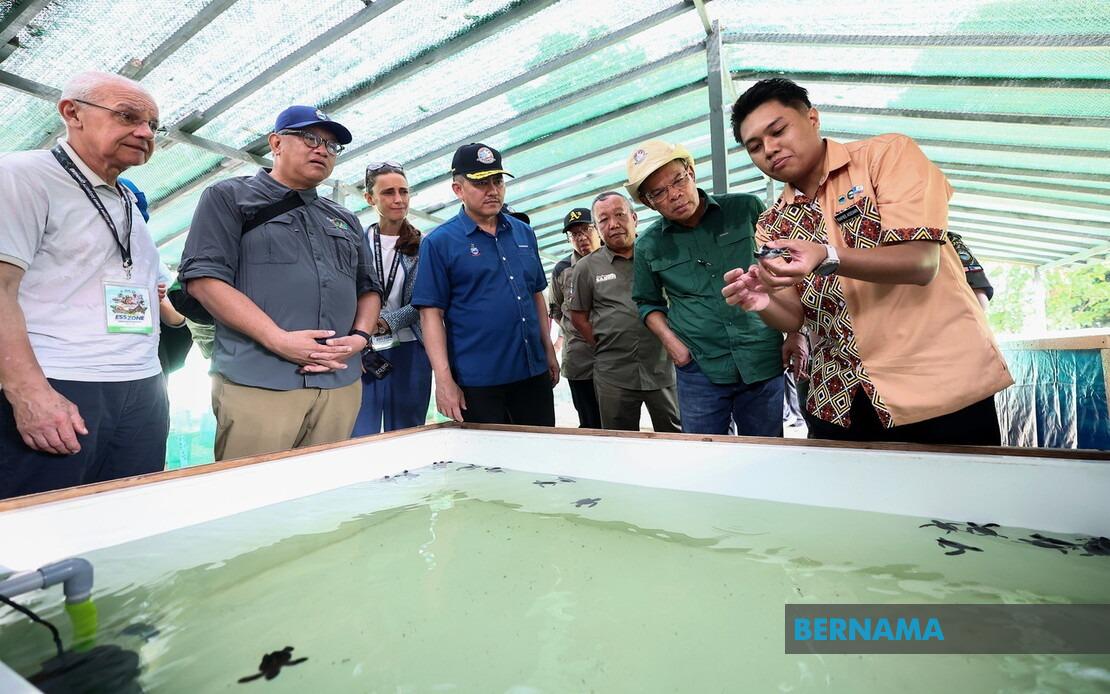
Beyond the immediate security audit, Saifuddin's visit to Eastern Sabah illuminates a parallel government priority: restoring international confidence in Malaysia's stability and territorial security. The Home Minister's tour of the Eastern Sabah Security Zone with fourteen foreign diplomatic representatives and international envoys served as both a reassurance mission and an attempt to reverse adverse travel advisories that have dampened visitor arrivals and investment interest. Nations including Japan and Switzerland have already moderated their warnings based on government briefings, suggesting that sustained diplomatic engagement can gradually reshape perceptions.
The security familiarisation programme represents a sophisticated understanding that official statements alone carry limited weight with foreign governments and their citizens. By enabling diplomatic representatives to visit strategic locations and tourism destinations directly, Malaysia's authorities aim to ground international risk assessments in observable conditions rather than dated intelligence or worst-case scenarios. This approach acknowledges that travel advisories—though often conservative—substantially influence business decisions, academic partnerships, and tourism flows across the region.
Statistics presented by Saifuddin underscore the operational intensity of security efforts within the Eastern Sabah Security Zone. Over the first half of this year, ESSCOM conducted nearly 900,000 inspections while achieving 307 arrests, demonstrating the scale of monitoring required to regulate maritime and terrestrial movement across Sabah's porous boundaries. The seizures valued at RM23.37 million across the six-month period indicate substantial interdiction capacity, though such figures also hint at the ongoing volume of attempted smuggling and transnational criminal activity.
The federal government's cumulative investment of RM723 million in the Eastern Sabah Security Zone over ESSCOM's thirteen-year operational history reflects long-term commitment to addressing security challenges specific to eastern Sabah. However, this substantial expenditure also highlights the persistent resource demands of maintaining security across expansive maritime zones and difficult terrain. The scale of investment suggests that security challenges in this region remain structural rather than temporary, requiring sustained infrastructure and personnel deployments that extend beyond short-term emergency responses.
For Malaysian business interests and the tourism sector, the Cabinet's dual focus on both operational security strengthening and diplomatic confidence-building carries significant implications. Enhanced airport screening procedures may create temporary friction and longer processing times for legitimate travellers and cargo, potentially affecting competitiveness against regional hub airports. Conversely, successful restoration of international confidence through travel advisory amendments could unlock substantial tourism growth and restore Malaysia's positioning as a preferred destination within Southeast Asia.
The emphasis on comprehensive planning rather than ad-hoc responses suggests that government officials recognise airport security as a holistic system requiring coordinated assessment across technology, personnel training, screening protocols, and intelligence-sharing frameworks. Previous security improvements in Malaysia have sometimes involved reactive deployments of additional personnel or equipment without addressing underlying procedural or information-sharing gaps. The Cabinet's insistence on a "detailed improvement plan" may indicate intention to undertake more fundamental assessment of terminal operations and passenger management processes.
For Malaysia's international reputation, the visibility of this Cabinet-level response carries both defensive and preventive value. Demonstrating that serious incidents trigger rapid policy review and systematic improvement efforts signals to international partners and investors that security lapses do not reflect governmental indifference. This messaging proves particularly important for countries like Malaysia, which operates across multiple geopolitical zones and depends heavily on international trade flows and passenger traffic to sustain economic momentum.
The coming two weeks will determine whether the Home Affairs and Transport ministries can synthesise preliminary findings into coherent policy recommendations suitable for Cabinet consideration. The success of this exercise will likely establish the trajectory for Malaysia's airport security posture across coming years, potentially establishing new standards for regional terminal operations and setting precedent for how quickly and comprehensively Malaysian authorities respond to security challenges.

