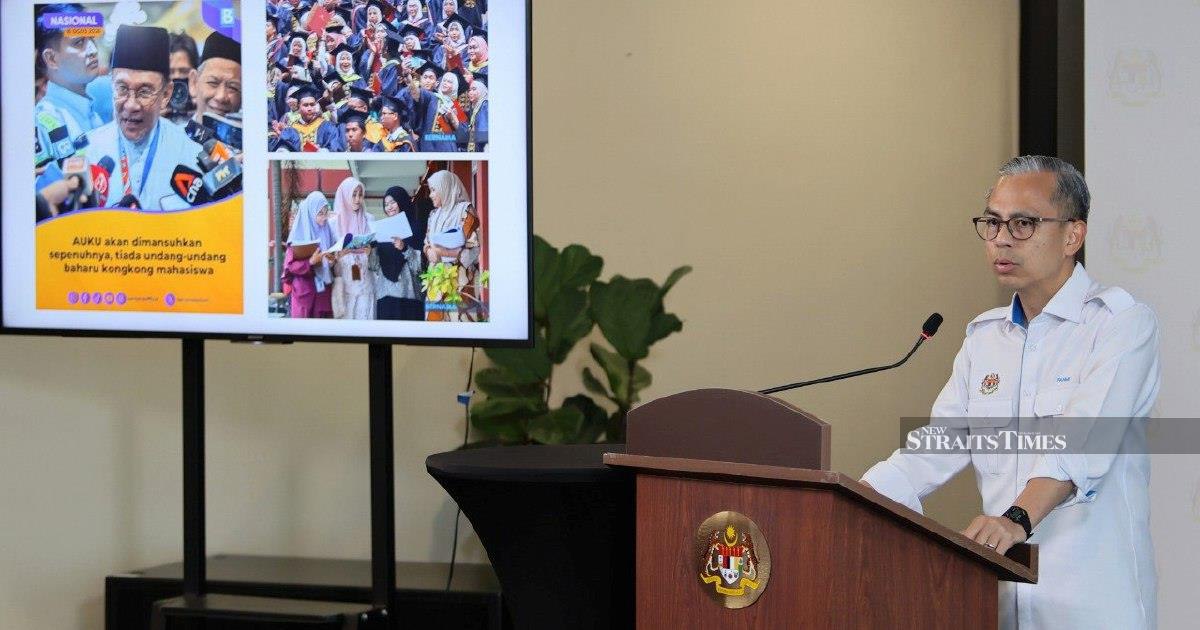
The Malaysian cabinet chose not to formally address Prime Minister Datuk Seri Anwar Ibrahim's recent Taiwan remarks during its proceedings, government spokesman Datuk Seri Fahmi Fadzil confirmed in Putrajaya. The statement came amid mounting international attention following Taiwan's sharp rejection of Anwar's statements, marking a notable departure from standard diplomatic protocols when such sensitive cross-strait issues emerge.
Fahmi's confirmation that the cabinet refrained from deliberating on the matter suggests the government may have opted to treat the comments as a matter of individual expression rather than a collective cabinet position. This approach reflects the complexities Malaysia faces in maintaining its carefully balanced diplomatic stance towards Taiwan, which exists in a delicate limbo between Beijing's "One China" doctrine and Taipei's de facto independence.
The decision not to formally discuss the remarks in cabinet circles raises questions about how the government manages high-profile statements on geopolitically sensitive topics. Taiwan's strong rebuke indicates that Anwar's comments—the specific substance of which warrants examination—touched upon fundamental issues affecting Taipei's international relations and domestic political standing. For a nation like Malaysia, which maintains unofficial ties with Taiwan while officially recognising the People's Republic of China, such moments demand careful calibration.
Anwar's position as Prime Minister means his utterances carry official weight in international forums. Yet the cabinet's apparent avoidance of the issue suggests either confidence that the matter would resolve itself through diplomatic channels, or perhaps a deliberate choice to distance the broader government apparatus from the statement's implications. This distinction between prime ministerial speech and cabinet collective responsibility carries significant implications for how Malaysia's regional partners interpret the nation's actual foreign policy position.
Taiwan's decision to respond forcefully underscores how closely international observers monitor Malaysian leadership's comments on cross-strait matters. Taipei likely views Malaysian statements through the prism of broader regional alignments, particularly given ASEAN's strategic importance in the Indo-Pacific calculus and Malaysia's historical role in facilitating informal cross-strait exchanges. A strong rebuke serves Taipei's dual purpose of signalling domestic strength to its electorate while warning other potential critics of Taiwan's status to calibrate their language carefully.
From a Malaysian perspective, the cabinet's non-engagement with the issue may reflect institutional confidence in the Foreign Ministry's capacity to manage bilateral fallout. Fahmi's role as government spokesman positioning him as the primary voice clarifying government intent suggests communication through official channels rather than through cabinet statements. This arrangement offers plausible deniability regarding collective culpability while maintaining the government's diplomatic flexibility.
The timing of this clarification merits consideration against Malaysia's broader diplomatic calendar and its relationship with major powers. As a middle-power nation navigating great-power competition, Malaysia requires nuanced consistency in how it addresses cross-strait issues. Statements from its leader that draw international rebuke demand careful handling to preserve Malaysia's credibility in regional forums and bilateral relationships with Beijing, Taipei, and Washington alike.
Domestically, the cabinet's silence on the matter also reflects Malaysia's multi-communal character and the sensitivity surrounding any statements touching upon China, Taiwan, or Chinese diaspora communities. The government's apparent choice to compartmentalise the issue rather than deliberate it collectively suggests an awareness of these domestic dimensions and a preference for avoiding public divisions that might emerge during open cabinet debate on contested international issues.
The incident highlights broader challenges for Southeast Asian governments in an era of intensifying great-power competition over Taiwan and the South China Sea. Malaysia's carefully maintained equilibrium between Beijing and Washington, coupled with its growing economic interdependence with China, creates structural pressures against strong public statements that might alienate Beijing while simultaneously risking diplomatic friction with other partners. The cabinet's non-response exemplifies how these constraints shape the scope for official commentary on cross-strait affairs.
Looking forward, this episode may influence how Anwar calibrates public remarks on Taiwan-related matters. While prime ministerial flexibility to speak beyond strict cabinet positions serves diplomatic purposes, the international reaction here demonstrates costs associated with statements that provoke strong responses from one of Asia's most sensitive geopolitical actors. Malaysia's experience mirrors that of other ASEAN nations that have discovered the complexity of managing cross-strait sensitivities within the constraints of their own foreign policy frameworks.
The government spokesman's clarification ultimately reflects Malaysia's underlying diplomatic strategy: maintain official One China recognition while preserving practical engagement across the strait, avoid unnecessary controversy through cabinet-level pronouncements, and rely on specialised diplomatic channels to manage inevitable tensions. Whether this approach proves sustainable as cross-strait tensions intensify remains a question Malaysian policymakers must continuously reassess.

