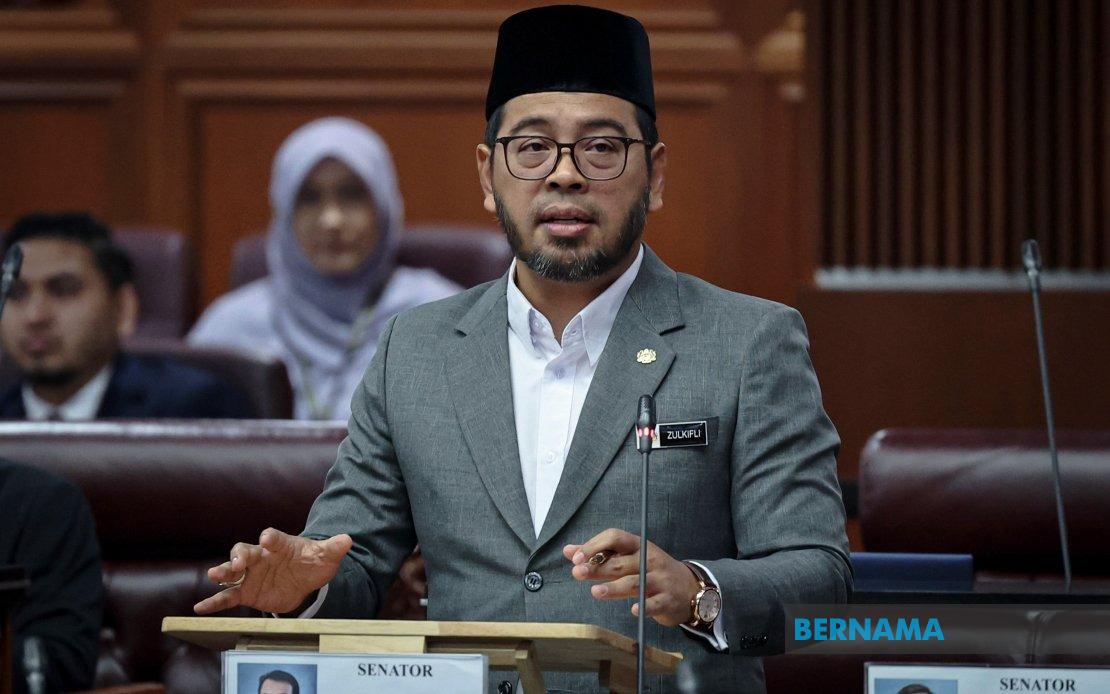
The Cabinet will consider a proposal to make the Royal Commission of Inquiry report on Tabung Haji accessible to the public, Religious Affairs Minister Dr Zulkifli Hasan announced in Parliament on July 22. The move comes amid persistent questions and unfounded allegations regarding the disposal of the Islamic pilgrimage fund's strategic holdings, which have generated confusion among stakeholders and the broader Malaysian Muslim community.
Zulkifli categorically rejected suggestions that the former Treasury secretary-general engaged in asset sales that compromised Tabung Haji's financial standing. He clarified that what observers have characterised as asset disposals was actually an institutional rescue operation designed to stabilise a critical financial services provider serving Malaysia's Muslim population. The minister emphasised that the distinction between these characterisations carries significant implications for understanding what actually transpired at the fund during a period of acute financial distress.
The underlying crisis that triggered the intervention was severe. When auditors and Bank Negara Malaysia conducted their assessments in 2018, they discovered that Tabung Haji faced a concerning asset-liability gap of RM10.9 billion. This gap represented a structural imbalance that threatened the institution's viability and, by extension, the security of millions of depositors who had entrusted their savings to the fund in preparation for the hajj pilgrimage.
The situation deteriorated rapidly as market confidence eroded. Approximately RM6 billion was withdrawn by concerned depositors over a compressed timeframe, intensifying liquidity pressures on the institution. Simultaneously, attempts to secure a standby financing facility with international lenders failed to materialise, leaving policymakers with limited conventional options to stabilise the fund. This convergence of challenges forced the government's hand toward more decisive intervention.
The financial exposure facing the Malaysian government was substantial. Had Tabung Haji been permitted to collapse, the state would have inherited liabilities exceeding RM74.5 billion, since government guarantees on depositor funds remain unconditional. This figure dramatically illustrated why allowing the institution to fail was economically untenable, regardless of the philosophical merits of depositor protection.
The Cabinet's 2018 decision to facilitate the transfer of problematic and underperforming assets to Urusharta Jamaah Sdn Bhd, a government-owned special purpose vehicle, represented a collective policy choice rather than an act of any individual official. This mechanism allowed Tabung Haji to clean its balance sheet while maintaining its core operational capacity. Zulkifli stressed the collaborative nature of this decision-making process, underscoring that no single actor unilaterally determined the course of action.
The subsequent recovery trajectory validates the intervention strategy. Deposits in Tabung Haji expanded from RM69.4 billion in 2019 to surpass RM95.1 billion by mid-2024, a reversal that signals restored institutional credibility. This deposit growth, achieved following years of crisis management, demonstrates that Malaysian Muslims have gradually reconsidered their assessment of the fund's safety and prospects. The rebound reflects a hard-won recovery of institutional trust.
Financial returns to depositors have also improved substantially. The profit distribution rate climbed from 1.25 per cent in 2018 to 3.5 per cent scheduled for 2025, marking the highest payout in eight years. This performance enhancement occurred despite the global economic uncertainties and inflationary pressures that have constrained returns across the broader financial services industry. The improved returns provide tangible evidence of the fund's improved financial health.
Costs associated with performing the hajj have remained remarkably stable. The pilgrimage package pricing has not increased during the three-year period spanning 2024 to 2026, a feat accomplished notwithstanding persistent global inflation in transportation, accommodation, and service provision costs. This price stability represents a direct benefit to Malaysian Muslims planning their religious obligations, insulating them from the cost escalations affecting pilgrims from other countries.
The decision to potentially release the RCI report publicly addresses broader governance and transparency concerns that have circulated within Malaysian civil society. Public scrutiny of the inquiry's findings would provide stakeholders with authoritative documentation of what occurred, the rationale behind key decisions, and the institutional failures that necessitated intervention. Such transparency can help dissipate speculation and anchor public understanding in established facts.
For Malaysian policymakers and regulators, the Tabung Haji case illustrates the consequences of inadequate oversight of financial institutions, even those with social missions and government backing. The massive pre-2018 misappropriation of depositor funds exposed severe governance weaknesses that audit mechanisms failed to detect or prevent until substantial damage had accumulated. Learning from these failures requires honest institutional reckoning.
The broader regional implications deserve consideration as well. Several Southeast Asian nations operate Islamic financial institutions with government guarantees and depositor protection commitments comparable to Tabung Haji's structure. Malaysia's experience managing the fund's crisis and its subsequent recovery offers instructive lessons for policymakers across the region contemplating similar institutions or evaluating existing ones for vulnerabilities to mismanagement and fraud.

