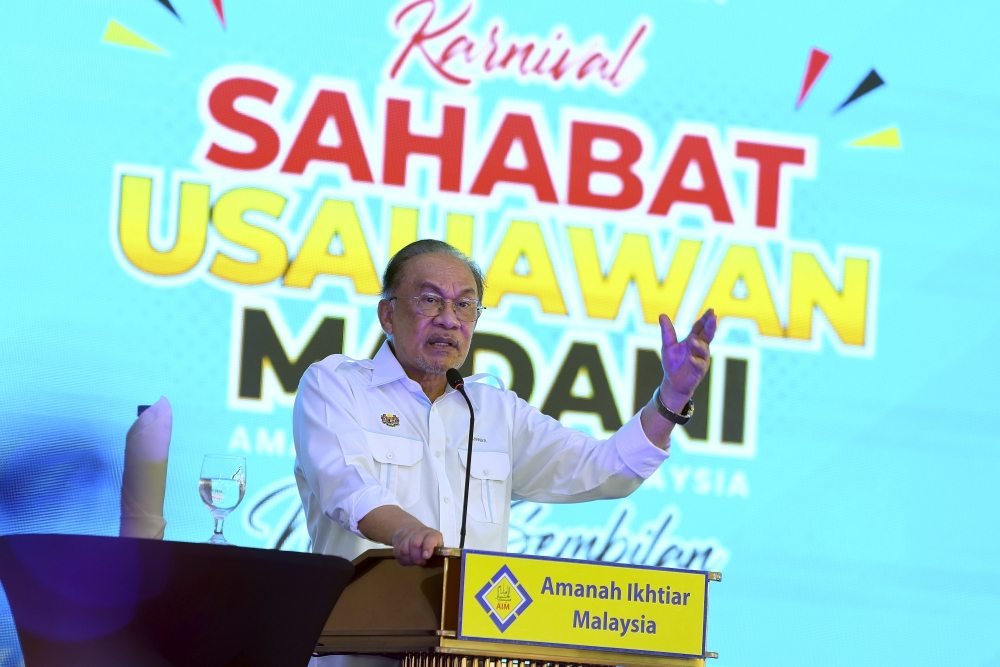
Prime Minister Datuk Seri Anwar Ibrahim has moved to dispel growing concerns about potential Cabinet resistance to programmes designed to benefit Malays and Muslims, declaring that his administration maintains complete unity on these matters. Speaking in Jempol, the Prime Minister emphasised that no Cabinet member has raised objections to any proposal aimed at advancing the interests of these communities, a statement that carries particular weight given ongoing debates about the government's policy priorities and inclusivity.
The assertion comes at a moment when Malaysia's political landscape continues to grapple with questions about how multiethnic administrations balance competing communal interests whilst maintaining social cohesion. Anwar's clarification appears designed to address underlying anxieties within Malay-Muslim constituencies regarding whether their specific needs might be marginalised in a broader national development agenda. By explicitly confirming Cabinet endorsement of targeted initiatives, he seeks to reinforce that supporting these programmes remains a core government commitment rather than a contested terrain within the executive.
This position reflects a fundamental challenge facing any Malaysian administration: the requirement to simultaneously serve the constitutional protections afforded to Malays and Islam under Article 153 of the Federal Constitution whilst promoting equitable development across all communities. The tension between these dual obligations has historically generated political friction, and Anwar's statement signals that his Cabinet operates with clear consensus on honouring these commitments without compromise.
The timing of these remarks is significant given the complex political coalition supporting the current government. Anwar's Pakatan Harapan partners, alongside other aligned parties, represent diverse constituencies with varying priorities. The Prime Minister's emphasis on unified Cabinet backing for Malay and Islamic programmes suggests a deliberate effort to maintain cohesion within this coalition by demonstrating that no faction is subordinating these interests to other policy objectives. Such reassurance proves particularly valuable when political opponents frequently attempt to portray ruling coalitions as internally divided or unreliable guardians of communal interests.
For Malay-Muslim voters and community leaders, Anwar's statement provides explicit reassurance about the government's commitment trajectory. Many within these communities harbour concerns—sometimes exaggerated by opposition rhetoric—that secular-oriented or pluralist-leaning governments might subtly deprioritise their specific requirements. By making this declaration, Anwar addresses these anxieties head-on, establishing that constitutional obligations remain binding across all government levels and that Cabinet ministers universally respect this framework.
The broader context reveals Malaysia's ongoing struggle to balance constitutional protections with modern governance demands. Article 153 represents a foundational social contract established at independence, but implementing this provision in increasingly diverse and economically complex circumstances generates genuine policy questions. Programmes targeting Malays and Muslims operate within this constitutionally sanctioned space, yet their design and implementation require careful calibration to avoid perceptions of favouritism whilst ensuring meaningful impact. Anwar's Cabinet appears determined to pursue such programmes without apology or hesitation.
From an administrative perspective, this unified stance streamlines policymaking considerably. When Cabinet divisions emerge regarding communal programmes, implementation becomes fragmented and effectiveness diminishes. Anwar's assertion of complete consensus suggests that proposals advancing Malay and Islamic interests face no internal bureaucratic obstruction, enabling more decisive programme delivery. This operational benefit complements the political messaging value of his statement.
Regionally, Malaysia's approach to managing communal interests whilst maintaining democratic governance attracts scrutiny from other Southeast Asian nations grappling with comparable challenges. Countries like Thailand, Myanmar, and Indonesia face their own tensions between majority community protections and inclusive development models. Malaysia's demonstration that a multiethnic coalition government can maintain firm commitment to constitutional provisions whilst pursuing broader development agendas offers instructive lessons, though critics argue that implementation sometimes falls short of rhetoric.
For the corporate and foreign investment sectors, clarity about government policy direction carries material significance. Companies operating in Malaysia need certainty that programmes supporting specific communities will receive consistent backing rather than becoming political footballs subject to shifting Cabinet positions. Anwar's confirmation of unanimous support creates predictability that benefits long-term planning and investment decisions across sectors from education to economic empowerment initiatives.
Moving forward, translating this Cabinet-level commitment into tangible outcomes remains the critical measure. Various Malay-Muslim focused programmes—ranging from bumiputera equity schemes to Islamic financing initiatives to educational scholarships—will demonstrate whether this stated consensus translates into adequate resource allocation and effective implementation. The Prime Minister has essentially committed his entire Cabinet to delivering on this promise, creating accountability beyond mere political rhetoric.
Anwar's remarks also implicitly rebut opposition parties that frequently challenge the government's bona fides regarding communal interests. By positioning these programmes as completely uncontroversial within Cabinet, he denies opposition movements the political space to portray the government as divided or unreliable on fundamental constitutional obligations. This rhetorical positioning strengthens his government's standing among constituencies most alert to any perceived wavering on these core issues.
Ultimately, the Prime Minister's unambiguous statement serves multiple purposes simultaneously: reassuring Malay-Muslim communities about government commitment, clarifying the government's administrative position, and reinforcing coalition unity on foundational constitutional matters. Whether this declared unanimity survives inevitable tensions between communal programmes and broader development objectives will determine the credibility of Anwar's assertions in the eyes of stakeholders who view these issues as non-negotiable elements of the Malaysian social contract.

