A coalition of government agencies, conservation groups, and indigenous tribes in California is racing to restore one of the world's most remarkable ecosystems after catastrophic wildfires decimated nearly 20 percent of the planet's giant sequoias. The restoration initiative, which has expanded significantly since 2022, represents a coordinated attempt to undo more than a century of fire suppression policies that have left these ancient trees critically vulnerable to increasingly intense blazes. With another summer fire season approaching, the partnership says it is making measurable progress, though scientists emphasize the work remains urgent.
The scale of the 2020 and 2021 fires across the southern Sierra Nevada proved unprecedented in their destructiveness. These conflagrations tore through Sequoia National Park, Sequoia National Forest, and surrounding areas with intensity that shocked even experienced fire managers. The fires claimed thousands of giant sequoias—trees that can soar 91.5 metres skyward and persist for three millennia—leaving devastated groves in their wake. Kevin Conway, state forests programme manager for Cal Fire, California's primary firefighting agency, captured the emotional toll of the disaster when he described the helplessness of watching these irreplaceable organisms perish despite humanity's best efforts. The twin fire years fundamentally altered how officials approach forest management across sequoia territory.
The Giant Sequoia Lands Coalition, formed in the aftermath of those fires, brings together eight primary organisations controlling lands stretching from Tahoe National Forest to Bakersfield. Members include Cal Fire, California State Parks, the National Park Service, Tulare County, the Tule River Indian Tribe of California, UC Berkeley, the US Forest Service, and the Bureau of Land Management. This diverse partnership also coordinates with nine additional organisations providing scientific expertise, financial resources, and logistical support. The collaboration reflects growing recognition that protecting these ecosystems requires transcending institutional boundaries and integrating traditional ecological knowledge with modern conservation science.
Since launching operations in 2022, the coalition has undertaken forest-thinning work across 44 of California's 94 giant sequoia groves. Crews have mechanically removed overgrown brush and smaller trees that accumulate as fuel, while also conducting controlled burns following techniques indigenous tribes employed for centuries. The scale of reforestation has been equally impressive: workers have planted more than 682,000 sequoia seedlings in severely burned areas. According to a report released in early May, these cumulative efforts have reduced fire danger across 9,409 hectares over four years, a tangible achievement that offers hope even as climate change intensifies the underlying threat.
Steve Mietz, recently appointed president of Save the Redwoods League and former superintendent of Redwood National Park, frames the challenge with both urgency and optimism. He emphasises that future fires are inevitable, not merely possible—a certainty driven by climate dynamics and accumulated fuel loads. Yet his message also carries conviction that solutions exist and that despair is unwarranted. This duality reflects the scientific consensus: managers understand the problem and possess the technical tools to address it, but implementation must accelerate before the next major fire season arrives.
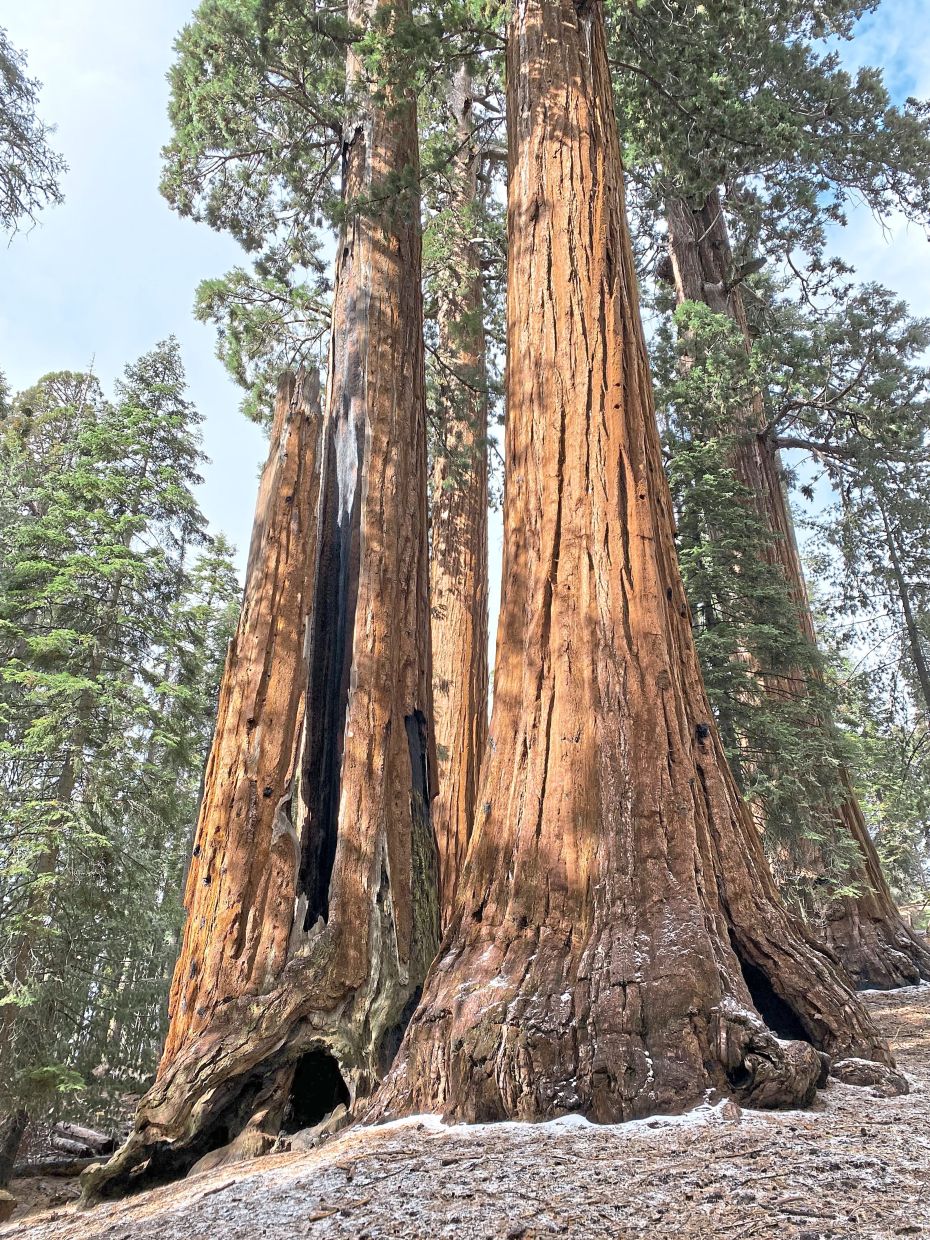
Giant sequoias represent the largest living organisms on Earth when measured by volume, though they are cousins to coast redwoods, which claim the title for height. These massive conifers evolved alongside fire over millennia, developing remarkable adaptations that allowed them to survive frequent burns. Their bark, spongy and reddish in colour, can reach 60 centimetres thick and functions as natural insulation, protecting the living tissue beneath from extreme heat. Additionally, sequoia cones contain resin that requires fire's heat to open and release seeds, meaning the trees depend on periodic burning for reproduction.
Before European settlement, lightning strikes and controlled burns conducted by indigenous tribes ignited fires through sequoia groves every 10 to 20 years. This fire regime maintained forests in an open, parklike condition with low fuel loads. However, beginning roughly a century ago, fire suppression became official policy. As firefighting crews extinguished every blaze, small trees, brush, and dead wood accumulated to unnaturally dense levels, fundamentally transforming forest structure. The consequences proved catastrophic: when wildfires eventually penetrated these overstocked groves, they burned with unprecedented intensity and severity, overwhelming the sequoias' evolutionary defences.
Kristen Shive, a fuels and forest specialist at UC Berkeley's Cooperative Extension Program, described the shock of witnessing thousand-year-old trees succumbing to fires of such ferocity that they exceeded the ecosystems' adaptive capacity. She noted that the 2020 and 2021 fires created thousands of acres of high-severity burn, a landscape transformation that dismayed scientists who recognised it reflected fundamentally human mismanagement. The emotional and ecological weight of watching ancient organisms perish due to policy failures—rather than natural forces—crystallised the urgency of course correction.
Climate change has intensified the threat beyond what forest structure alone can explain. Rising temperatures dry soils and vegetation, creating conditions where fires spread faster and burn hotter. The severe droughts of 2012-2016 and 2020-2022 killed millions of trees across the Sierra Nevada range, providing additional fuel for wildfires. This cascade of stresses—suppressed fire, dense forests, climate-driven drying, and abundant dead wood—created a tinderbox awaiting only ignition. Coalition managers recognised that addressing fuel loads while climate change accelerates requires moving with exceptional speed.
The restoration strategy involves removing dense thickets of smaller tree species including white fir, red fir, and incense cedar that surround giant sequoias. Workers also fell large sugar pines and ponderosa pines killed during recent droughts. Much of the resulting debris is piled and burned during seasons when fire conditions permit controlled treatment. On private land and Cal Fire demonstration forests, larger timber pieces are sold to lumber companies, offsetting thinning costs and creating economic incentives for the work. After initial thinning, treated areas undergo controlled burns using indigenous burning practices refined over centuries.
These interventions address multiple objectives simultaneously. By removing excess vegetation, fires burn with reduced intensity and temperature, protecting the remaining ancient sequoias. Simultaneously, thinning allows sunlight to penetrate the forest canopy, enabling sequoia seedlings to establish themselves and grow toward maturity. The result is a transition from the artificially dense, fire-prone conditions that developed under suppression toward the more open, resilient forest structure that characterised pre-Gold Rush landscapes. As Conway explained, restoring natural conditions creates forests resistant to drought, fire, and disease—outcomes impossible to achieve through passive management alone.
The coalition's work has not proceeded without legal challenge. In 2022, the Earth Island Institute sued the National Park Service seeking to halt fuel reduction projects in Merced Grove within Yosemite, arguing that environmental review was inadequate. A federal district court dismissed the case, and the Ninth Circuit US Court of Appeals affirmed that decision in 2023. The Merced Grove has faced six major wildfires over the past 15 years, lending urgency to thinning and burning operations that commenced last year and will continue through the current season. This legal vindication cleared the path for accelerated restoration work across multiple jurisdictions.
The restoration effort carries implications extending beyond California's borders. As climate change amplifies fire risk globally and Southeast Asian nations confront similar challenges around forest management and indigenous land rights, the Giant Sequoia coalition's approach offers lessons in institutional coordination and adaptive management. The partnership demonstrates that protecting ancient forests requires moving beyond traditional boundaries between government agencies, private enterprise, conservation organisations, and indigenous communities. For Malaysia and the broader region, where tropical forests face mounting pressures from climate stress and land use change, the California example illustrates how deliberate, science-based interventions—grounded in respect for traditional ecological knowledge—can shift trajectories before ecosystems cross irreversible tipping points.

