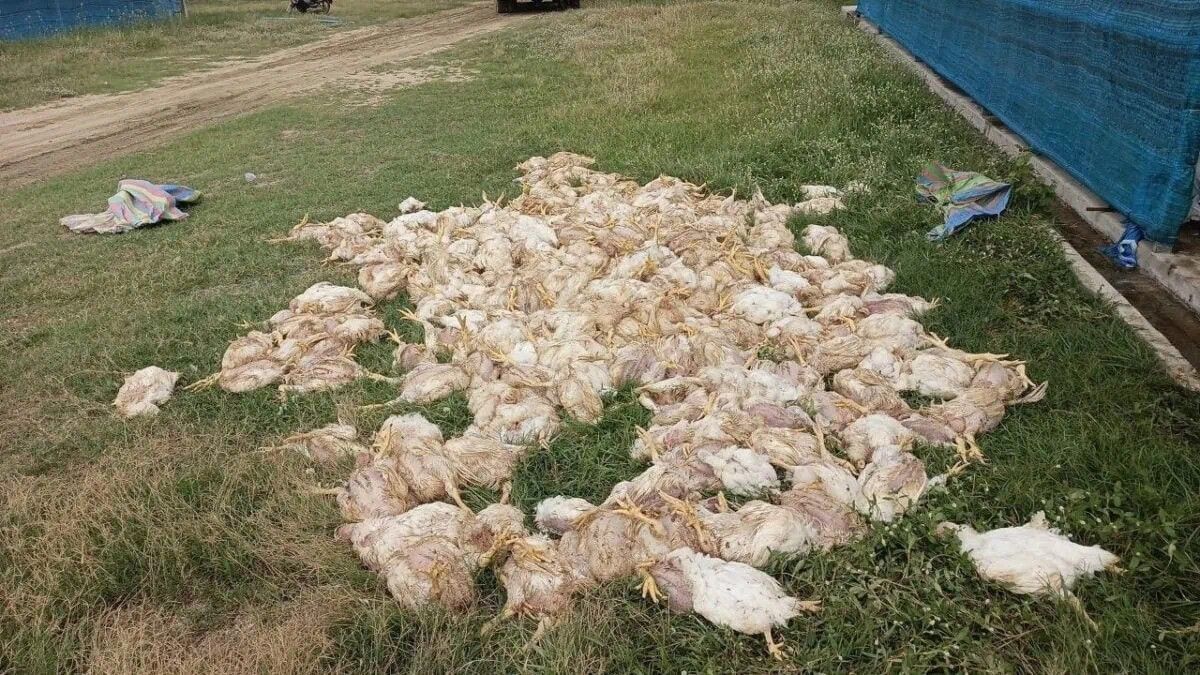
Cambodia's Ministry of Environment has moved to penalise the operators of a battery and metal recycling facility in Kampong Speu province following a destructive fire on July 29 that claimed the lives of around 2,000 chickens and exposed significant lapses in industrial safety oversight. The incident has become a case study in how inadequate environmental safeguards can pose tangible dangers to livestock and nearby communities, with authorities now demanding financial penalties and mandatory relocation of the offending business.
The fire erupted at the Tuol Sambour village site in Damnak Raing commune, Samaki Mony Chey district, originating from what officials identified as the careless storage of lithium batteries stored without adherence to environmental safety protocols. The subsequent explosions and conflagration released substantial quantities of toxic smoke and pollutants that spread rapidly across the densely populated locality. By the evening of July 30, more than 24 hours after the initial blaze, the facility continued belching thick smoke into the atmosphere, with discarded batteries still igniting sporadically and preventing emergency personnel and environmental investigators from safely accessing the storage areas where accumulated battery waste lay stacked.
The proximity of the industrial operation to residential and agricultural zones amplified the disaster's severity. Residential buildings stood just 50 metres from the recycling plant, while an adjacent poultry farm containing as many as 20,000 chickens absorbed the full force of the toxic emissions. The casualty toll reached approximately 2,000 birds, representing a significant economic loss to the farm operator and demonstrating the cascading consequences of unregulated industrial activity in areas with insufficient buffer zones separating factories from civilian infrastructure.
Measurements taken by the inspection team detected dangerously elevated levels of air pollution across the affected region. Authorities initiated comprehensive environmental sampling and laboratory analysis to identify specific hazardous substances released during the combustion process. The ongoing monitoring efforts reflect official concern about residual contamination and the potential for prolonged exposure risks to the surrounding population, particularly given the persistent emissions observable days after the incident commenced.
Public health authorities issued urgent guidance recommending that residents wear protective respiratory equipment when traveling through smoke-affected zones. Residents were also counselled to shield food supplies and water reservoirs from contamination by airborne particulates and chemical residues. The ministry specifically highlighted vulnerability among children, elderly individuals, and persons suffering from pre-existing respiratory conditions, urging these groups to exercise heightened caution and seek immediate medical evaluation should symptoms of smoke exposure emerge.
The regulatory violations underlying this incident reveal systemic failures in the approval and oversight mechanisms governing hazardous waste operations. The Ministry of Industry, Science, Technology and Innovation had granted initial facility approval in December of the previous year, permitting a one-month trial operation designed to test the company's capacity to acquire and process used batteries for valuable metal recovery. Nonetheless, investigators discovered that the operator had commenced full-scale activity without completing a mandatory Environmental Impact Assessment and without securing the requisite authorisations for collecting, storing, and recycling hazardous battery waste.
Environmental authorities determined that the facility had contravened multiple sections of the Environment and Natural Resources Code. Violations encompassed the absence of an environmental impact assessment, unauthorised collection and storage of hazardous battery materials, illicit recycling operations, and environmental pollution resulting in documented harm to third parties. These breaches suggest inadequate inter-ministerial communication and oversight, allowing a potentially dangerous industrial operation to escalate beyond trial status without proper environmental clearance mechanisms being triggered or enforced.
The Ministry of Environment's enforcement response included not only financial penalties and compensation obligations for environmental degradation but also a mandatory order requiring the company to discontinue operations at the current site and relocate elsewhere. This remedial action addresses both the immediate hazard and the underlying problem of inappropriate industrial siting—a challenge increasingly familiar across Southeast Asia, where rapid industrial expansion frequently occurs in proximity to civilian populations lacking political influence to demand safer separation distances.
This incident carries broader implications for Cambodia's industrial development trajectory and the region's capacity to manage the mounting hazards associated with battery recycling. As electric vehicle adoption accelerates throughout Southeast Asia, including Cambodia, the volume of spent batteries requiring safe disposal will expand dramatically. The Tuol Sambour fire underscores the necessity for governments to establish robust regulatory frameworks before recycling infrastructure proliferates, ensuring that health and environmental safeguards are embedded from inception rather than imposed reactively following catastrophic failures.
The episode also highlights a critical gap between approving agencies and enforcement bodies. The Ministry of Industry granted the facility's operational permit without establishing verification mechanisms to ensure compliance with environmental standards, while regulatory responsibility fragmented across multiple ministries created ambiguity regarding accountability. Malaysian regulatory bodies and other Southeast Asian governments can observe this cautionary example as they contemplate how to structure waste management governance for emerging industrial sectors, particularly those involving hazardous materials with significant toxic potential.

