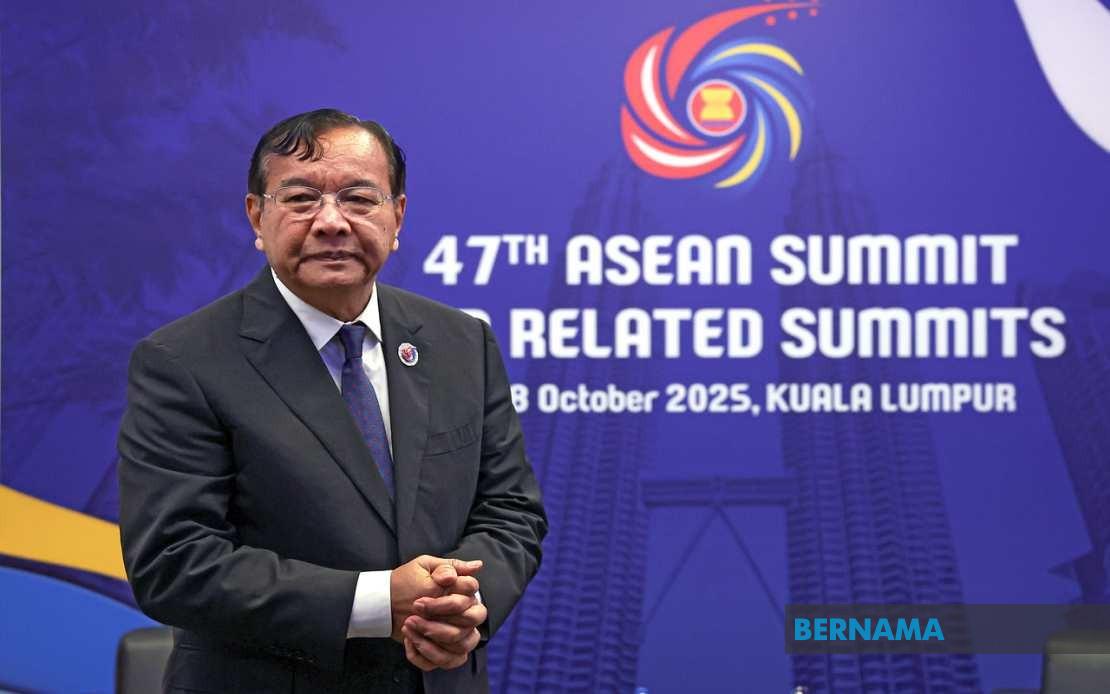
Cambodian Deputy Prime Minister and Minister of Foreign Affairs and International Cooperation Prak Sokhonn has arrived in Malaysia for a two-day official visit aimed at revitalising bilateral ties between the two Southeast Asian neighbours. The high-level visit, which commenced in early August, signals a significant turning point in Malaysia-Cambodia relations, with the highlight being the co-chaired resumption of the Malaysia-Cambodia Joint Commission for Bilateral Cooperation (JCBC), a mechanism that has remained dormant for two decades.
During his stay in Kuala Lumpur, Prak Sokhonn will meet with Prime Minister Datuk Seri Anwar Ibrahim to reaffirm the longstanding partnership between both nations and discuss matters of mutual strategic interest. The formal bilateral engagement reflects both governments' commitment to strengthening cooperation across multiple sectors. This courtesy call carries symbolic weight, positioning the visit as an opportunity for top-level political engagement rather than a purely administrative exercise.
The centrepiece of Prak Sokhonn's visit will be his co-chairing of the third JCBC meeting alongside Malaysia's Foreign Minister Datuk Seri Mohamad Hasan. The convening of this mechanism is particularly significant given that the second meeting was held in Siem Reap in 2006, representing a gap of nearly two decades in formal bilateral dialogue structures. The resumption indicates a deliberate effort by both capitals to institutionalise their engagement and create structured channels for addressing bilateral issues.
This diplomatic renewal gains added prominence as Malaysia and Cambodia approach the 70th anniversary of their diplomatic relations in 2027. The timing of Prak Sokhonn's visit allows both countries to prepare for what will be a milestone celebration, setting a foundation of renewed cooperation that can carry through the anniversary year and beyond. The forward-looking nature of this engagement suggests that both governments view the commemoration as an opportunity to reset and deepen their relationship.
Economically, Malaysia-Cambodia ties have demonstrated considerable dynamism. The bilateral trade relationship experienced robust growth in 2025, with total trade surging 27.4 per cent year-on-year to reach RM5 billion, equivalent to approximately US$1.17 billion. This expansion reflects growing commercial linkages, with Malaysian exports to Cambodia accounting for RM4.13 billion (US$970 million) of the total, while imports from Cambodia contributed RM880 million (US$200 million). Such trade momentum provides a strong foundation for the political dialogue taking place during this visit.
Beyond trade figures, Malaysia's investment footprint in Cambodia underscores the depth of bilateral economic engagement. As of 2024, Malaysia's cumulative foreign direct investment in Cambodia reached US$3.20 billion across 162 registered projects, positioning Malaysia as the third-largest foreign investor in the Kingdom. This substantial capital deployment indicates Malaysian business confidence in Cambodia's economic prospects and demonstrates the practical benefits both economies derive from their partnership.
The JCBC's resumption carries implications for the broader Southeast Asian region. As both nations are members of the Association of Southeast Asian Nations (ASEAN), strengthened Malaysia-Cambodia cooperation contributes to regional stability and cohesion. The mechanism allows the two countries to address bilateral issues that might otherwise create friction within the regional framework, thereby supporting ASEAN's goal of maintaining unity and dialogue among member states.
The Agreed Minutes expected to be signed at the conclusion of the third JCBC meeting will serve as a roadmap for future cooperation. These formal documents typically outline specific action items, sectoral priorities, and timelines for implementation, converting high-level political will into concrete programmes. The formality of this outcome demonstrates that the resumption of the JCBC is not merely ceremonial but intended to generate substantive results across multiple domains.
For Malaysian readers and businesses, the renewed bilateral mechanism opens opportunities in key sectors. Cambodia's ongoing economic development, combined with its strategic location in the Mekong region, makes it an attractive destination for Malaysian investors seeking to diversify beyond traditional markets. The formal structures now in place through the JCBC can facilitate smoother investment flows, technology transfer, and joint ventures.
The visit also reflects Cambodia's diplomatic positioning in Southeast Asia. By hosting high-level engagement from Malaysia and formalising institutional frameworks, Cambodia signals its commitment to managing relationships with key regional partners. This approach supports Cambodia's broader objective of leveraging its geographic position to maintain strong ties with multiple regional actors while pursuing its own developmental agenda.
From Malaysia's perspective, the engagement demonstrates the government's commitment to maintaining robust relationships across Southeast Asia. In a region characterised by complex geopolitical dynamics, maintaining strong bilateral ties with Cambodia helps Malaysia preserve influence and advance shared interests, whether in trade, security, or ASEAN affairs. The visit underscores Malaysia's pivot toward deepening regional partnerships at a time when external powers are increasingly active in Southeast Asian affairs.
Looking ahead, the resumption of the JCBC provides both countries with a framework to address emerging challenges and capitalise on opportunities. Whether tackling transnational issues, facilitating people-to-people exchanges, or coordinating on ASEAN matters, the mechanism offers a valuable tool for regular dialogue. The 20-year gap makes this resumption particularly noteworthy, as it represents not merely a continuation of previous arrangements but a deliberate recommitment to structured bilateral engagement in the contemporary context.

