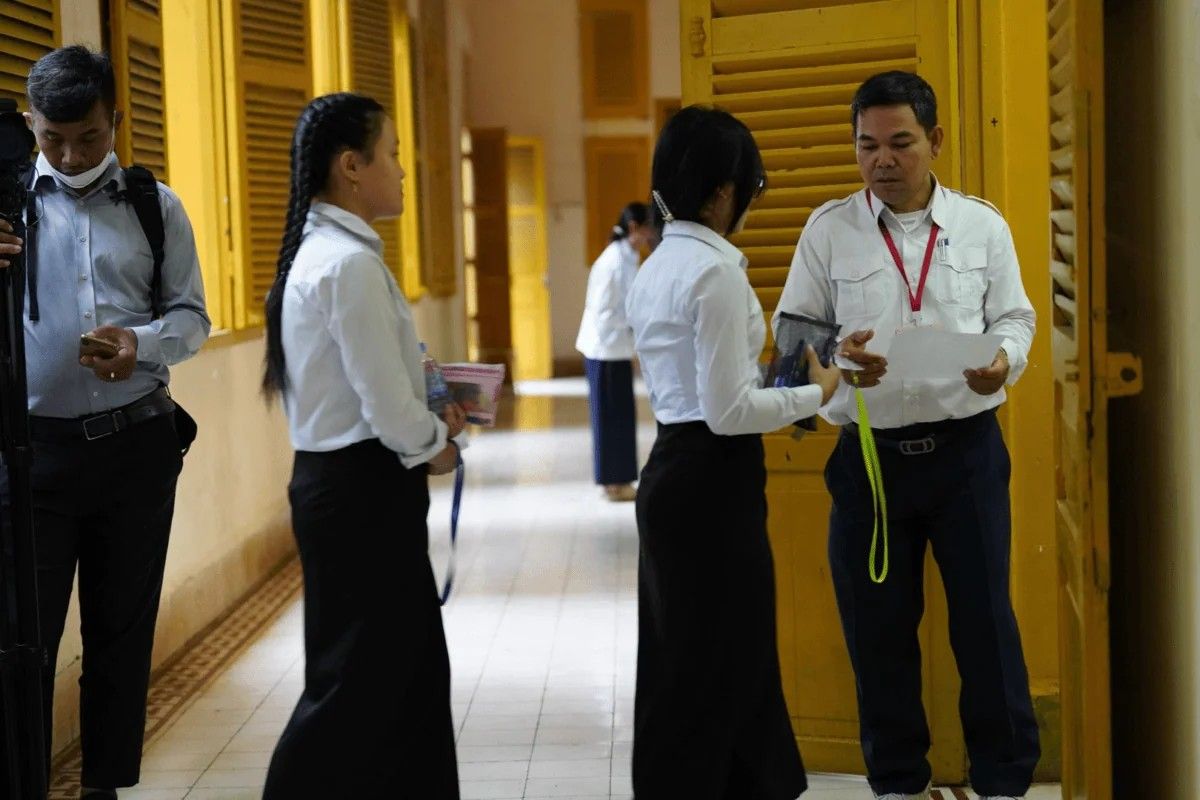
Cambodia's high school graduation examinations commenced on August 10, marking the start of a crucial testing period for the Kingdom's students. Education Minister Hang Chuon Naron opened the ceremony in Phnom Penh, extending his wishes for success to the more than 150,000 candidates preparing to sit the finals across examination centres nationwide. Yet the occasion was shadowed by an ongoing diplomatic and humanitarian challenge: twenty-five schools in border provinces remain off-limits to students and staff, effectively occupied by Thai military forces following armed clashes that erupted between the two nations last year.
The examination intake reflects a substantial portion of Cambodia's school population, with candidates distributed across two main academic streams. The science track will see over 37,000 participants, whilst the social science stream encompasses more than 130,000 students. These figures underscore the scale of Cambodia's education system and the importance of these finals in determining academic pathways for thousands of young people seeking entry into higher education institutions. The geographical spread of examination centres across the Kingdom ensures accessibility, though this logistical achievement is undermined by the reality that students from occupied border regions cannot return to their own schools.
The timing of this year's examinations stands in stark contrast to last year's ordeal. The 2025 finals took place on August 28, occurring precisely one month after the first armed confrontations erupted along the Cambodia-Thailand border. That proximity to conflict created extraordinary hardship for students in affected regions. Minister Hang Chuon Naron drew attention to the resilience displayed by these young people, recounting the story of one student who was forced to continue studying from tractors as families evacuated their homes fleeing the attacks. Despite such adverse circumstances, this student achieved top grades and successfully gained admission to a quality higher education institution, exemplifying the determination of Cambodia's youth even amid crisis.
The border occupation has created an educational vacuum that persists into this examination season. The 25 shuttered schools are concentrated in frontier provinces, where Thai military presence prevents normal operations and access. This situation has forced the Cambodian government into difficult compromises regarding displaced student populations. Currently, only learners from Banteay Mean Rith Lower Secondary School in Oddar Meanchey province have been granted alternative arrangements, attending classes in temporary camps established away from their traditional classrooms. Minister Hang Chuon Naron emphasized that the Royal Government continues demanding full Thai withdrawal and the restoration of students' rights to their original school buildings and learning environments.
The education disruption carries broader implications for Cambodia's development and stability. When students cannot access their schools for extended periods, educational continuity fractures, creating gaps in learning that are difficult to recover. The situation affects not only immediate examination performance but also the foundational knowledge required for higher education success. For Southeast Asia, where education is viewed as critical infrastructure for national development, such prolonged interruptions represent a concerning precedent. The fact that military occupation directly impacts civilian education systems underscores how border tensions extend beyond security matters into social and economic spheres.
Authenticity and integrity of the examination process have emerged as priorities following security lapses during last year's finals. Mathematics examination papers were reportedly leaked during the 2025 testing period, raising concerns about fairness and the validity of results. To prevent recurrence, authorities have implemented enhanced oversight mechanisms. The Anti-Corruption Unit has deployed more than 4,000 observers positioned across examination centres, matching the deployment strength from the previous year. These observers serve dual purposes: detecting irregularities and reassuring candidates, educators, and parents that the assessment process maintains rigorous standards despite external pressures and challenges.
Minister Hang Chuon Naron attributed the improved examination environment this year partly to thorough organisational preparation and strict enforcement protocols. Beyond observer deployment, the ministry has implemented procedural improvements designed to close vulnerabilities that enabled the mathematics paper leak. This multi-layered approach reflects lessons learned and demonstrates institutional adaptation. However, the observer presence also symbolises deeper concerns about examination integrity in a nation where corruption has historically plagued various sectors. The participation of stakeholders representing diverse interests—government bodies, civil society organisations, and international observers—creates a system of mutual accountability that theoretically discourages misconduct.
For Malaysian readers, Cambodia's experience illuminates vulnerabilities that exist across the region whenever national crises intersect with essential services. Malaysia, with its own multiethnic composition and historical border sensitivities, might recognise parallels in how education systems can become collateral damage in geopolitical tensions. The displacement of students and interruption of schooling represent humanitarian concerns that transcend national boundaries, particularly in Southeast Asia where mobility and cross-border education linkages are becoming increasingly common. Cambodia's situation also highlights the importance of regional mechanisms for protecting civilians during conflicts, a matter of direct relevance to ASEAN's broader stability agenda.
The examination season proceeding amid such circumstances reflects Cambodia's determination to maintain educational functionality despite external disruptions. Students arriving at examination centres across the Kingdom represent not only individual ambitions but also national commitment to normalcy and development. Yet the persistent absence of 25 schools serves as a daily reminder of unresolved tensions with Thailand and the civilian costs of protracted border disputes. The Royal Government's continued demands for restoration of these schools and student access underline that this is not merely an educational matter but also a sovereignty and territorial issue. How Cambodia navigates the coming weeks—completing the examination process fairly whilst maintaining pressure for resolution—will test both institutional capacity and political resolve.
Looking ahead, the examination results will likely reflect the broader dichotomy characterising Cambodian education this year: progress and resilience coexisting with disruption and displacement. The 150,000 candidates participating represent Cambodia's future workforce and leadership. Whether they can succeed academically whilst their peers in border provinces struggle without proper facilities remains an open question that extends beyond examination scores into questions about regional stability, humanitarian protection, and the price paid by younger generations when diplomatic solutions remain elusive. For Southeast Asia more broadly, Cambodia's examination season serves as a sobering reminder that education systems are fragile during conflict and that peaceful resolution of border disputes is essential not only for security but for enabling youth to fulfil their educational potential.

