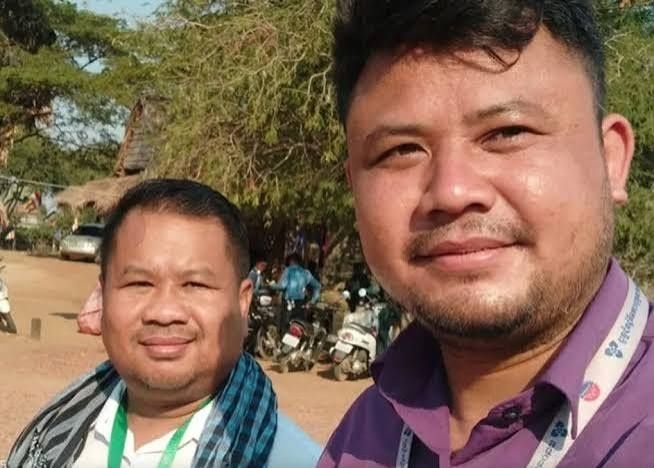
Cambodia's highest court was poised to deliver a verdict on Thursday, June 25, regarding the treason appeal of two journalists whose convictions have intensified international scrutiny of the country's commitment to press freedom and judicial independence. Phorn Sopheap of Battambang Post TV Online and Pheap Pheara of TSP 68 TV Online were arrested in July last year and subsequently sentenced to 14 years imprisonment for posting photographs taken in a restricted military zone near the Thai border. The case centres on their decision to share images on Facebook following reporting trips to areas affected by the two nations' border skirmishes, though both men maintain they possessed authorisation to access the location where they captured their photographs.
The substance of their prosecution rests on accusations that the journalists supplied information prejudicial to national defence to a foreign state—a charge they dispute. When the Siem Reap Provincial Court convicted them in December, it determined their actions constituted treason under Cambodian law. A lower appellate court upheld the convictions in March, leaving the Supreme Court as the final arbiter of whether the verdicts should stand or be reversed. The appeal process has drawn intensive scrutiny from press freedom advocates who view the case as emblematic of Cambodia's deteriorating media landscape and the weaponisation of national security legislation against legitimate journalistic activity.
One of the photographs proved particularly consequential for regional politics. The image, which documented anti-personnel mines positioned along the border, gained widespread circulation through Thai news organisations and became pivotal evidence supporting Thailand's assertion that Cambodia had deployed new mines that subsequently injured Thai military personnel on patrol duties. Cambodia's government categorically rejected these allegations, maintaining adherence to international treaties prohibiting mine deployment and proposing instead that any explosives discovered were remnants of warfare extending back to the late 1990s. The competing claims around this single photograph illustrate how journalism in sensitive geopolitical zones can become entangled with state narratives and nationalist interests, complicating the distinction between legitimate security concerns and press suppression.
The border tensions themselves constitute a significant regional backdrop to this case. Throughout July and December of the previous year, Cambodia and Thailand experienced a series of military confrontations that displaced hundreds of thousands of civilians and resulted in approximately 100 deaths among both military and civilian populations. A ceasefire established in December has largely held, though underlying tensions persist and the humanitarian toll remains considerable. By prosecuting the journalists for documentation of these conflicts, the Cambodian government effectively restricted external visibility into the nature and scope of military activities during a period when independent information was arguably most valuable to international understanding of events.
The timing of the Supreme Court decision carries particular weight given concurrent developments in Cambodia's judicial system. Less than one week before the journalists' hearing, the same court upheld the incitement conviction of Rong Chhun, a 56-year-old opposition politician whose case follows a strikingly similar pattern. Rong Chhun was found guilty of inciting social unrest after engaging with villagers affected by government development projects, a conviction widely interpreted as part of a broader governmental campaign to neutralise political criticism and restrict civic participation. Human Rights Watch characterised the Rong Chhun decision as demonstrating the Cambodia judiciary's lack of independence from the ruling party, though the Cambodian government disputed this assessment and reiterated claims that the Supreme Court operates with full independence from political influence.
Understanding Cambodia's current political trajectory requires examining the recent transition in leadership. For nearly four decades, Hun Sen operated as Prime Minister and established a governance model characterised by suppression of dissent, restricted freedom of expression and association, and documented human rights violations. Hun Manet, his American-educated son, assumed office in August 2023, raising initial hopes among international observers that political reforms and liberalisation might follow. However, the subsequent months have demonstrated minimal substantive change in state practice toward critics and independent media, suggesting that institutional constraints and political cultures established under the previous regime continue to shape contemporary governance.
The Committee to Protect Journalists, based in New York, identified earlier this year a systematic pattern whereby Cambodian authorities employ ambiguously worded national security statutes to criminalise routine journalistic reporting. The cases of Pheap Pheara and Phorn Sopheap exemplify this dynamic, wherein undefined terminology around national defence and foreign state information provision becomes a prosecutorial instrument against reporters engaged in documentation of public events. This approach creates a chilling effect on journalism by rendering journalists' core professional responsibilities—gathering and disseminating information—inherently risky under interpretations of broadly drafted legislation.
Cambodia's international press freedom standing reflects these systemic challenges. The 2025 Reporters Without Borders World Press Freedom Index, compiled by the Paris-based organisation, ranked Cambodia at position 161 out of 180 countries and territories surveyed. This placement situates the country among nations considered to present "very serious" threats to press freedom, a categorisation that encompasses some of the world's most restrictive information environments. For Malaysian and Southeast Asian observers, Cambodia's trajectory raises important questions about how authoritarian governance models can persist and even strengthen following leadership transitions when underlying institutional structures remain unaltered.
The Supreme Court's forthcoming decision will provide meaningful indication of whether the Hun Manet administration intends to diverge from its predecessor's approach toward media freedom and judicial independence. An affirmation of the treason convictions would reinforce international perceptions that Cambodia's courts operate principally as instruments of state policy rather than as independent arbiters applying law impartially. Conversely, an overturning of the convictions could signal genuine commitments to institutional reform, though sceptics would likely note that a single decision cannot overcome years of accumulated credibility deficits. For regional and international observers, the ruling represents a consequential indicator of whether Cambodia's new leadership genuinely intends substantive political change or merely cosmetic adjustments to inherited authoritarian structures.

