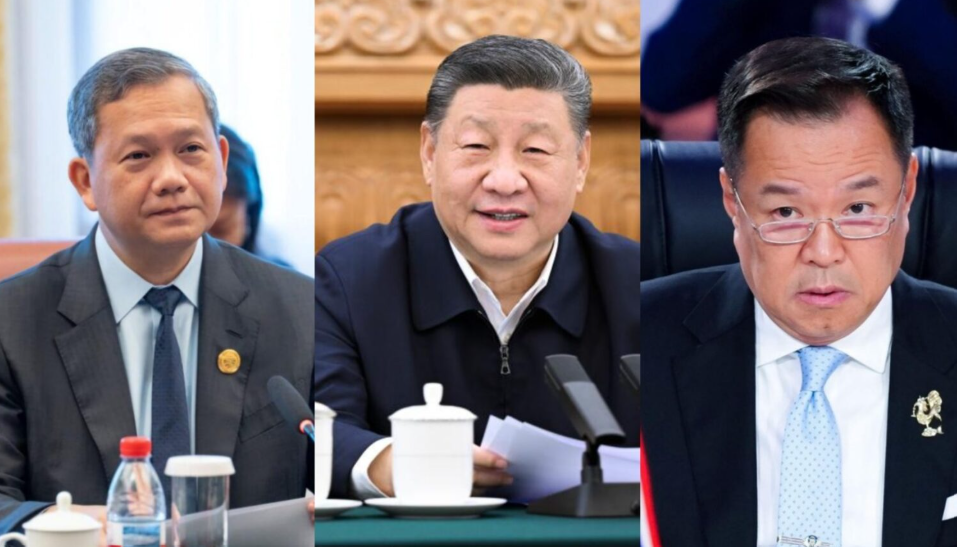
Cambodia and Thailand's prime ministers are heading to Shanghai next month for what could be a pivotal moment in their fractured diplomatic relationship. Hun Manet and Anutin Chanvirakul have both confirmed attendance at the World AI Conference 2026 scheduled for July 17, where they will meet with Chinese President Xi Jinping and Premier Li Qiang. The high-level gathering presents a rare opportunity for Beijing to exercise its considerable economic and political leverage over both Southeast Asian neighbours, yet uncertainty remains about whether China intends to push substantive border negotiations or simply stage symbolic photo opportunities.
The Cambodian delegation arriving July 15-17 will be substantial and carefully composed, reflecting Phnom Penh's strategic approach to the visit. Foreign Minister Prak Sokhonn and Defence Minister Tea Seiha will accompany the prime minister, signalling that military and diplomatic dimensions of the dispute remain prioritised. The inclusion of Sun Chanthol, first vice-chairman of the Council for the Development of Cambodia, underscores the development cooperation angle that Beijing increasingly emphasises in its regional partnerships. Thailand's representation, led by Anutin with Foreign Minister Sihasak Phuangketkeow in tow, appears similarly designed to balance commercial interests with security concerns.
The timing of this summit is loaded with meaning. Hun Manet and Anutin last met at the Asean Future Forum in Hanoi during early June, where they exchanged handshakes before cameras but conducted no meaningful discussions about their territorial dispute. That choreographed encounter illustrated the hollow nature of recent bilateral encounters—diplomatic theatre without substantive engagement. Seven months have elapsed since the two countries last sat at the negotiating table in December, making the Shanghai gathering potentially significant as either a reset point or another missed opportunity.
At the heart of this standoff lies territory that Cambodia claims is occupied by Thai military forces. Approximately 20,000 Cambodian civilians remain displaced from their homes, unable to return to areas Thailand controls. This is not a minor boundary demarcation issue but a humanitarian crisis affecting thousands of families. The dispute defies simple resolution partly because it implicates military-controlled decision-making in Thailand, complicating efforts by civilian authorities to implement agreements they may have reached with Cambodian counterparts.
China's potential role as mediator carries substantial weight given its position as a dominant trading partner for both nations and its historical relationship with Cambodia as an ally. Analysts have suggested that Beijing possesses sufficient economic leverage to incentivise both capitals toward a settlement. However, whether China will explicitly deploy that influence remains unclear. The Shanghai visit ostensibly centres on artificial intelligence cooperation and broader strategic partnership declarations—safer ground than direct mediation of contentious bilateral issues.
Kin Phea, director of the International Relations Institute at Cambodia's Royal Academy, has identified a fundamental obstacle that transcends simple negotiation: the actual holders of power in Thailand. The Thai military, he argues, operates with significant autonomy from civilian oversight, allowing senior commanders to encroach on Cambodian territory regardless of agreements their government signs. This structural challenge means that even if Anutin commits to withdrawals and resumed talks, implementation depends on military leadership willing to comply—a far less certain proposition.
Phea advocates for China to assume a more assertive mediating posture, leveraging the December 2025 Fuxian Consensus that both nations previously endorsed. That agreement established principles for peaceful resolution through diplomatic channels and international law, yet remains unfulfilled. He contends that China should insist Thailand respect this consensus by withdrawing troops from occupied areas and returning to the Joint Boundary Commission negotiation process without delay.
The Fuxian Consensus itself represents an earlier moment when China attempted to forge consensus between its neighbours, brokering an agreement that promised progress. Its subsequent stalling demonstrates that Chinese diplomatic efforts, while sometimes effective, cannot unilaterally override internal resistance within either nation. Bangkok's military leadership may calculate that its strategic position depends on maintaining territorial leverage rather than ceding ground to secure peace.
For Malaysia and other Southeast Asian states, this situation carries implications for regional stability and the credibility of multilateral frameworks. A Cambodia-Thailand conflict perpetuates instability along a border that affects broader regional movements, trade flows, and security arrangements. The Asean framework has proven limited in addressing the dispute, partly because both nations remain members with equal standing, limiting institutional capacity to compel resolution.
China's approach during the Shanghai conference will signal its priorities in managing intra-regional conflicts among its key Southeast Asian partners. Will Beijing emphasise AI cooperation and grand partnership rhetoric while sidelining hard border questions? Or will Xi's meetings with both leaders include frank discussions about returning to serious negotiations? The distinction matters enormously for displaced Cambodians and for future confidence in international mediation efforts across the region.
The success or failure of the Shanghai gathering will likely be measured not by immediate announcements but by whether meaningful dialogue resumes in subsequent months. Chinese pressure, if applied, could tip the balance toward negotiated settlement. Conversely, if the visit proceeds as diplomatic ritual without serious mediation, the displacement crisis may persist indefinitely, another festering wound in Southeast Asia's political landscape.

