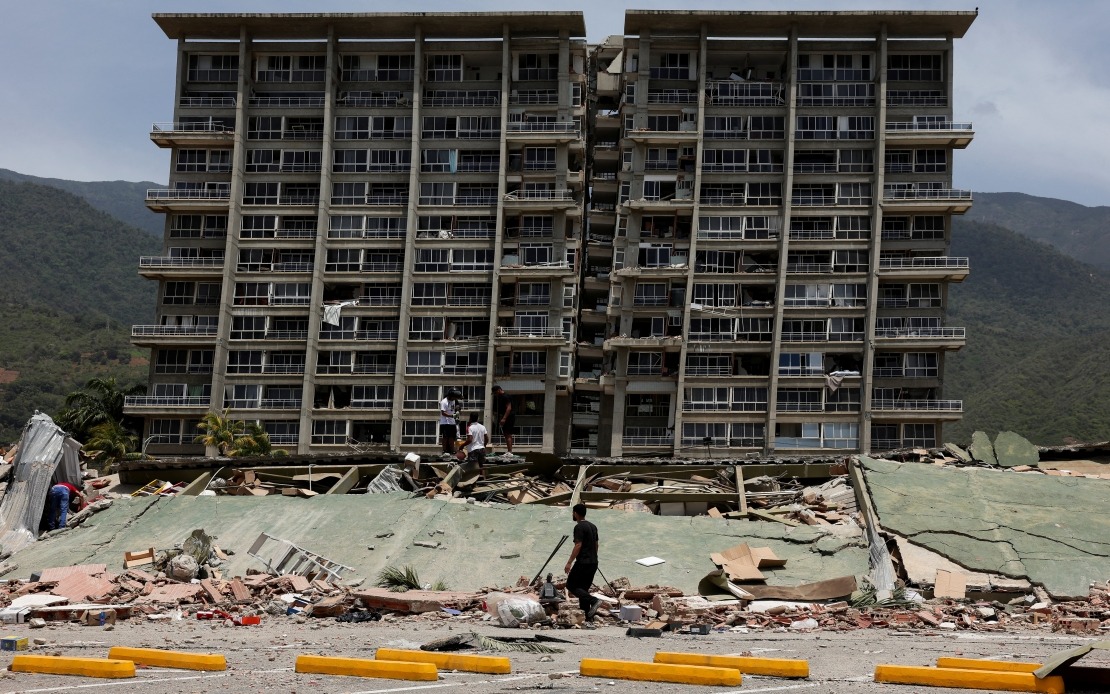
Canada has announced a fresh commitment of US$5 million in humanitarian assistance to address the humanitarian crisis unfolding in Venezuela following a series of devastating earthquakes. The Canadian Foreign Ministry made the announcement through Geneva, emphasizing the urgent need for coordinated international support as rescue and recovery efforts intensify across the affected regions. Foreign Minister Anita Anand characterised the scale of destruction as heartbreaking, noting that families throughout Venezuela have lost loved ones while entire communities have been fractured by the natural disaster.
The full extent of damage and casualties from the earthquakes remains unclear as rescue teams continue their search efforts and damage assessments proceed in remote and hard-to-reach areas. Preliminary assessments indicate that the tremors have triggered widespread infrastructure damage, with collapsed buildings and severely compromised supply chains hampering immediate relief operations. Officials warn that the eventual toll could prove far more severe than current estimates suggest, with potentially hundreds of thousands of people facing acute humanitarian needs in the coming weeks and months.
This additional Canadian funding arrives as part of a broader international humanitarian response framework and complements US$4.5 million in assistance that Canada had already allocated to Venezuela earlier in 2024. The cumulative investment underscores Ottawa's commitment to supporting vulnerable populations in the Latin American nation, where political instability and economic hardship have already strained existing social infrastructure and public service capacity. By channelling resources through established humanitarian partners with proven operational expertise, Canada aims to ensure that aid reaches populations most critically affected by the disaster.
The newly announced funds will be directed toward multipronged emergency interventions addressing the most pressing survival needs. Humanitarian organisations operating on the ground will utilise the resources to establish food distribution networks, ensuring that displaced populations and those trapped in affected areas receive adequate nutrition. Water purification and sanitation infrastructure represents another critical priority, as earthquake damage frequently disrupts municipal water systems and creates unsanitary conditions that breed disease outbreaks. Medical and health services will also receive support, enabling emergency clinics and field hospitals to treat crush injuries, trauma cases, and secondary health complications emerging in post-disaster environments.
Beyond these immediate life-sustaining functions, the funding will support protection services designed to safeguard vulnerable populations including children, women, and elderly persons who face heightened exploitation risks during humanitarian emergencies. Logistics coordination represents a less visible but equally vital component, as effective aid delivery demands robust supply chain management, warehouse operations, and transportation networks capable of navigating damaged road infrastructure and security challenges. Canadian officials emphasise that these logistics functions often determine whether humanitarian assistance reaches beneficiaries or remains bottlenecked in supply depots.
For Malaysia and Southeast Asian observers, Venezuela's earthquake response illustrates the devastating humanitarian consequences that seismically active regions face when combined with pre-existing governance challenges and economic constraints. Several Southeast Asian nations, particularly Indonesia, the Philippines, and Myanmar, share similar vulnerability profiles characterised by high earthquake risk, complex disaster management infrastructure, and populations with limited adaptive capacity. The Venezuelan case study demonstrates how international coordination and rapid financial mobilisation can supplement domestic response capabilities, a model that holds relevance for regional disaster preparedness planning.
Canadian officials remain actively engaged with regional partners and international humanitarian organisations as the situation evolves, with commitment to provide updated details regarding fund allocation priorities within days. This ongoing monitoring reflects recognition that humanitarian needs shift dynamically during post-disaster periods, requiring flexibility and adaptive management approaches. Early coordination with local organisations and authorities helps ensure that external assistance complements rather than duplicates or undermines local response efforts.
The Venezuelan humanitarian challenge also highlights how natural disasters intersect with broader geopolitical and economic factors to amplify suffering. Venezuela's existing humanitarian crisis, rooted in economic collapse and political dysfunction, means that earthquake victims return to devastated communities already lacking functional healthcare systems, adequate food security, and reliable infrastructure. This compounding vulnerability pattern renders international assistance particularly critical, as local coping mechanisms have already been severely eroded by years of systemic instability.
Canada's dual-track approach—combining emergency earthquake response with longer-term Venezuela support initiated earlier in 2024—reflects sophisticated understanding that humanitarian crises rarely resolve through single infusions of funding. Sustained engagement and predictable assistance patterns enable organisations to transition from emergency response toward recovery and reconstruction phases, establishing foundations for community resilience. This strategic timeframe also aligns with international best practices emphasising that effective disaster response requires commitments extending well beyond initial acute phases.

