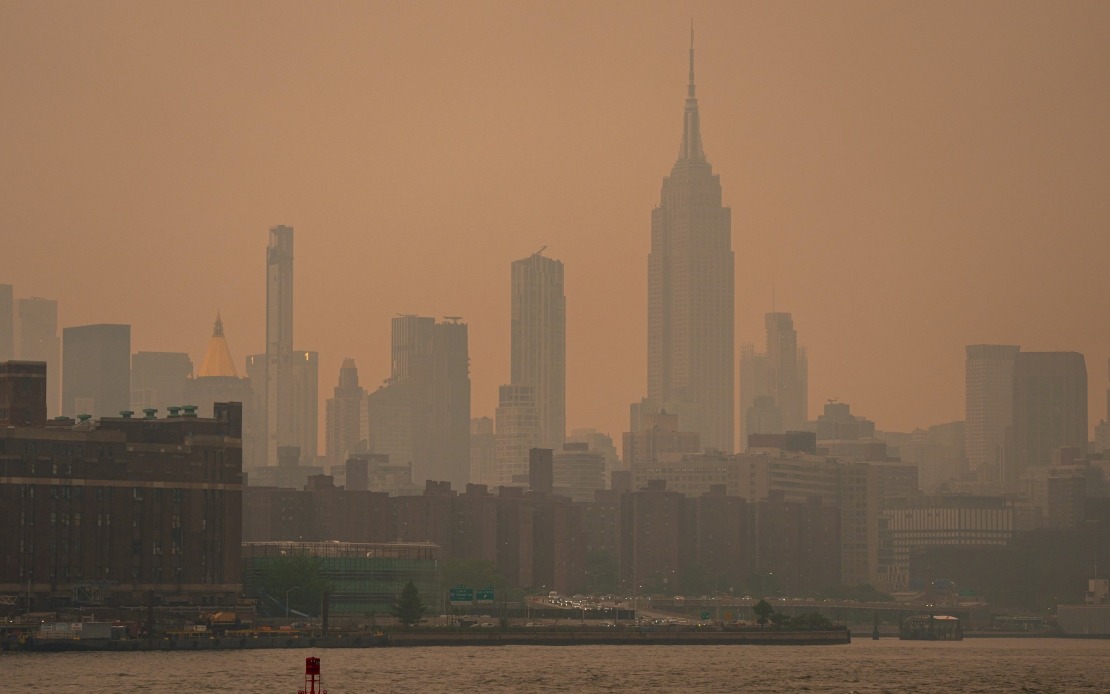
Mexican President Claudia Sheinbaum encountered significant travel disruptions this past weekend while attempting to reach New York for the Argentina-Spain World Cup final, with smoke blanketing the region from active wildfires across the Canadian border forcing authorities to cancel her initial commercial flight. The poor air quality and atmospheric conditions transformed what should have been routine diplomatic travel into a logistical challenge, highlighting how transnational environmental crises can affect even the highest-level government operations across North America.
Sheinbaum's original itinerary called for her to depart Cancún on Saturday aboard a commercial aircraft headed to New York, but the flight faced an initial two-hour delay as ground teams assessed the deteriorating air quality caused by smoke drifting south from wildfires burning in Canada. Rather than wait for conditions to improve, Mexican government officials ultimately decided to cancel the Saturday departure entirely, recognizing that the atmospheric conditions posed unacceptable risks for the journey.
Instead of abandoning her plans to attend the match, Sheinbaum adapted by utilizing Mexico's Defence Ministry aircraft to undertake the trip overnight on Sunday, allowing her to reach New York despite the environmental challenges. This alternative routing and timing adjustment ensured she would not miss what represented a significant diplomatic occasion, particularly given the multilateral nature of the event.
The invitation itself carried notable symbolism. United States President Donald Trump had extended a personal invitation to Sheinbaum to join him at the final in East Rutherford, New Jersey, transforming what might have been a routine sporting attendance into a formal diplomatic engagement. The gesture represented an attempt at warming relations between two neighbouring countries whose ties have been strained by ongoing disagreements spanning trade negotiations and cross-border security concerns.
Sheinbaum's attendance alongside Trump and Canadian Prime Minister Mark Carney underscored the tripartite nature of the World Cup hosting arrangement, with all three North American nations jointly organizing the tournament. The presence of all three leaders in one stadium, despite the geopolitical tensions that periodically surface, provided a rare opportunity for high-level coordination among the continental partners.
The relationship between Mexico and the United States remains complicated by unresolved disputes. Trade tensions have periodically flared, while security matters—ranging from drug trafficking to border enforcement—continue to generate friction between the neighbouring administrations. Against this backdrop, the World Cup tournament offers a neutral venue for leaders to interact constructively.
Prior to this weekend's gathering, Sheinbaum and Trump had shared only limited direct contact. Their previous encounter took place during the World Cup draw ceremony in Washington last December, meaning the New Jersey match represented only their second substantial in-person meeting since Sheinbaum assumed office. The relatively sparse diplomatic calendar between the two leaders made Trump's personal invitation noteworthy, suggesting a deliberate effort to strengthen working relationships through the sporting event.
The incident also illustrates a broader reality facing North America: transboundary environmental challenges do not respect borders or diplomatic protocols. The wildfires in Canada, whether driven by climate factors or other causes, created immediate practical consequences for government operations across the continent, affecting presidential travel schedules and air quality in major metropolitan areas hundreds of kilometres away. Such events underscore the interconnected nature of environmental management across the region and the unpredictability that increasingly characterizes weather patterns.
For Malaysia and other Southeast Asian nations observing North American affairs, the episode offers insight into how even wealthy, developed countries must adapt when confronted with environmental disruptions. The region's own experiences with transboundary haze and wildfire smoke—particularly during El Niño years affecting Indonesia and other neighbours—demonstrate a shared vulnerability to such atmospheric phenomena. The Mexican government's pragmatic response, pivoting to alternative aircraft and timing rather than cancelling entirely, mirrors the flexible approaches governments across Asia have adopted when managing similar crises.
The World Cup final itself carried significance beyond sport, functioning as a rare opportunity for continental leaders to interact in a setting divorced from the contentious bilateral issues that ordinarily dominate their agendas. Sheinbaum's determination to attend despite the travel complications reflected the diplomatic weight both Mexico and the broader North American partnership placed on the event. The presence of leaders from all three host nations signalled unity around the tournament while acknowledging the complex realities underlying contemporary North American relations.

