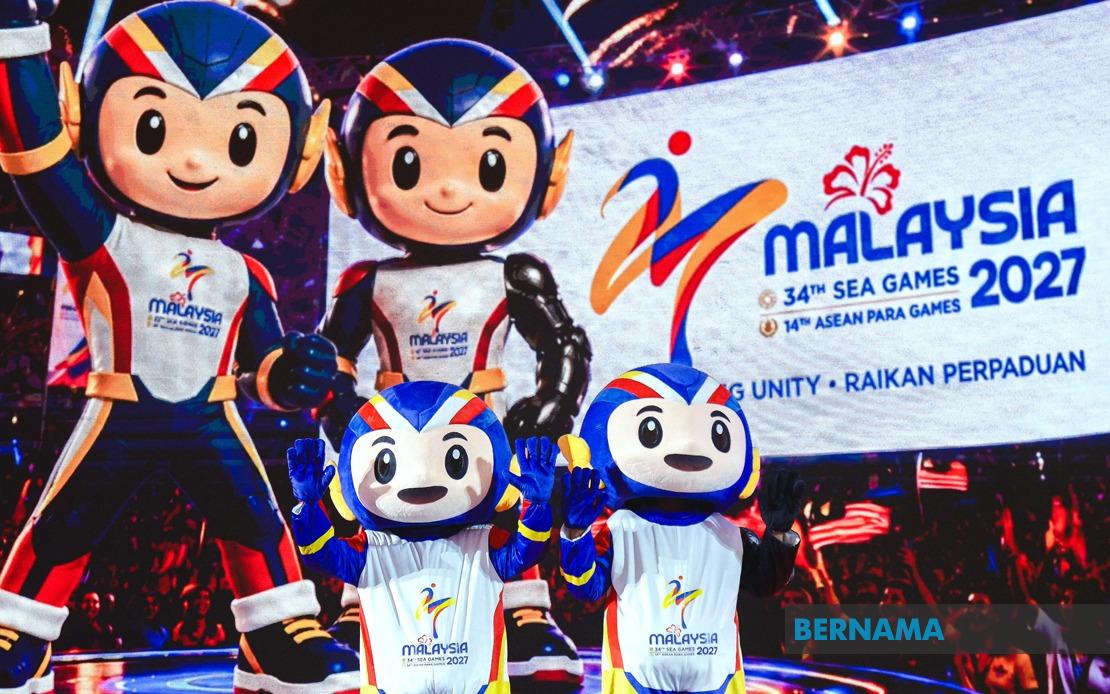
Malaysia has officially unveiled its vision for hosting the 2027 SEA Games and ASEAN Para Games, selecting "Celebrating Unity" as the central theme that will guide the region's largest multi-sport gathering in just over three years. The announcement, made in Putrajaya, represents a significant milestone in Malaysia's preparations for hosting the dual tournaments, which will see sporting events spread across four distinct geographic clusters spanning Sarawak, Penang, Johor, and Kuala Lumpur. Youth and Sports Minister Dr Mohammed Taufiq Johari emphasized that this thematic choice goes beyond mere branding, positioning it as a philosophical underpinning that captures the enduring bonds connecting Southeast Asian nations through athletic competition and shared values.
The selection of "Celebrating Unity" carries particular resonance for Malaysia and the broader region at a time when ASEAN cohesion remains central to Southeast Asian geopolitics and regional stability. The theme encapsulates both the practical reality of hosting nations from across the bloc and the aspirational goal of using sport as a vehicle for fostering deeper connections among populations. Rather than focusing narrowly on competition or national achievement, the overarching message emphasizes collective regional progress and mutual respect among athletes and nations. This approach reflects a strategic shift in how Malaysia frames its hosting responsibilities, positioning the nation not merely as a venue but as a custodian of ASEAN's sporting heritage and unity objectives.
Equally significant is the introduction of TUAH as the official mascot—a departure from the animal-centric mascot tradition that has characterized previous SEA Games iterations. Unlike kangaroos, tigers, or other wildlife that graced past hosting ceremonies, TUAH represents a stylized human figure embodying the qualities of a contemporary hero: dynamic, self-assured, and relatable to modern audiences. This conceptual shift carries important implications for how Malaysia seeks to connect with younger demographics and positioning the Games as contemporary and forward-looking rather than rooted in purely traditional imagery. The mascot's design philosophy reflects careful consideration of what resonates with the region's youth, who increasingly drive social media engagement and public enthusiasm surrounding major sporting events.
The visual identity of TUAH further reinforces Malaysia's strategic messaging through deliberate incorporation of the Jalur Gemilang, Malaysia's national flag. By weaving the flag's distinctive colours into the mascot's design, the government creates a subliminal yet powerful association between national pride, regional unity, and athletic achievement. This visual grammar serves multiple audiences simultaneously: domestic constituents see their nation's symbols celebrated on an international stage, while regional viewers recognize both Malaysia's centrality to the occasion and its commitment to broader ASEAN principles. Such symbolism, though seemingly aesthetic, carries substantial weight in shaping public perception and generating the emotional investment necessary to mobilize volunteer forces, secure public funding, and maintain political will across what will be a grueling multi-year preparation process.
Dr Mohammed Taufiq expressed hope that TUAH would function as a fortuitous emblem accompanying Malaysia's pursuit of overall championship status on home soil—a stated objective that carries considerable symbolic importance beyond mere medal tallies. Emerging as overall champions would validate Malaysia's substantial investment in sporting infrastructure, coaching development, and athlete preparation programmes that have intensified over recent years. The minister's invocation of TUAH as a potential good luck charm, while appearing ceremonial, reflects the deep-rooted cultural significance many Malaysian and Southeast Asian communities attribute to symbols and mascots in influencing outcomes of major events. This interweaving of contemporary branding strategy with cultural expectations demonstrates sophisticated understanding of how to mobilize multifaceted audiences.
Official confirmation of the Games' timing—September 18-29 for the SEA Games followed by October 17-23 for the ASEAN Para Games—provides clarity for athletes, federations, and host institutions engaged in logistical planning. The scheduling reflects careful consideration of climatic conditions in Southeast Asia, positioning the Games during the transitional period between southwest and northeast monsoon patterns while avoiding peak heat intensity. Splitting the SEA Games and Para Games into sequential events rather than simultaneous competitions allows venues to be optimized for different sporting requirements and prevents resource-allocation conflicts that might otherwise strain hosting capacity. This temporal configuration has become standard practice across SEA Games iterations, though the specific dates demand meticulous alignment with international sporting calendars, weather patterns, and academic cycles across participating nations.
Dr Mohammed Taufiq reported that venue development across the four geographic clusters is proceeding without significant impediments, with no critical facility-related issues identified to date. This reassurance, delivered at the official theme and mascot unveiling, addresses underlying anxieties that frequently accompany large-scale multi-site sporting events, where coordinating construction, safety compliance, and operational readiness across dispersed locations multiplies logistical complexity. The minister's shift of focus toward technical aspects—equipment specifications, operational protocols, security arrangements—signals transition from the foundational infrastructure phase toward refinement stages where precision and coordination become increasingly critical. This maturation of preparation status, approximately thirty months before competition commencement, aligns with the typical trajectory of successful major Games hosting, though regional observers note that Malaysian sporting event preparation has sometimes encountered compressed timelines that required accelerated decision-making.
The National Sports Council's ambitious target of achieving 70 per cent podium-finish rates among Malaysian athletes at Asian-level competitions by year's end demonstrates how the Games hosting has catalyzed broader athletic development objectives extending beyond 2027. NSC director-general Jefri Ngadirin positioned this metric as a preliminary assessment mechanism for Malaysia's realistic championship prospects at the SEA Games themselves. The underlying logic suggests that athletes consistently delivering top-three finishes at intermediate Asian competitions possess the technical competence, competitive experience, and mental resilience necessary for sustained excellence at the regional championship level. Malaysia's historical performance at SEA Games—alternating between dominant showings and disappointing underperformances depending on preparation cycles and athlete development trajectories—underscores the importance of sustained, measurable progress indicators rather than relying on momentum or home-ground advantage alone.
Championship aspirations carry significance extending beyond sporting prestige, touching upon national identity, political messaging, and social cohesion within Malaysia's ethnically and religiously diverse society. Successfully hosting a major regional sporting event in which Malaysian athletes excel provides opportunities for cross-community celebration and nationally-unifying accomplishment. The "Celebrating Unity" theme thus resonates not only regionally but domestically, offering Malaysia's leadership the prospect of leveraging athletic success toward broader nation-building objectives. This multilayered dimension of the Games—simultaneously regional gathering, national showcase, and political opportunity—shapes how hosting preparations proceed and why significant resources, across government ministries and private sector partners, flow toward ensuring success.
The introduction of TUAH and the "Celebrating Unity" theme represent Malaysia's attempt to craft a distinctive identity for the 2027 Games that differentiates this iteration while honoring SEA Games traditions. As preparations advance across the four geographic clusters, these symbolic elements will permeate promotional campaigns, volunteer uniforms, digital platforms, and public consciousness, creating consistent visual and philosophical reinforcement of the hosting nation's values. The months ahead will test whether this branding successfully mobilizes sustained enthusiasm across stakeholders while Malaysia executes the complex operational requirements of simultaneously developing infrastructure, training athletes, coordinating security, and managing international protocols across a vast geographic footprint.

