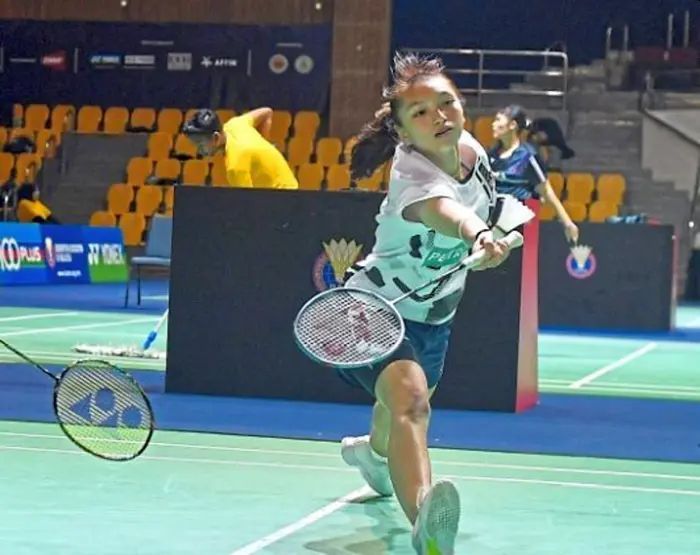
Rising Malaysian shuttler Noraqilah Maisarah Ramdan has caught the attention of the national badminton establishment with displays of versatility and raw talent, yet her mixed doubles coach Nova Widianto believes that technical prowess alone will not carry her to the sport's elite levels. The 19-year-old's ability to perform across multiple disciplines has been impressive, but Widianto's emphasis on the psychological and emotional dimensions of athletic development reveals a coaching philosophy increasingly prevalent among Southeast Asian sports educators: that talent without character often fails under pressure.
Widianto has observed Noraqilah's progression closely, watching her develop from a young prospect into a competitive player who now juggles commitments in both women's doubles and mixed doubles formats. His assessment acknowledges the undeniable foundation upon which her career rests—a natural aptitude for badminton that requires minimal technical instruction. Yet the coach's focus on grounding and mental fortitude speaks to a deeper concern about how Malaysian badminton talent is cultivated. The coaching fraternity regularly grapples with the challenge of preventing early success from derailing promising players whose temperaments have not yet matured sufficiently to handle sustained competition and external validation.
The risks Widianto alludes to are tangible in Malaysian sport. When young athletes experience breakthrough performances and receive praise from stakeholders, the psychological impact can prove destabilising. Confidence may tip into overconfidence; focused preparation may become complacent. The coach's insistence on managing this aspect of Noraqilah's development underscores the difference between athletic programmes that produce occasional champions and those that build sustained excellence. This distinction matters increasingly as Malaysia seeks to maintain competitiveness in badminton against rising powers in China, Indonesia, and Thailand.
Noraqilah's recent achievements demonstrate the foundation upon which Widianto's optimism rests. Her partnership with Low Zi Yu reached the Australian Open quarter-finals, a result that elevated their ranking to a career-high world No. 70—a respectable standing for players still establishing themselves on the international circuit. Separately, her adaptability was underscored when she won the women's doubles title at the second leg of the Under-21 National Championship in Kuantan alongside scratch partner Ong Xin Yee, indicating a readiness to perform with different partners and in different pairings. In mixed doubles, her work with Loo Bing Kun has yielded a world ranking of No. 115 after they reached the second round in Sydney.
These results collectively paint a picture of a player with broad competitive capability rather than narrow specialisation. For a 19-year-old, such versatility might appear advantageous, allowing her to accumulate match experience and exposure across formats. Yet Widianto's perspective, grounded in experience with elite athletes, recognises this period of experimentation as necessarily temporary. The mathematical reality of elite sport—where incremental gains become exponentially harder to achieve—means that sustainable progress eventually requires decisive focus.
Widianto's strategic thinking extends to the longer-term trajectory of Noraqilah's career. While he acknowledges the value of competing in multiple disciplines during her teenage years, he identifies a fork in the road that awaits as she matures. Should her ambitions encompass Olympic representation—the benchmark of achievement in badminton—then the demands of preparation become incompatible with divided attention. The coach frames this not as an immediate demand but as an inevitable conversation that the player, her support team, and the national federation will need to navigate thoughtfully. This calibrated approach avoids prematurely boxing in a developing athlete while remaining realistic about the requirements of reaching badminton's highest echelons.
The Malaysian badminton context makes this coaching philosophy particularly salient. The country has produced world champions and Olympic medallists, but the pathway from promising junior to established international competitor remains unpredictable. The national system has long struggled with the transition phase—that crucial period when players must shift from accumulating experience to accumulating results. Widianto's emphasis on character building and deliberate specialisation addresses precisely this bottleneck. Players who reach their peak in single disciplines, supported by coaches who have invested equally in their psychological resilience as technical refinement, tend to sustain excellence longer than those whose development was rushed or lopsided.
The broader implications for Malaysian badminton are substantial. If the national programme can successfully implement this dual-track development—managing character formation alongside technical advancement—it creates a template replicable across the player pipeline. Southeast Asian badminton's competitive intensity means that small advantages in psychological preparation or timing of specialisation can yield significant outcomes on international stages. Widianto's comments, therefore, represent not merely an assessment of one player but a statement about the coaching standards and developmental philosophy that the Malaysian badminton system should aspire to maintain.
For Noraqilah herself, the coming years will test whether the balance between current opportunity and future specialisation can be maintained without compromising either. Her coaches will need to monitor carefully whether exposure across formats enhances her overall understanding of badminton or whether it dilutes the focused work necessary for breakthrough performances. The player's own maturity, her response to pressure, and her receptiveness to coaching guidance will ultimately determine whether the foundation being laid now yields the sustained excellence Widianto envisions. In the end, her story will illustrate whether Malaysian badminton can successfully cultivate not just talented players, but resilient champions.

