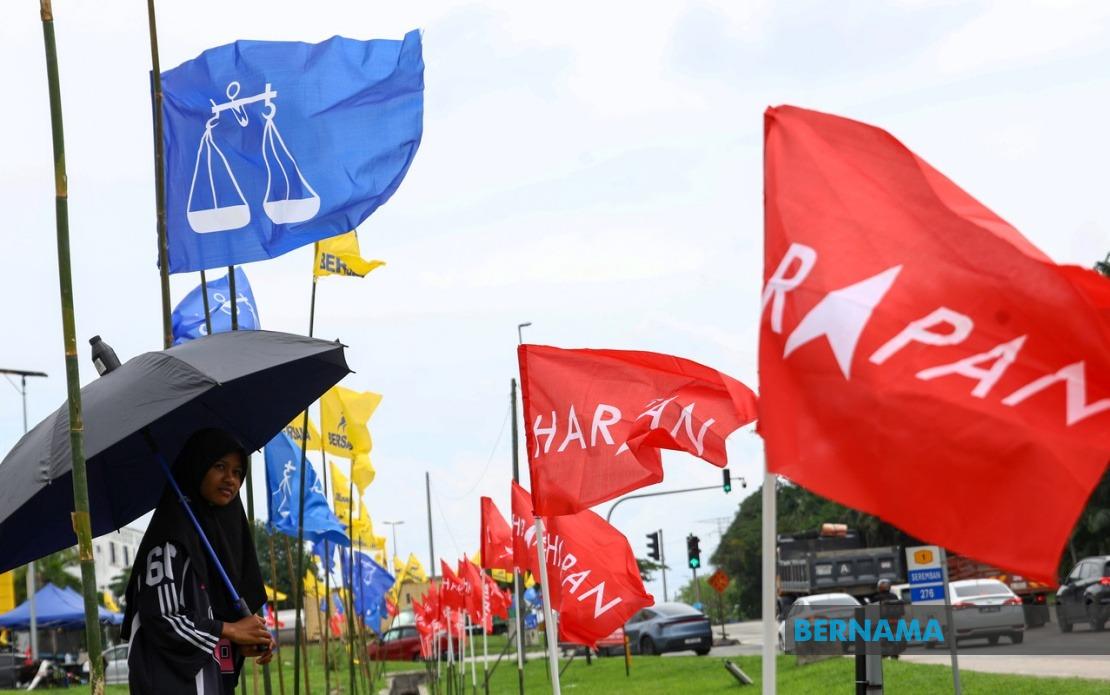
Pakatan Harapan's success in the forthcoming Johor state election represents far more than a routine electoral contest; it embodies a fundamental question about the future trajectory of democratic governance in Malaysia's southernmost peninsula state. Speaking at a DAP gathering in Kluang on July 3, DAP secretary-general Anthony Loke articulated this broader concern, framing the coalition's electoral ambitions within the critical context of institutional checks and balances that underpin democratic systems.
Loke's remarks underscore the strategic importance that opposition coalitions place on preventing any single political force from accumulating unchecked power within state administrations. His argument rests on the premise that concentrated political authority, without credible alternative voices capable of scrutinising government decisions, fundamentally weakens democratic accountability. This perspective reflects growing concerns across Malaysia's political spectrum about the concentration of executive power and the erosion of institutional oversight mechanisms that traditionally served to constrain arbitrary governance.
The mechanics of this democratic concern operate at multiple levels. When a single coalition controls an overwhelming parliamentary supermajority, the mechanisms for legislative scrutiny—such as parliamentary questions, committee reviews, and oppositional amendments—become largely ceremonial rather than substantive. State assemblies without effective opposition representation struggle to function as genuine forums for public debate and policy refinement. PH's campaign strategy in Johor, therefore, extends beyond merely winning seats; it aims to create sufficient political competition to resurrect meaningful parliamentary procedures.
Pakatan Harapan's comprehensive slate across all 56 state assembly seats demonstrates the coalition's determination to contest the political landscape systematically. This total commitment represents a significant organisational undertaking for the three-component coalition comprising PKR, DAP, and Amanah. The breadth of their campaign effort indicates their conviction that scattered victories would prove insufficient; rather, they seek to establish themselves as a genuinely competitive force capable of presenting coherent alternative governance frameworks and policy positions.
The Johor state election, scheduled for July 11 with early voting commencing July 7, will attract 172 candidates vying for representation. This competitive field reflects the state's political significance within Malaysia's broader institutional arrangements. Johor, as a major economic engine and population centre in the peninsula, carries implications that extend well beyond regional significance. Electoral outcomes there frequently signal broader trends affecting national political calculations and coalition dynamics.
Loke's emphasis on preventing political monopolisation resonates within the Malaysian context where recent decades have witnessed intermittent episodes of single-party dominance at both national and state levels. The experiences of single-party rule have demonstrated tangible costs: reduced parliamentary dynamism, constrained media pluralism, and diminished space for civil society contestation. Democratic systems, historical evidence suggests, require not merely formal institutional structures but genuine competitive forces to animate those structures meaningfully.
The presence of DAP deputy national chairman Nga Kor Ming and deputy secretary-general Steven Sim Chee Keong at the Kluang event underscored the national importance the party attributes to Johor's outcome. DAP's involvement in this state electoral contest carries particular significance given the party's traditional urban and Chinese-majority electoral base, which requires careful navigation within Johor's distinct demographic and political composition. The party's willingness to contest all constituencies signals confidence in its capacity to broaden its appeal beyond traditional strongholds.
For Malaysian observers, particularly those concerned with institutional governance and democratic quality, Loke's framing presents an important analytical challenge. His argument essentially inverts conventional political narratives: rather than focusing narrowly on which coalition secures administrative control, the deeper democratic question concerns whether sufficient political competition exists to sustain genuine parliamentary oversight. This perspective acknowledges that electoral politics ultimately concerns not merely the distribution of ministerial posts but the preservation of institutional mechanisms that constrain governmental arbitrariness.
The competition between PH's coalition formula and the incumbent forces in Johor will test whether Malaysian voters prioritise institutional safeguards or other electoral considerations. In many democracies facing similar decisions, electorates have oscillated between rewarding clear electoral mandates and ensuring competitive balance within legislatures. Johor's voters will ultimately determine whether democratic checks and balances remain sufficiently salient to influence electoral calculations.
As campaigns intensify ahead of July 11, the substantive debate about political accountability and democratic institutional health will compete with conventional campaign messaging around development projects, personality politics, and coalition branding. Yet Loke's intervention suggests that sophisticated political actors increasingly recognise that electoral mathematics—transforming scattered opposition support into parliamentary representation—carries profound implications for how governmental power operates once elected. The Johor result will provide empirical evidence about whether such concerns mobilise meaningful electoral response among Malaysian voters.

