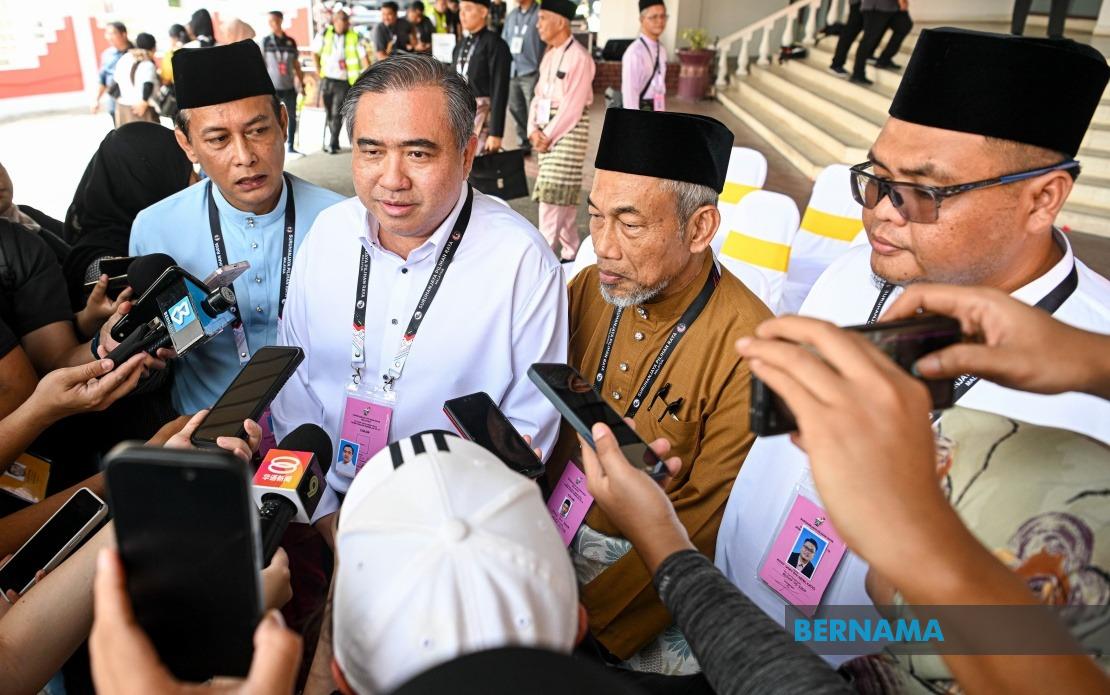
Transport Minister Anthony Loke has identified the Chennah state seat as strategically vital to Pakatan Harapan's campaign to retain control of the Negeri Sembilan government in the forthcoming state election. Speaking after nomination proceedings at Dewan Besar Kuala Klawang in the Jelebu parliamentary constituency, Loke underscored that Chennah ranks among the four most significant seats within the broader Jelebu electoral area, where victories could prove decisive in securing a fresh mandate for the coalition government.
The straight contest pitting Loke against Barisan Nasional candidate Siow Kong Choon reflects the competitive nature of the upcoming state polls. Acknowledging the direct nature of this matchup, Loke expressed confidence that Pakatan Harapan would retain the seat, anchoring his optimism in the coalition's governance record and tangible contributions to the state over two successive terms in power. The Transport Minister's emphasis on historical performance suggests the PH campaign strategy will centre on demonstrating continuity and accumulated developmental gains rather than promising transformative change.
Pakatan Harapan has governed Negeri Sembilan continuously since 2018, a period spanning more than five years. During this tenure, the coalition government has implemented various policy initiatives and infrastructure projects aimed at consolidating support among the electorate. Loke's assertion that the government has "proven that we are capable of delivering progress and stability" reflects the narrative the coalition intends to project—one of competent stewardship and measured advancement that justifies electoral renewal.
The particular focus on Chennah and Kelawang within the Jelebu constituency carries historical weight. Loke's reference to these two seats as instrumental in forming the state government in 2018 indicates that similar outcomes in 2024 could determine the overall composition of the state assembly. In Malaysia's first-past-the-post electoral system, such pivot constituencies often receive disproportionate resources and attention from political machinery, and Jelebu's four critical seats likely represent the narrow margins through which state governments are formed and unmade.
The Negeri Sembilan state election takes place against a backdrop of shifting political dynamics across Malaysia. While Pakatan Harapan has maintained federal government status through the current Anwar Ibrahim administration, state-level contests provide voters with opportunities to deliver separate verdicts on governance performance. The coalition's record in Negeri Sembilan, therefore, faces evaluation on both state management and alignment with the broader federal narrative that has characterised PH's messaging since 2022.
Loke's positioning as Transport Minister alongside his role as incumbent in Jelebu creates a dual platform for influence. Federal ministerial visibility often translates into enhanced capacity to deliver centralised resources to constituencies, a factor that may advantage the incumbent in resource allocation decisions. However, Siow Kong Choon's nomination as the BN challenger suggests that the opposition coalition regards Chennah as a realistic target for recapture, indicating either weakness in the PH incumbent's local standing or competitive strength on the BN side.
For Malaysian political observers, Negeri Sembilan's election carries implications beyond the state level. A successful retention by Pakatan Harapan would reinforce the coalition's claim to effective governance and provide morale and momentum for the federal government. Conversely, significant losses in the state would invite internal reflection and external criticism regarding the coalition's administration of federal affairs under Anwar Ibrahim. The state election thus becomes a referendum on broader political competence and public satisfaction with the current national direction.
The constituency dynamics in Jelebu merit scrutiny within the context of peninsular Malaysia's demographic and electoral patterns. Negeri Sembilan, while a smaller state, has historically swung between political coalitions, making it a bellwether for broader electoral trends. The identification of four crucial seats within a single parliamentary constituency underscores how fragmented electoral support has become, with governments increasingly dependent on narrow majorities pieced together across multiple marginal contests.
Loke's confidence in retaining Chennah rests partly on the assumption that two terms of governance have generated sufficient goodwill and visible achievements to overcome any anti-incumbent sentiment. However, the emergence of Siow Kong Choon as a credible BN alternative suggests that voters may be considering comparative options rather than simply evaluating the incumbent on absolute performance terms. The straight fight format eliminates potential vote splitting, concentrating the choice sharply between the two candidates and their respective party affiliations.
As the campaign unfolds in Jelebu and across Negeri Sembilan, the attention devoted to Chennah by senior PH figures like Loke will likely intensify. The allocation of campaign visits, media coverage, and party resources to this and the other three crucial seats will reveal where political strategists believe the election will be won or lost. For voters in Chennah, such concentration of political focus may translate into heightened accessibility to candidates and policy commitments tailored to local concerns, even as the seat's strategic importance at the state and potentially national level continues to amplify its significance within the broader electoral narrative.

