China is significantly expanding its scientific engagement with Iran into rare earth exploration and processing, a strategically significant domain with direct implications for global weapons development and supply chain security. The collaboration, facilitated through China's National Natural Science Foundation and Iran's equivalent body, represents a deepening of bilateral ties at a moment when the United States is actively seeking alternatives to Chinese dominance in critical minerals essential for modern defence systems.
The financial structure of this cooperation reflects modest but meaningful commitment. Beijing has allocated 30,000 yuan (approximately US$4,200) per workshop to cover operational expenses including venue costs, participant accommodation and internal travel arrangements. Iran's National Science Foundation complements this arrangement by funding international airfare for Iranian scientists and lodging for Chinese researchers visiting Iranian facilities. This cost-sharing model underscores genuine reciprocal investment rather than unilateral sponsorship, suggesting serious institutional buy-in from both parties.
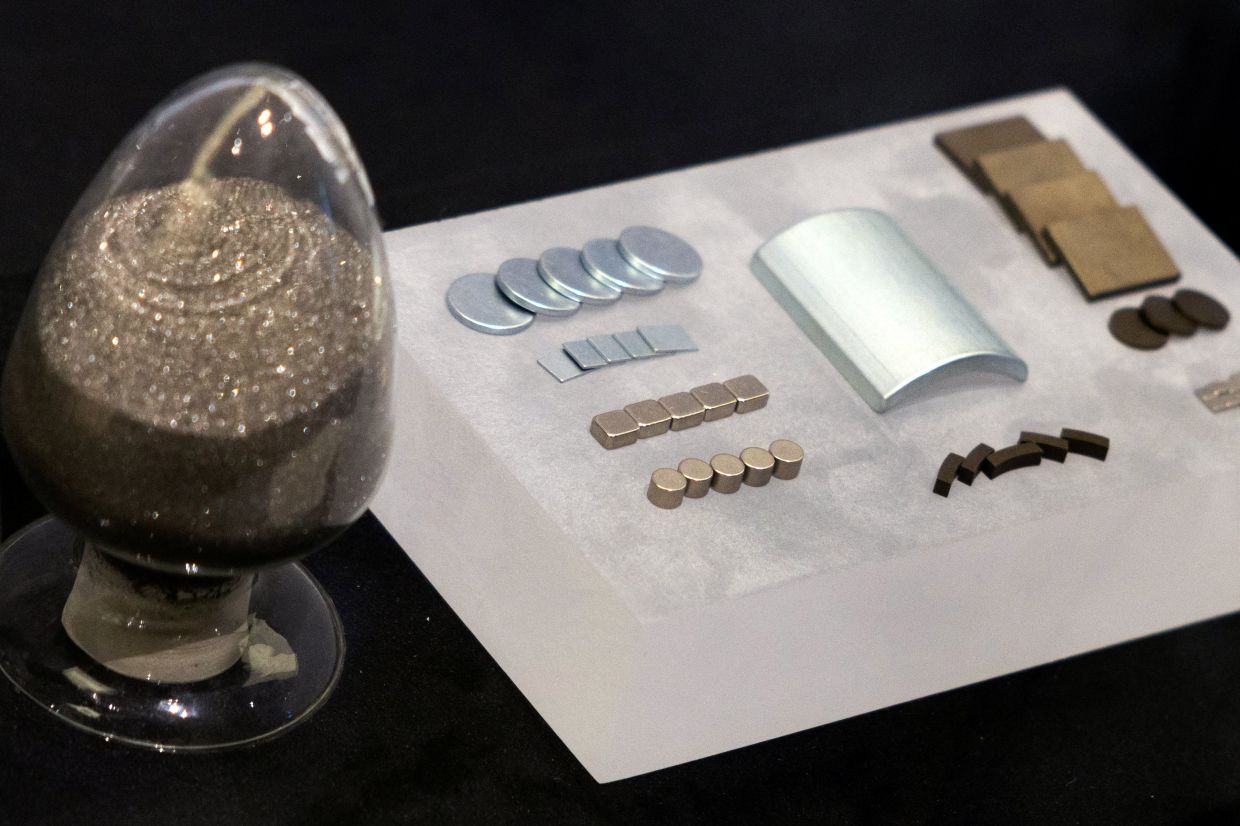
Rare earth elements occupy a position of extraordinary strategic importance in contemporary military and industrial technology. These 17 metals possess distinctive magnetic and electronic characteristics that render them indispensable components in advanced weaponry ranging from guided missile systems and high-performance fighter aircraft to sophisticated radar installations and specialised electronic equipment. Control over rare earth supplies therefore translates directly into geopolitical leverage, a reality that has animated discussions in defence and technology policy circles across North America and Europe for nearly two decades.
The timing of China-Iran cooperation on this specific technology domain cannot be divorced from broader great-power competition dynamics. The Trump administration has recently committed US$3 billion toward domestic critical-mineral extraction and battery manufacturing ventures, explicitly designed to rebuild American weapons inventories and diminish Washington's vulnerability to supply interruptions from Chinese sources. This investment surge reflects acute awareness of dependency created during previous administrations and represents a significant reorientation of defence industrial policy toward greater self-sufficiency.
China's dominance across the rare earth value chain remains comprehensive and uncontested. The country commands the world's largest proven reserves of these elements and controls the majority of global production capacity. More crucially, Beijing has cultivated near-monopolistic power over processing and refinement technologies, the most sophisticated and economically valuable segments of the industry. When the Trump administration initiated trade tensions with Beijing last year, China responded with targeted export restrictions on rare earth materials, creating immediate supply shocks throughout American manufacturing sectors and starkly demonstrating Washington's structural vulnerability in this domain.
Iran's rare earth endowment, whilst potentially substantial, remains poorly characterised and substantially underdeveloped compared to Chinese resources. Geological surveys have identified rare earth anomalies across approximately 7,000 square kilometres of central Iran, distributed across formations containing iron ore and phosphate deposits that scientific evidence suggests are geologically favourable for rare earth occurrence. A February assessment by the Hague Research Institute provides the most systematic recent analysis of Iranian potential, though significant uncertainty persists regarding commercial viability and extraction costs.
What distinguishes Iran's position is the wide gap between geological potential and actual operational capacity. The country currently lacks extraction and processing infrastructure capable of industrial-scale rare earth production. Current capabilities remain in early developmental stages, meaning any partnership aimed at developing Iranian rare earth industries would require substantial technological transfer and infrastructure investment before yielding commercially meaningful output. This reality shapes the partnership's significance—it represents Chinese investment in developing future alternative supply sources outside Western jurisdictions.
The institutional foundation for China-Iran scientific cooperation extends back to 2017, when both nations' science foundations executed a formal memorandum of understanding in Beijing. This agreement laid groundwork for what has become progressively more ambitious collaboration spanning mathematics, biological sciences, medical research, renewable energy technologies, advanced materials science, climate systems research and artificial intelligence applications. The rare earth initiative thus represents merely the latest expansion of an already established institutional relationship.
China explicitly frames Iran as strategically central to its Belt and Road Initiative, emphasising how expanded scientific cooperation strengthens bilateral technology development capacities and generates mutual economic benefits. The joint workshop programme itself began in 2024 with initial support for research in climate systems, artificial intelligence, advanced materials and manufacturing innovation. Each workshop received 150,000 yuan in funding, establishing a template now extended to include rare earth exploration and processing alongside other priority areas including nanomaterials for medical diagnostics, environmental monitoring systems, earthquake-resistant infrastructure and sustainable manufacturing processes.
For Malaysian and Southeast Asian observers, this development illustrates how great-power competition over critical minerals is reshaping scientific cooperation networks and supply chain investments. The expansion of Chinese technological partnerships with Iran signals Beijing's strategy to secure rare earth supplies from sources less vulnerable to American diplomatic pressure, whilst simultaneously building processing capacity outside direct US sanctions reach. Should Iran develop meaningful rare earth extraction capabilities through this partnership, it would create an additional global source independent of both Western markets and single-source Chinese control.
The broader implication extends to regional technology policy. Southeast Asian nations, including Malaysia, occupy intermediate positions in global supply chains dependent on rare earth availability and refined materials. Understanding how China constructs alternative supply relationships through scientific partnerships provides insight into emerging competitive dynamics likely to shape regional economic strategy. The capacity to access critical materials on stable, non-coercive terms increasingly determines industrial competitiveness and security autonomy, making rare earth cooperation patterns worthy of sustained policy attention from governments across the region concerned with both economic development and strategic independence.

