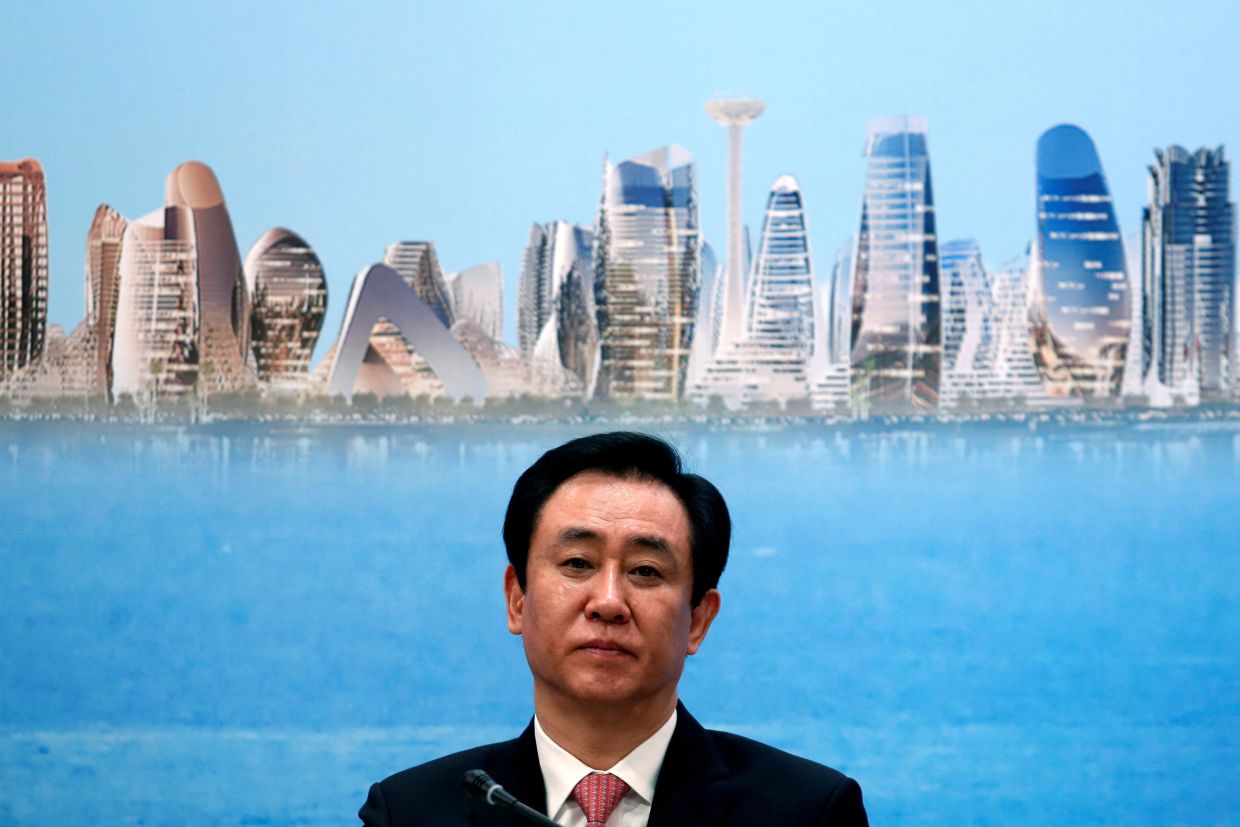
Hui Ka Yan, the onetime Asia's wealthiest entrepreneur who built China Evergrande Group into the nation's largest property developer, has been handed a life sentence by a Shenzhen court for orchestrating an elaborate scheme of financial manipulation and fraud. The Thursday verdict brings formal legal closure to a scandal that paralysed China's property sector and sent shockwaves through regional and global financial markets when Evergrande defaulted on approximately $300 billion in liabilities five years ago.
The 67-year-old magnate, whose net worth once soared to $45.3 billion in 2017 according to Forbes rankings, had entered guilty pleas in April to a sweeping list of eight criminal charges. These included misappropriation of corporate funds, fraudulent fundraising practices, unlawful acceptance of public deposits, illicit extension of credit facilities, securities fraud, and corruption. The sentencing also encompassed the confiscation of all his personal assets, effectively stripping the former peasant-turned-billionaire of the vast wealth he accumulated over three decades.
The court's judgment emphasised the extraordinary scale and gravity of Hui's transgressions. In an official statement, judges noted that the criminal conduct involving Evergrande Group, its flagship subsidiary Hengda Real Estate, and Hui personally resulted in "particularly huge amounts" with "egregious circumstances" that "caused particularly significant economic losses and particularly serious social harm." This language underscores how Chinese authorities regard the Evergrande collapse not merely as corporate mismanagement but as a systemic threat to national financial stability and social cohesion.
Hui's rise and fall represents one of modern China's most dramatic reversals of fortune. A former steel technician raised by his grandmother in rural Henan province, he established Evergrande in 1996 and systematically transformed it into China's dominant property developer through aggressive expansion and massive debt accumulation. The company's contracted sales once exceeded those of all competitors, and Hui's personal wealth peak reflected the extraordinary valuations assigned to real estate enterprises during China's property boom. Yet this meteoric ascent was constructed on foundations of fraud, as subsequent investigations have revealed.
Beyond Hui's individual sentence, the court imposed a corporate fine of 8.82 billion yuan (approximately $1.31 billion) on Evergrande itself, with an additional 7 billion yuan penalty levied against Hengda Real Estate. Five other senior executives received prison sentences ranging from six to eighteen years alongside financial penalties. State media reported that fifty-six individuals connected to Evergrande faced criminal convictions on Thursday, demonstrating the pervasive nature of misconduct throughout the organisation's leadership structure.
The collapse triggered profound consequences for ordinary Chinese citizens. Hundreds of thousands of retail investors had purchased Evergrande wealth-management products, viewing them as relatively safe investment vehicles backed by an ostensibly blue-chip developer. When the company defaulted, these investors—many with modest incomes—discovered their savings had evaporated. Angry homeowners also discovered that projects they had paid for remained incomplete, leading to widespread protests that at one point threatened social stability. Social media commentary from affected parties expressed bitter resentment, with some noting that "ordinary citizens have paid the cost" while others darkly joked that imprisonment actually "protects" Hui from potential retaliation by defrauded investors.
Hui had disappeared from public view since his detention by Chinese authorities in 2023 following Evergrande's formal default. Court photographs released Thursday showed a greying man in his mid-sixties wearing a navy collared shirt, flanked by security officers, as judges pronounced his sentence. His lawyers remained unreachable for comment, and the once-ubiquitous businessman had become entirely inaccessible to press inquiries during his fifteen-month detention period prior to trial.
The resolution of Hui's criminal case represents only one dimension of Evergrande's protracted collapse. A Hong Kong court ordered the company into liquidation in 2024, with the Hong Kong Stock Exchange subsequently delisting its shares—formally terminating what had been an extraordinarily turbulent corporate saga. However, the liquidation process has proceeded at what administrators describe as glacial speed. As of August 2024, liquidators had sold merely $255 million in assets despite facing creditor claims totalling $45 billion—a ratio suggesting the recovery process could span many years.
International complications further complicate asset recovery efforts. Liquidators are pursuing parallel legal proceedings across multiple jurisdictions to freeze and recover offshore assets held by Hui and his former spouse. These efforts specifically target approximately $6 billion in dividends and executive compensation paid to Hui and other former corporate officers during the years before Evergrande's collapse. This offshore dimension reflects how Chinese property tycoons had systematically shifted wealth beyond mainland authorities' reach—a practice that has now become central to creditor recovery strategies.
Preceding Hui's criminal conviction, China's securities regulator had already moved independently against the Evergrande founder. In 2024, regulators imposed a $6.6 million fine and imposed a lifetime ban from securities markets after determining that Evergrande's primary listed unit had systematically inflated financial earnings and perpetrated securities fraud. This regulatory action signalled that even before the criminal courts rendered their verdict, supervisory authorities had already concluded that Hui's conduct violated fundamental market integrity principles.
The broader implications of Hui's imprisonment extend well beyond an individual conviction. The Evergrande crisis exposed fundamental weaknesses in China's property sector oversight, debt management frameworks, and corporate governance standards. The developer's spectacular failure triggered a prolonged downturn affecting hundreds of real estate firms, depressing construction activity, and reducing tax revenues that local governments depend upon. For Malaysian investors and businesses with exposure to Chinese property markets or financial instruments, the Evergrande precedent underscores the opacity and latent risks embedded within China's real estate sector despite its ostensible economic centrality.
Regional observers note that the criminal prosecution also reflects Beijing's determination to hold corporate leaders personally accountable for financial misconduct, contrasting with earlier periods when such figures might have received administrative discipline rather than prosecution. This intensified enforcement posture carries implications for how Southeast Asian nations evaluate investment risks and governance standards among Chinese partners and subsidiaries operating in the region. The sentencing signals that neither wealth nor past prominence provides insulation from consequences when systemic fraud causes broad economic damage.

