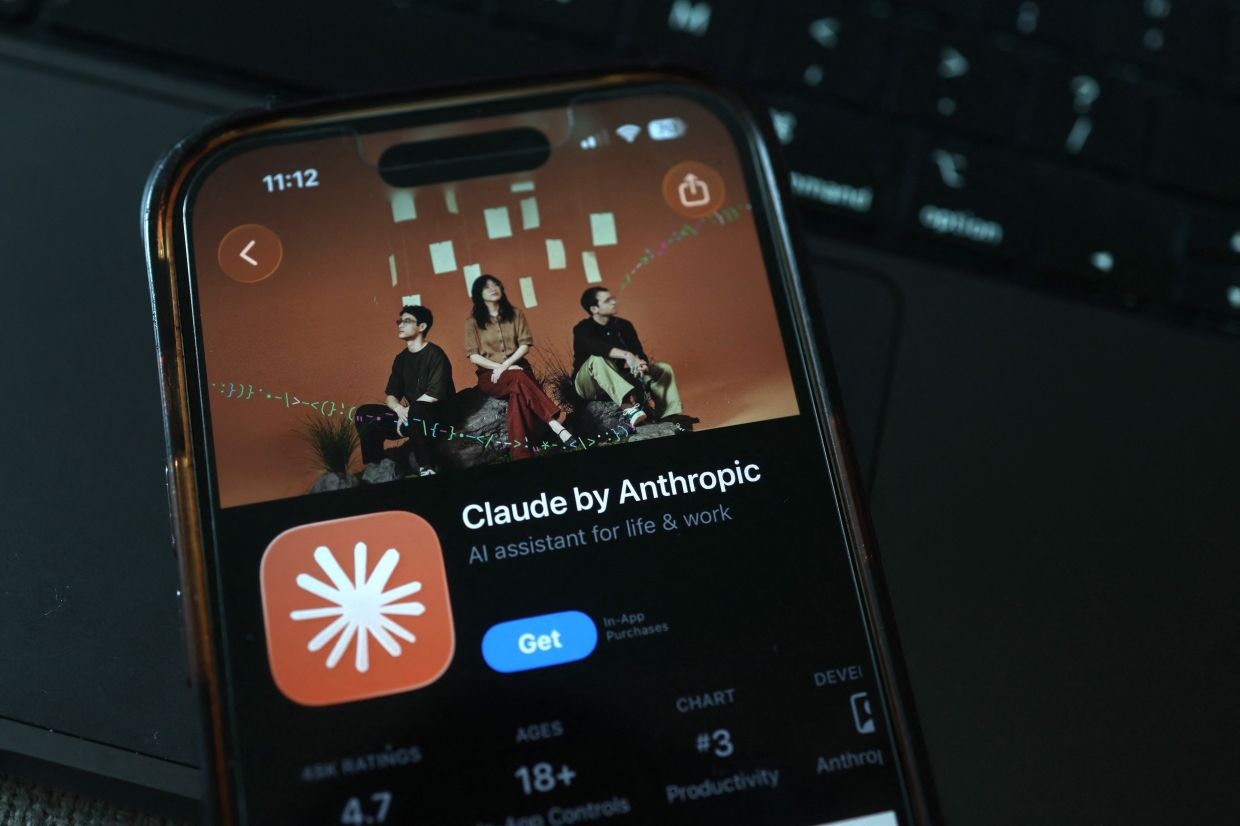
Tensions between Chinese authorities and American artificial intelligence companies escalated this week when China's National Vulnerability Database publicly accused Anthropic of embedding security weaknesses in Claude Code, its popular AI-powered software development tool. The allegations centre on what Beijing characterizes as a deliberate backdoor mechanism that could covertly transmit sensitive data—including user locations and identity markers—back to Anthropic's servers without user knowledge or authorization, raising fresh concerns about data privacy and corporate accountability in the cross-border AI industry.
Claude Code represents a significant advance in AI-assisted software engineering, functioning as an intelligent agent capable of writing functional code, identifying and fixing bugs, and analyzing existing software based on natural language instructions from developers. The tool has gained traction globally as organizations seek to accelerate development cycles and improve code quality through machine learning. Its rapid adoption among technical teams underscores the competitive intensity surrounding generative AI applications in high-value professional sectors.
The accusation emerged from China's National Vulnerability Database, a cybersecurity monitoring platform overseen by the Ministry of Industry and Information Technology—a powerful government body responsible for digital infrastructure and technology policy. In an official advisory, the NVDB urged organizations and individual users to immediately undertake comprehensive security audits and either uninstall Claude Code or upgrade to a patched version that purportedly removes the problematic code. The agency also recommended that companies strengthen their network monitoring systems to prevent unauthorized exfiltration of proprietary or sensitive data.
Anthrop's business model already involves geographical restrictions: the San Francisco-based startup actively blocks access to its products from users and organizations in China and nations it classifies as adversarial. However, the effectiveness of such geofencing remains limited, as technically sophisticated users routinely circumvent regional restrictions using virtual private networks and third-party proxy services, allowing them to access Claude Code and other Anthropic offerings despite official prohibitions.
The controversy appears to have prompted immediate action among major Chinese technology corporations. Alibaba, the e-commerce and cloud computing giant, instructed its workforce that use of Claude Code would be prohibited effective July 10, according to individuals with direct knowledge of the company's decision. This ban signals serious concern within China's business leadership about the security implications of continuing reliance on American AI tools, particularly those suspected of data collection practices.
Historical animosity between Anthropic and Alibaba adds layers of complexity to the current dispute. The American startup has previously leveled accusations against Alibaba, asserting that the Chinese conglomerate engaged in model distillation—a process through which proprietary AI systems are reverse-engineered and replicated. These competing accusations reflect broader geopolitical anxieties about technology transfer, intellectual property protection, and the asymmetric advantages flowing from access to advanced AI capabilities.
Anthropically's response came through Thariq Shihipar, an engineer on Claude Code's development team, who posted on the social media platform X to contextualize the alleged backdoor as part of a controlled experiment launched in March. According to Shihipar's account, the data collection mechanism was explicitly designed to prevent account abuse by unauthorized resellers and to protect against the model distillation techniques that Alibaba and possibly other competitors have employed. Rather than a malicious backdoor, Shihipar framed the capability as a defensive security measure intended to safeguard Anthropic's intellectual property and ensure proper licensing compliance.
Shihipar's statement indicates that Anthropic's engineering team had already developed superior mitigation strategies rendering the original approach obsolete. He acknowledged that the company had intended to discontinue the data collection experiment for some time but had not prioritized its removal until the public controversy erupted. In what appeared to be damage control, Shihipar pledged that the disputed functionality would be completely eliminated in Claude Code's release scheduled for July 2—the day immediately following his public statement.
The incident illustrates the persistent friction characterizing the relationship between American technology companies and the Chinese government. Beijing maintains increasingly stringent oversight of digital technologies, viewing them as potential vectors for foreign espionage or unauthorized information flows. From China's perspective, the alleged backdoor in Claude Code represents exactly the kind of threat that justifies tighter regulation and reduced reliance on American software solutions. For American companies operating globally, such allegations—whether substantiated or not—complicate market access and corporate reputation.
For Southeast Asian technology companies and users, the Claude Code controversy carries particular significance. Many firms in Malaysia, Singapore, Vietnam, and other regional economies have begun integrating AI coding assistants into their development workflows, attracted by productivity gains and competitive advantages. The security allegations raise questions about whether Western AI tools can be trusted, particularly when companies maintain the technical ability to monitor usage patterns and extract data.
The situation also underscores the fragmented nature of the global AI ecosystem. Rather than a unified international framework governing AI security and data protection, multiple jurisdictions apply conflicting standards and enforcement approaches. Companies must navigate an increasingly complex landscape of geopolitical tensions, regulatory mandates, and competing claims about security and surveillance.
Looking forward, the Claude Code controversy may accelerate demand for AI development tools built by companies headquartered outside the United States, or for open-source alternatives that operate under transparent governance structures. It may also embolden other governments to scrutinize American technology products more aggressively, using security as the pretext for what amounts to industrial policy aimed at nurturing domestic competitors.

