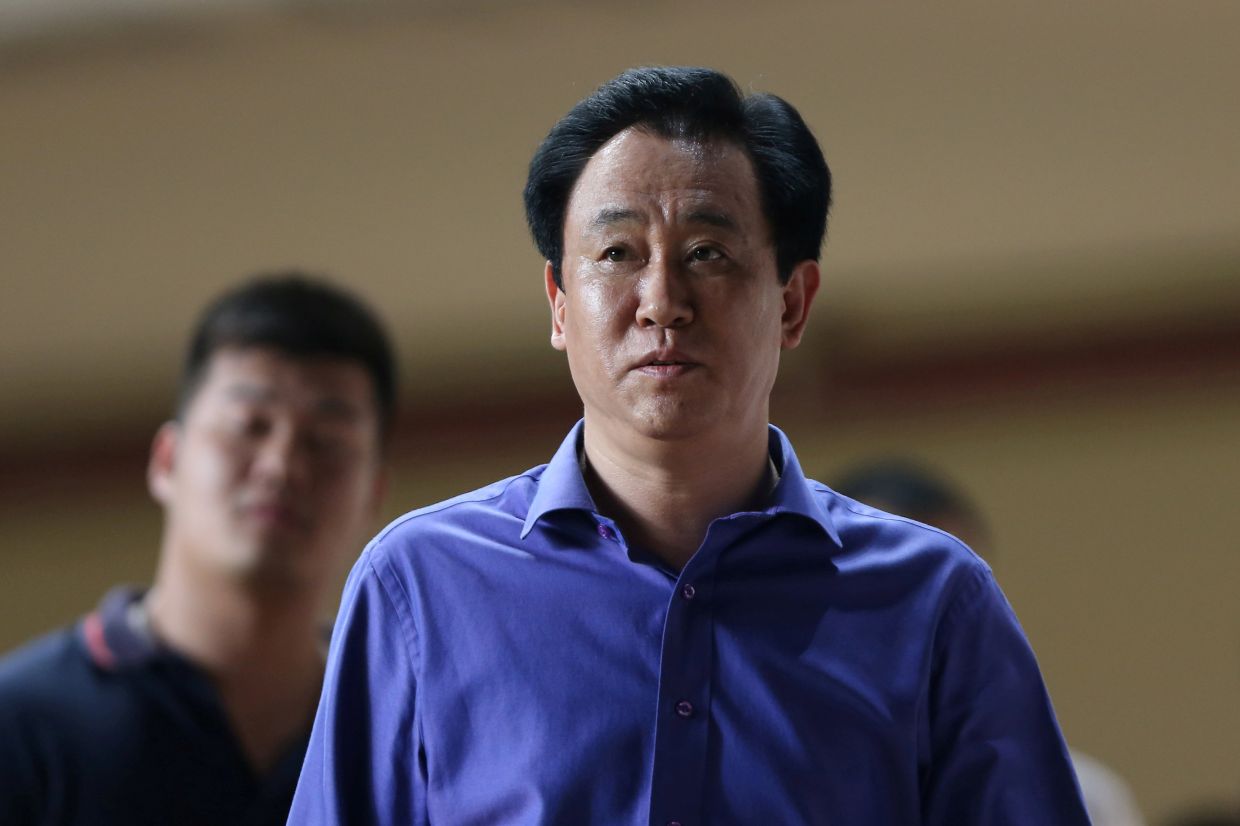
The Shenzhen Intermediate People's Court in Guangdong province delivered a decisive verdict on Thursday, sentencing Xu Jiayin, the founder of China's once-dominant Evergrande Group, to life imprisonment while simultaneously fining the company and its real estate subsidiary a combined 15.82 billion yuan—equivalent to US$2.4 billion. The judgment represents the culmination of a far-reaching investigation into one of the Asian property sector's most catastrophic failures, one whose ripples continue to shape investment sentiment across the region.
Xu's conviction on charges of large-scale financial fraud, embezzlement, and bribery marks a historic moment in China's corporate accountability efforts, signalling an intensified willingness to pursue even the most prominent business figures when systemic misconduct is uncovered. The court simultaneously stripped Xu of his political rights for life and ordered the confiscation of all his personal property, a comprehensive forfeiture that underscores the severity with which Chinese authorities view his transgressions. Beyond the founder, five additional senior executives received custodial sentences ranging from six to 18 years for their respective roles in the company's fraudulent operations.
Evergrande Group once epitomized China's property sector success story, leveraging decades of unprecedented real estate expansion to become a household name across the country. The developer aggressively marketed the concept of home ownership to millions of middle-class Chinese, positioning itself as an indispensable player in the nation's urbanization narrative. Xu became a billionaire and prominent philanthropist, his wealth and influence seemingly unshakeable within China's competitive business landscape. Yet this veneer of solidity masked deepening structural problems that would eventually trigger the most significant property company default in modern Chinese history.
The roots of Evergrande's catastrophe trace directly to Beijing's pivotal decision to introduce stringent regulatory curbs designed to restrain excessive borrowing and dampen speculative investment in the property market. These policy interventions, while economically necessary for long-term financial stability, effectively cut off the company's access to the abundant credit that had fuelled its rapid expansion. Without the ability to refinance existing obligations or secure fresh capital for ongoing projects, Evergrande found itself unable to meet its commitments to creditors, culminating in a formal default in 2021 that sent shockwaves through global financial markets.
Investigations that followed the 2021 collapse revealed systematic and deliberate misconduct spanning nearly six years. Between 2016 and 2021, according to the court's findings, Evergrande and its founder engaged in continuous, large-scale financial fraud, deliberately inflating asset valuations while concealing substantial liabilities from external scrutiny. The company's operational dishonesty extended beyond creative accounting into the realm of institutional capture; prosecutors established that Xu and his associates gained control over certain financial institutions through bribery schemes, though the specific institutions involved were not publicly identified by the court. This suggests a deeply embedded approach to corporate governance that prioritized personal enrichment and control over legitimate business practices.
Xu's April admission of guilt to the charges, combined with his cooperation in subsequent investigations, may have influenced the court's decision to impose life imprisonment rather than pursue capital punishment—an option technically available under Chinese law for the most severe economic crimes. His early plea represented an acknowledgement of the indefensible nature of the evidence against him, though it came only after the full scope of his misconduct had been documented and forensically examined. The acceptance of responsibility did not, however, spare him from comprehensive punishment.
For Malaysian and broader Southeast Asian investors and property developers, the Evergrande case carries profound implications. The conviction demonstrates that even companies of enormous scale and apparently unassailable market position remain vulnerable to regulatory intervention and criminal sanction when fundamental financial dishonesty is uncovered. Regional governments have observed closely China's approach to corporate accountability in the property sector, and several Southeast Asian jurisdictions have begun tightening their own regulatory frameworks for real estate financing and disclosure, partly in response to lessons learned from the Evergrande debacle.
The broader significance extends beyond individual corporate failure to questions about the sustainability of credit-driven property booms across Asia. Evergrande's collapse exposed the dangers inherent in rapid, leverage-fuelled expansion that depends on continuously expanding credit availability. As property markets throughout Southeast Asia—particularly in Vietnam, Thailand, and the Philippines—show similar patterns of rapid development and growing household debt, regulators and investors remain acutely aware that regulatory tightening can rapidly transform apparent economic strength into insolvency.
The sentencing of five additional executives serves as a cautionary reminder that participation in corporate fraud at senior levels carries personal criminal consequences. Chinese practice in recent years has consistently punished managers and directors alongside company entities, a departure from earlier eras when corporate scandals sometimes resulted in fines alone. This trend toward individual accountability has potentially heightened risk consciousness among professionals in China's financial and property sectors, though critics argue it may also incentivize the concealment of problems rather than transparent disclosure.
Evergrande's creditors—including retail investors who purchased properties before completion, financial institutions holding bonds, and suppliers awaiting payment—remain mired in lengthy and uncertain recovery proceedings. The US$2.4 billion in fines ordered by the court represent a fraction of the company's total liabilities, which exceed US$300 billion by most estimates. Whether these fines will be collected and distributed to harmed parties remains unclear, as Evergrande's restructuring process continues to unfold amid ongoing uncertainty about the company's viability.
The conviction also reflects China's broader campaign against what Communist Party authorities characterize as excessive financialization and speculation in the property sector. This ideological repositioning, which gained momentum under Xi Jinping's leadership, represents a fundamental shift away from the property-driven growth model that dominated the previous two decades. Evergrande's founder, having prospered enormously during the boom years, has now become a cautionary emblem of that era's excesses and the price of non-compliance with evolving state priorities.
Looking forward, the Evergrande case will likely influence how multinational investors assess political and regulatory risk in China's property sector. The severity of the punishment suggests that authorities prioritize exemplary enforcement against prominent figures as a means of signalling commitment to financial discipline and corporate accountability. Regional competitors and counterparts will note that even former national champions cannot rely on their historical significance to shield them from criminal prosecution when systemic fraud is proven.

