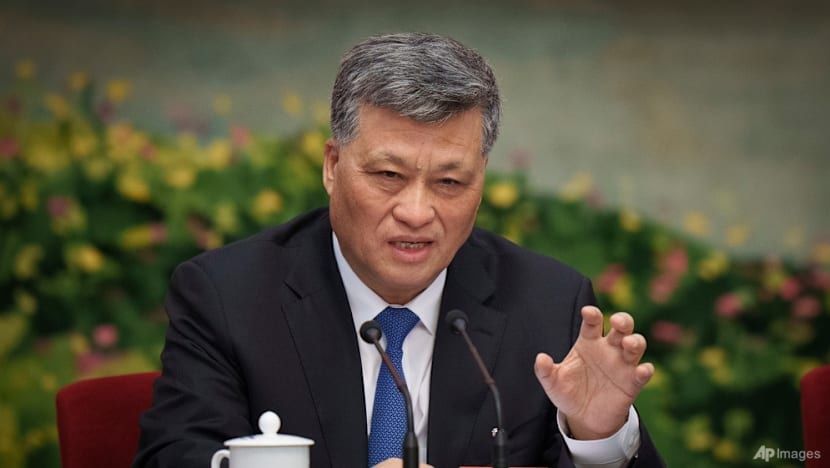
China's ruling Communist Party has stripped Ma Xingrui, 66, of his Politburo membership and all official positions following a corruption investigation that revealed extensive abuse of authority. The senior party body, which functions as the country's supreme decision-making council under President Xi Jinping, formally approved the anti-corruption watchdog's findings on Tuesday, concluding that Ma's misconduct was sufficiently grave to warrant expulsion from the party itself.
The investigation into Ma, which commenced in April, documented a pattern of malfeasance spanning personal enrichment, exploitation of his status for sexual favours, and systematic nepotism. Party authorities found that Ma facilitated his family members' acquisition of residential properties at substantially discounted rates, a practice that effectively converted public position into private financial gain. Beyond real estate manipulation, he engaged in transactions where power and money were exchanged for sexual access—a category of corruption that Beijing's party apparatus treats with particular severity as it undermines both institutional integrity and official morality.
Ma's family members leveraged his political standing to accumulate substantial wealth, extracting commercial advantages and securing lucrative business opportunities that would otherwise have remained beyond their reach. The Politburo's formal statement indicated that Ma personally solicited bribes and accumulated vast sums of money and valuables through his position, breaching the party's stipulated standards of conduct. His administration also facilitated preferential treatment for selected business operators, contractors, and job candidates in exchange for financial considerations.
As Xinjiang's regional leader from 2021 until 2025, Ma presided over a vast territory that has occupied a contentious position in Chinese governance. The region experienced recurring cycles of violence targeting civilians through the mid-2010s, which Beijing attributed to armed groups pursuing separatist and Islamist objectives. The Chinese government's response has centred on an expansive security apparatus that authorities characterise as counter-terrorism strategy, concentrating enforcement activities on the Uyghur Muslim population whom officials associate with militant activity.
The stringent security framework implemented across Xinjiang over the past decade has drawn intense scrutiny from international human rights advocates, who argue the measures constitute collective punishment of an ethnic minority. A landmark 2022 assessment by Michelle Bachelet, who formerly served as UN High Commissioner for Human Rights, raised alarms about potential crimes against humanity embedded within Beijing's Xinjiang policies. The Bachelet report has become a reference point for Western governments and civil society organisations challenging China's approach to the region.
Ma's expulsion exemplifies the party's internal disciplinary mechanisms, which function independently of the international criticism surrounding Xinjiang governance. Chinese authorities have consistently rejected external assessments of their regional policies as interference in domestic affairs. The corruption charges against Ma focus exclusively on his personal misconduct rather than the legitimacy or scope of counter-terrorism operations he oversaw.
The case also reflects Xi Jinping's anti-corruption campaign, which has operated continuously since his ascension to power and has resulted in the downfall of numerous high-ranking officials. This systematic purge serves multiple functions within Chinese governance: it removes officials deemed corrupt, consolidates power within the central leadership, and projects an image of party discipline to both cadres and the public. Ma's membership in the Politburo—the apex of party hierarchy—underscores that no official, regardless of rank, remains beyond accountability for personal malfeasance.
For Malaysia and the broader Southeast Asian region, Ma's removal carries implications for understanding how China manages accountability within its governance structures. While international observers often question the independence and impartiality of Chinese investigations, the formal expulsion of a Politburo member demonstrates that the party maintains mechanisms for removing officials from the highest echelons. This insider accountability, however limited by external standards, contrasts with perceptions of untouchable elites in some neighbouring systems.
The intersection of Xinjiang governance, counter-terrorism policy, and official corruption also illuminates broader questions about how security rationales can mask or enable personal enrichment. Ma's case suggests that even officials operating within Xi's security-centric framework remain vulnerable to prosecution for self-serving behaviour that strays beyond the boundaries of their authority. Yet the case simultaneously highlights how China compartmentalises internal party discipline from international scrutiny of Xinjiang policies—the former treated as a matter of domestic party administration, the latter dismissed as external interference.
As China's regional influence extends throughout Southeast Asia through infrastructure investment, trade relationships, and diplomatic engagement, the governance patterns within its own institutions warrant attention from regional policymakers. Understanding how Beijing manages internal corruption, enforces party discipline, and prioritises security considerations provides context for interpreting Chinese institutional behaviour in transnational contexts.

