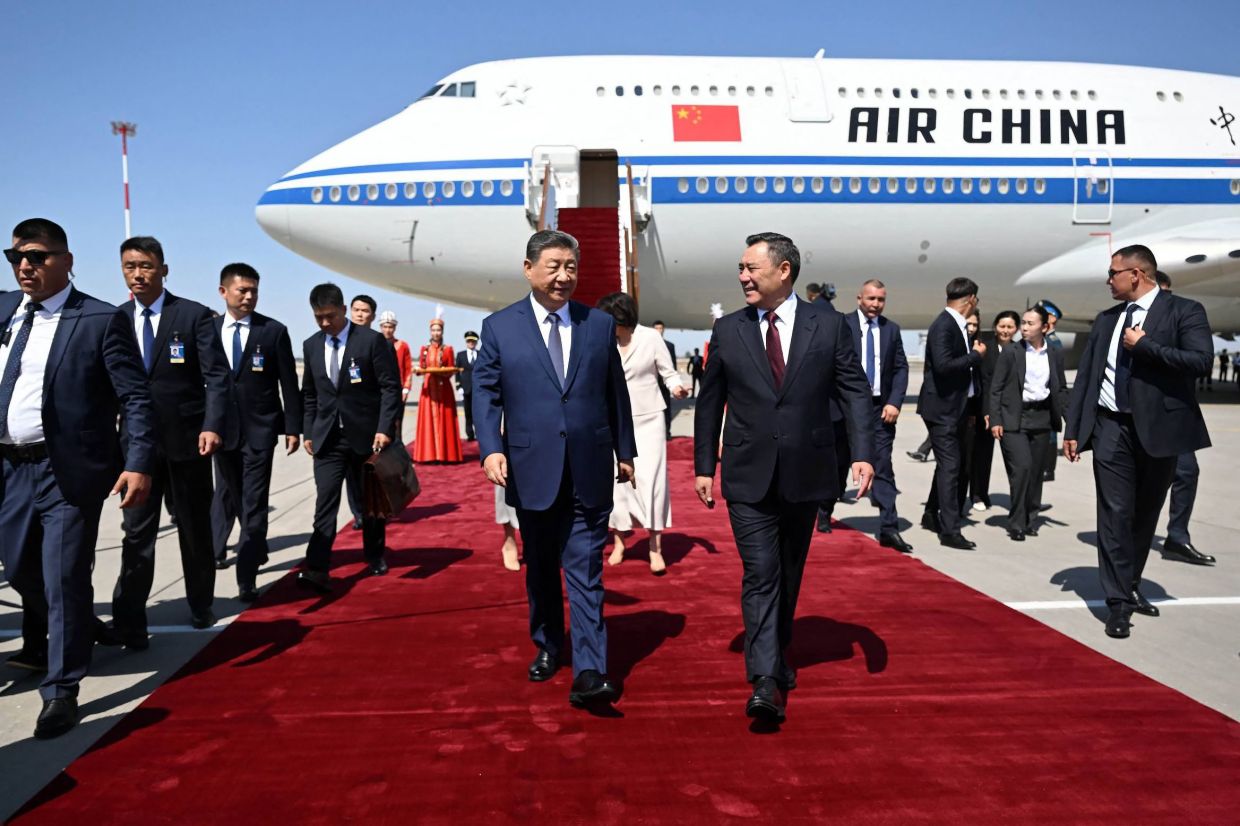
The Shanghai Cooperation Organisation is hosting its latest summit this week in Bishkek, Kyrgyzstan, with a constellation of major Asian powers converging to reaffirm their commitment to an alternative geopolitical order. Chinese President Xi Jinping, Russian President Vladimir Putin and Indian Prime Minister Narendra Modi are all scheduled to attend, alongside leaders from nine other member nations spanning Central Asia, South Asia and the Middle East. The gathering represents one of the most significant diplomatic assemblies outside the Western-aligned framework, signalling the growing institutional weight of non-Western powers seeking to reshape global governance structures.
The summit's schedule reflects the urgency many participants feel about deepening their strategic relationships. Beyond the formal multilateral sessions, bilateral meetings underscore the importance members attach to strengthening ties outside public view. Putin and Xi are set to meet on Monday, while the Russian leader is also scheduled to hold separate talks with Iranian President Masoud Pezeshkian on Tuesday. These parallel negotiations reveal how the SCO functions as both a collective forum and a mechanism for bilateral relationship-building, allowing major powers to coordinate positions while pursuing individual strategic objectives. For countries like Russia and Iran, both facing significant international isolation, the summit serves as a critical venue to demonstrate that they maintain robust diplomatic channels and strategic partnerships despite Western pressure.
Founded in 2001 as a security-focused platform among China, Russia and four Central Asian republics, the Shanghai Cooperation Organisation has undergone substantial transformation over its 23-year history. What began as a relatively specialised arrangement addressing regional security concerns has evolved into a more ambitious institutional framework encompassing ten full member states: Russia, China, India, Iran, Pakistan, Belarus, Kazakhstan, Kyrgyzstan, Tajikistan and Uzbekistan. This expansion reflects how China and Russia have deliberately worked to expand the organisation's reach and political significance, positioning it as a genuine counterweight to Western institutions. The SCO's current membership spans from the Black Sea to the Pacific, encompassing roughly a quarter of humanity and controlling substantial portions of global energy reserves and manufacturing capacity.
China has been particularly instrumental in advocating for the SCO's transformation from a modest security mechanism into a comprehensive platform for economic cooperation and political coordination. Beijing's Ministry of Foreign Affairs recently highlighted how the organisation has successfully pioneered fresh approaches to regional collaboration, language that mirrors China's broader push to establish alternative governance models centred on non-Western values and principles. By framing the SCO as an example of successful multilateral cooperation outside the Western system, Chinese officials implicitly contrast it with what they characterise as declining Western institutions and outdated governance approaches. This messaging resonates particularly with SCO members frustrated by perceived Western interventionism or concerned about maintaining strategic autonomy in an increasingly multipolar world.
For Russia, now nearly five years into its full-scale military campaign in Ukraine, the Bishkek summit carries particular diplomatic weight. The gathering offers Moscow an opportunity to demonstrate that its international isolation remains incomplete and that substantial powers continue viewing Russia as an indispensable strategic partner. Iranian attendance is similarly significant, as Tehran utilises the forum to strengthen relationships with Asian powers amid escalating tensions with the United States and Israel. Both nations view the SCO as an essential platform for coordinating with partners who have resisted Western pressure to impose sanctions or diplomatic isolation. The summit effectively provides these two countries with tangible evidence of international legitimacy and ongoing diplomatic engagement despite their pariah status in Western capitals.
Yet the SCO's reality proves considerably more complicated than its public positioning as a unified bloc. Member states harbour numerous competing interests, historical grievances and strategic priorities that often conflict with collective action. India's presence at the summit illustrates these tensions acutely. Despite being a full member, New Delhi maintains fundamentally different strategic calculations than China and Russia. India's longstanding border disputes with China, competition with Pakistan over regional influence and reluctance to embrace Beijing's vision of a China-centric Asian order create persistent friction within SCO structures. These competing visions mean that collective SCO positions on major issues often remain vague or consensus-driven to the point of meaninglessness.
Analysts specialising in South Asian geopolitics observe that India approaches SCO participation strategically as an instrument for protecting its own interests rather than as a vehicle for implementing any unified non-Western agenda. According to security specialists at Carnegie India, the summit primarily serves Indian interests by offering New Delhi a seat at the table in a region increasingly dominated by competition between major powers. The SCO membership allows India to remain informed about developments shaping the Asian landscape, including China's initiatives and Russia's strategic calculations, while simultaneously projecting itself as a responsible stakeholder committed to regional stability. This represents classic hedging behaviour—maintaining relationships with multiple partners while avoiding exclusive alignment with any single power bloc.
Turkey's role within the SCO framework further illustrates the organisational tensions between Western and non-Western orientations. Although Turkey holds only dialogue partner status rather than full membership, Ankara has persistently pursued greater integration within SCO structures. President Recep Tayyip Erdogan has repeatedly expressed ambitions to convert Turkey's dialogue partnership into permanent membership, viewing such elevation as validation of Ankara's role as a bridge power connecting Europe, Asia and the Middle East. Turkey's strategy reflects a calculated effort to maintain meaningful engagement with both Western institutions—most significantly NATO membership—and emerging non-Western power structures simultaneously. This balancing act parallels Indian calculations, suggesting that even as new institutions challenge Western dominance, traditional powers remain reluctant to abandon Western affiliations entirely.
Turkey's position within the SCO also reflects broader geopolitical trends affecting the organisation's long-term trajectory. While Ankara maintains NATO membership and participates in Western security architectures, its EU accession process has stalled for more than two and a half decades despite the existence of a 1995 customs union agreement. This prolonged exclusion from European integration has motivated Turkish leadership to develop alternative partnerships and institutional relationships. The SCO represents a natural avenue for this diversification, offering Turkey opportunities to strengthen its presence in Eurasia and participate in Asian power dynamics without requiring abandonment of traditional Western ties. This pattern suggests that the SCO's future strength may depend less on ideological commitment to replacing Western-led order than on practical benefits its members derive from membership.
For Malaysian observers and policymakers, the Bishkek summit carries significant implications for Southeast Asian positioning in emerging geopolitical structures. While Malaysia is not an SCO member, the organisation's development directly affects the regional environment in which Southeast Asian nations operate. The SCO's expansion and institutional consolidation suggests that major power competition increasingly operates through multiple overlapping frameworks rather than a single bipolar or unipolar system. Malaysia and other ASEAN members must navigate relationships with SCO members including China, Russia and India while maintaining engagement with Western partners. Understanding the SCO's actual capacity for collective action versus its rhetorical positioning as a unified bloc becomes crucial for ASEAN strategic planning.
The summit ultimately reveals both the appeal of non-Western institutional alternatives and the significant constraints limiting their effectiveness. The SCO provides member states with a platform for coordination and symbolically demonstrates that alternatives to Western-led governance structures exist and function. Simultaneously, the divergent interests, historical animosities and strategic competitions among members prevent the SCO from operating as a truly unified political or military alliance. This reality suggests that the future international system will likely feature competing multilateral institutions operating in parallel rather than one institution decisively supplanting another. For Southeast Asian nations like Malaysia, this environment requires sophisticated diplomatic navigation, maintaining relationships across multiple institutional frameworks while protecting regional autonomy and strategic interests.

