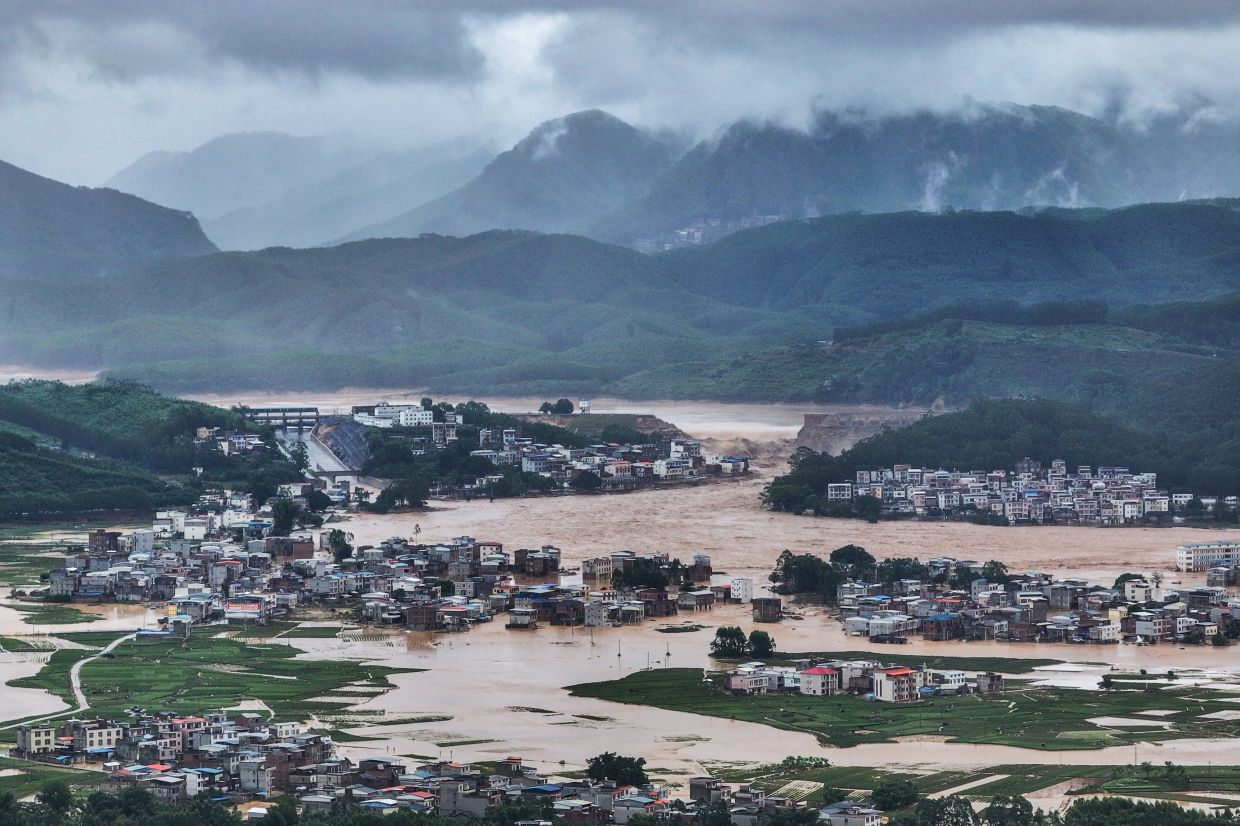
The Chinese government is casting its net wide in investigating the catastrophic failure of the Liulan Reservoir in Hengzhou, Guangxi Zhuang autonomous region, opening inquiry channels for ordinary citizens to submit evidence and observations about the July 6 collapse. State media disclosed on Monday that residents and anyone with relevant knowledge can telephone a dedicated hotline or file written submissions to the State Council investigation team, with a deadline of August 15 for formal documentation. This strategy of mobilizing public participation reflects official acknowledgement that community testimony and local knowledge often prove indispensable in reconstructing complex disaster sequences and identifying systemic failures that might otherwise remain obscured.
The investigation framework reveals the comprehensive scope of accountability authorities intend to pursue. Officials have signalled their determination to establish a complete chronological reconstruction of events, identify the underlying causes that made the reservoir vulnerable to failure, scrutinize gaps in disaster preparedness systems, evaluate the adequacy of emergency response protocols, and assess rescue operation effectiveness. By framing the inquiry as a mechanism for institutional learning, the government seeks to extract lessons applicable to preventing similar collapses elsewhere. This multi-layered approach suggests recognition that dam failures represent not merely technical engineering questions but complex governance challenges spanning preparedness, communication, and coordinated response.
China has employed this public-engagement model during previous State Council investigations into high-casualty disasters that generated substantial social tension. The 2021 Zhengzhou floods in Henan province, which claimed more than 300 lives during torrential rainfall, prompted similar public appeals for information. More recent incidents, including industrial accidents with mass fatalities, have likewise triggered this inclusive investigation methodology. The pattern indicates that authorities have internalized lessons about information credibility—when disasters provoke public speculation and online rumour-spreading, official investigations gain legitimacy and social acceptance by visibly incorporating community voices rather than relying exclusively on bureaucratic fact-finding.
The Liulan Reservoir catastrophe erupted when Typhoon Maysak delivered record-breaking rainfall across Guangxi, overwhelming the structure's capacity and triggering severe erosion. The scale of water release proved devastating: a massive breach opened suddenly, unleashing torrents that inundated downstream communities with little warning. Tens of thousands of residents faced emergency evacuation orders as floodwaters spread across populated areas. The initial official casualty count stood at 26 confirmed dead and seven missing from the Liulan collapse itself, but the disaster extended beyond this single structure—simultaneous dam breaches and flooding at neighbouring reservoirs claimed an additional 13 lives and left two persons unaccounted for, according to state statistics released by July 9.
The absence of updated casualty figures in the weeks following the disaster has fuelled online speculation about the true death toll, with some internet users claiming substantially higher numbers. Local authorities have repeatedly denied these assertions, characterizing them as baseless rumours. At least one resident faced police action for allegedly disseminating false casualty information, demonstrating official sensitivity to narratives that diverge from official counts. This tension between state-provided figures and public scepticism underscores broader concerns in Chinese disaster reporting, where information management and accountability often intersect uncomfortably, particularly when casualties prove politically or administratively sensitive.
Public discourse surrounding the collapse has naturally shifted toward examining why the dam failed and why evacuation warnings reached residents seemingly too late for orderly departure. These conversations reflect citizen desire to understand not merely what happened but whether preventable errors or institutional failures contributed to loss of life. Online discussions have become spaces where ordinary people attempt to reconstruct causation chains and assign responsibility, filling informational vacuums that official statements have not fully addressed. The decision to open formal public inquiry channels may partly reflect official recognition that suppressing such discussions proves counterproductive, whereas channelling them into structured investigation processes enhances governmental credibility.
The State Council investigation apparatus established itself in Nanning, the Guangxi regional capital, convening its inaugural meeting on July 24. This institutional presence signals serious commitment to thorough examination, positioning the investigation beyond merely local or regional administrative capacity. The team's establishment in the provincial capital rather than exclusively in Hengzhou suggests intent to maintain some analytical distance and independence from potentially compromised local officials. The timeline—commencing investigation three weeks after the disaster—allowed authorities to move beyond immediate emergency response phases toward systematic examination of causative factors and institutional performance.
Precedent from the Zhengzhou flood investigation offers instructive comparison for understanding likely investigation trajectories. That inquiry ultimately identified multiple official failures in flood preparedness and emergency management, leading to accountability measures against senior officials including disciplinary actions against Communist Party and municipal leadership. Officials acknowledged that negligence and failure to discharge prescribed responsibilities contributed to casualties. Several dozen officials faced consequences ranging from administrative discipline to criminal prosecution. This outcome demonstrates that when state investigations conclude with findings of official misconduct, accountability mechanisms do follow, though the extent and severity of consequences remain subjects of political determination rather than purely objective adjudication.
For regional observers in Southeast Asia, the Liulan incident and investigative response carry implications for transboundary water governance and disaster preparedness. Guangxi's geographical proximity to several Southeast Asian nations means that dam operations and water management decisions carry potential cross-border consequences. The investigation's focus on prevention and institutional strengthening aligns with broader regional interests in ensuring that infrastructure management meets robust safety standards. Moreover, the investigation model itself—emphasizing transparency mechanisms and public participation—reflects international best practices that other nations in the region might contemplate adopting for their own disaster inquiries.
The inquiry's emphasis on drawing preventive lessons extends beyond the immediate Guangxi context toward broader implications for China's aging infrastructure portfolio. Many reservoirs across the country were constructed decades ago during periods when construction standards and maintenance protocols differed substantially from contemporary expectations. Climate change is intensifying rainfall patterns and precipitation extremes, placing existing structures under unprecedented stress. Any findings regarding Liulan's vulnerabilities will likely inform national reservoir safety reviews and potentially trigger upgrades across multiple provinces. The investigation thus functions not as backward-looking blame assignment alone but as forward-looking infrastructure risk assessment with substantial economic and social implications.
The public inquiry mechanism also serves communicative and legitimacy functions beyond factual fact-finding. By inviting citizen participation, authorities acknowledge that disaster investigations in contemporary China must engage with informed public opinion rather than dismiss it. The hotline and submission deadline create formal structures through which grievances, observations, and information can flow into official channels without requiring individuals to navigate bureaucratic systems directly. This approach may help distinguish between speculation and substantive information while simultaneously demonstrating governmental responsiveness to public concern—a crucial consideration given the disaster's substantial impact on regional populations and the attention it has garnered nationally and internationally.

