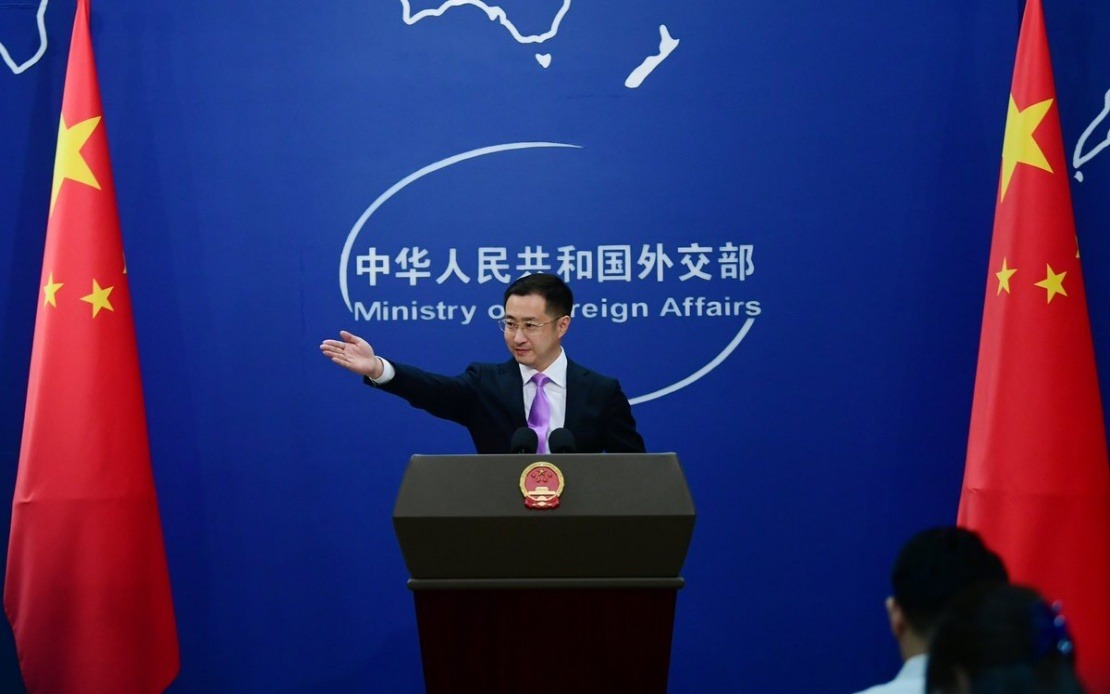
China's Ministry of Foreign Affairs has formally commended Malaysian Prime Minister Datuk Seri Anwar Ibrahim for his consistent advocacy of the one-China principle, signalling Beijing's appreciation for Malaysia's diplomatic alignment on this sensitive geopolitical issue. The endorsement came through an official statement posted on social media by the ministry's spokesperson on Wednesday, emphasizing that China's path toward reunification remains inevitable and that international support for this principle cannot be undermined.
Anwar's recent comments during an interview with Al Jazeera, in which he characterized Taiwan as an integral part of China and stated "It is one China. It is accepted by all," have drawn formal recognition from the Chinese government. These remarks reflect Malaysia's longstanding diplomatic position, which has historically maintained support for Beijing's sovereignty claims over Taiwan while balancing practical economic and strategic relationships across the region.
During a regular press briefing in Beijing on Wednesday, Chinese Foreign Ministry spokesperson Lin Jian elaborated on the significance of Anwar's statements, arguing that upholding the one-China principle reflects the sentiment of ordinary people and represents the morally correct stance in international relations. Lin reiterated China's core position that Taiwan constitutes an inseparable part of Chinese territory, and characterized the country's eventual reunification as an inescapable historical trajectory that no external force can alter.
Malaysia's reaffirmation of the one-China principle carries particular weight in Southeast Asian diplomatic circles, given the region's complex relationship with Beijing and Taiwan. As a major ASEAN member with significant economic ties to both China and Taiwan, Malaysia's explicit support for the one-China framework signals consistency in its foreign policy orientation, particularly important following transitions in regional leadership and shifting geopolitical alignments throughout Southeast Asia.
The public commendation from China's foreign ministry underscores how closely Beijing monitors statements by leaders of strategically important nations. Malaysia's position as a moderate ASEAN voice and its role as a bridge between diverse regional interests make such endorsements valuable to China's diplomatic efforts to consolidate international support for its Taiwan policy. Anwar's remarks serve to reinforce Malaysia's traditional stance within the context of broader ASEAN diversity on this issue.
For Malaysian policymakers, maintaining this delicate diplomatic balance remains essential. While reaffirming the one-China principle aligns with Malaysia's formal diplomatic commitments and international law recognition, the country simultaneously maintains substantial commercial partnerships with Taiwan, including semiconductor supply chains and technology investments that are economically significant to Malaysia. This duality requires careful navigation to avoid creating friction with either Beijing or Taipei.
The timing of China's public response reflects the government's broader strategy of securing explicit support from important developing nations on the Taiwan question. As geopolitical tensions have intensified in recent years, particularly following various international developments affecting cross-strait relations, Beijing has intensified efforts to obtain vocal backing from diplomatic partners, transforming what might once have been routine policy statements into matters of notable international significance.
Anwar's comments also demonstrate how Malaysia's diplomatic messaging has evolved under his leadership since returning to the prime ministership. His willingness to articulate clear positions on contentious international matters, communicated through major international media platforms, suggests a more proactive approach to shaping Malaysia's image and interests in global affairs compared to some of his predecessors' more reserved approaches.
The broader context for these exchanges includes the escalating strategic competition between major powers in the Indo-Pacific region, where Malaysia occupies a crucial position. As nations increasingly seek to position themselves amid competing spheres of influence, Malaysia's explicit statements on issues like the one-China principle acquire added significance beyond their literal diplomatic content, functioning as signals of alignment in a rapidly polarizing international environment.
For Southeast Asia more broadly, Malaysia's position exemplifies the challenge facing regional nations as they navigate relationships with China while maintaining connections to democratic allies and the international liberal order. Unlike some ASEAN members that have adopted more neutral or hedging positions, Malaysia's clear articulation of support for the one-China principle places it among nations willing to take explicit stances on contested geopolitical matters, even when such positions complicate relationships with other important partners.
Looking forward, Malaysia will likely continue balancing these competing interests as regional tensions fluctuate and international pressure mounts on nations to take clearer positions on major geopolitical questions. The government's ability to maintain productive relationships with both Beijing and Taipei while managing ASEAN consensus on regional stability will remain a defining challenge for Malaysian diplomacy in coming years.

