China's push to harness artificial intelligence for scientific breakthroughs faces a critical vulnerability: the country's overwhelming dependence on imported precision instruments for generating the experimental data that powers advanced research. At a major conference in Shanghai last week, leading researchers highlighted how this reliance could fundamentally undermine Beijing's ambitions in what has become a strategic priority, even as geopolitical tensions restrict access to the very equipment China needs most.
Weinan E, a mathematician at Peking University and member of the Chinese Academy of Sciences, drew an evocative comparison to illustrate the problem. Without domestically produced precision instruments capable of generating high-quality experimental data, China's artificial intelligence capabilities in scientific research would be "like cooking without rice"—technically possible but fundamentally unworkable. E's observation cuts to the heart of a structural challenge: sophisticated AI models require vast quantities of reliable, high-fidelity experimental information to train effectively, and inferior or incomplete data cannot be compensated for through algorithmic ingenuity alone.
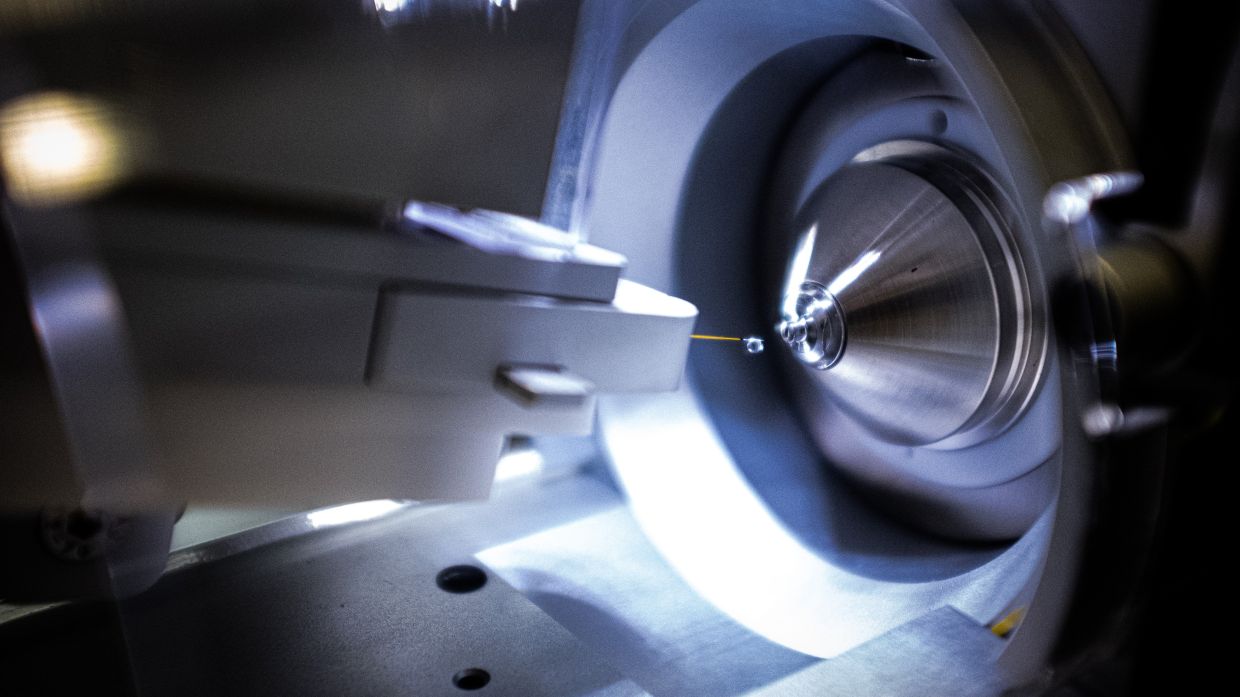
The scale of China's import dependence is striking. In 2024 alone, China imported approximately US$17 billion worth of scientific equipment, with more than three-quarters of major research instruments in the country originating from foreign manufacturers. The dependency becomes even more pronounced when examining specific categories critical to AI-driven research. According to a consulting analysis released earlier this year, China relies on imports for 83 per cent of its mass spectrometers and chromatographs, the devices that identify molecular structures and separate chemical compounds for analysis. Spectrometer imports account for roughly 75 per cent of total supply, while optical instruments and biological tissue analysis equipment are almost entirely sourced internationally. Each of these technologies plays an indispensable role in generating the experimental datasets that researchers feed into machine learning systems.
This structural vulnerability carries immediate operational consequences for Chinese research institutions. Imported equipment typically carries substantially higher costs due to tariffs, distribution margins, and currency fluctuations. Maintenance cycles lengthen when spare parts must be sourced internationally and shipped across continents. Technical support from manufacturers proves slower and more complicated when companies must coordinate across time zones and navigate regulatory frameworks. Cumulatively, these friction points reduce research efficiency and create bottlenecks that slow scientific progress at precisely the moment when China is prioritising speed in emerging technologies.
The situation has deteriorated markedly as Washington has weaponised export control policy to constrain Beijing's technological advancement. During Donald Trump's first presidency, more than 42 per cent of China-related entries on the US export control lists involved equipment restrictions. Those policies have accelerated rather than diminished under Trump's second term, motivated by explicit concern that advanced equipment could support Chinese military modernisation and the design of new weapons systems through artificial intelligence applications. In January, the US Department of Commerce announced fresh export controls targeting high-parameter flow cytometers and specific mass spectrometry equipment, explicitly citing concerns that these technologies generate "high-quality, high-content biological data" suitable for developing AI and biological design tools—essentially acknowledging that Washington views precision instruments as dual-use technology integral to military capability.
Beyond the hardware constraint, Chinese researchers confront a second, equally serious disadvantage in the underlying artificial intelligence foundations themselves. E warned that China's progress in applying AI to scientific problems faces a significant gap compared to international counterparts, particularly in what researchers call "foundation models"—the large language or multimodal models that provide the basic intelligence framework. This difference extends beyond raw computational power or dataset size. The strategic approaches diverge fundamentally. American institutions have concentrated on improving general-purpose foundation models and integrating them with automated research infrastructure, creating flexible platforms adaptable to diverse scientific domains. China has adopted a more application-specific approach, building scientific AI infrastructure tailored to particular research fields, integrating data, software, computing resources and equipment simultaneously.
E emphasised that simply grafting scientific capabilities onto existing open-source models represents a fundamental misunderstanding of what is required. Developers cannot solve complex scientific problems through post-training modifications alone; the underlying model architecture itself must possess sufficient depth and capability. This architectural disadvantage compounds the equipment dependence problem. Even if Chinese researchers obtain access to precision instruments, they lack the foundational model strength to extract maximum value from the resulting experimental data.
Addressing these interconnected challenges requires systematic restructuring of how Chinese science operates. E proposed three major "breaks" essential to adapting the research ecosystem for the AI era. First, disciplinary boundaries must dissolve to enable genuine cross-field collaboration; artificial silos between physics, chemistry, biology and engineering obstruct the integrative thinking that AI applications demand. Second, the traditional divide between theoretical research and experimental work requires elimination; hypothesis-driven theory and empirical validation must proceed in parallel rather than sequentially. Third, the barrier separating academic institutions from industry must lower, enabling rapid technology transfer and practical implementation.
Equally important, China's research evaluation systems require fundamental reform. Traditional metrics emphasising academic publications provide poor incentives for the infrastructure development crucial to AI-for-science. Creating and maintaining high-quality datasets, developing software tools, building automated equipment systems and establishing computational infrastructure generates enormous value but produces few publishable papers. Researchers pursuing these essential activities face career disadvantages under existing evaluation frameworks. Reorienting incentive structures to reward infrastructure contribution alongside published scholarship could unleash significant innovation capacity currently constrained by misaligned incentives.
For Malaysia and broader Southeast Asia, these developments carry significant implications. As China pursues technological independence in precision instrumentation, Southeast Asian suppliers and manufacturers face both threat and opportunity. The region's growing scientific capacity depends partly on access to the same equipment China seeks to domesticate. Chinese competitors advancing through heavy investment in equipment manufacturing could eventually reshape regional supply chains. Simultaneously, Southeast Asian research institutions might benefit from Chinese competition driving prices down or expanding product availability, though this remains uncertain.
The fundamental tension appears irresolvable through incremental steps. China cannot simply purchase its way to scientific independence while facing escalating US export controls. Domestic equipment development requires years of investment and expertise accumulation. Foundation model disadvantages cannot disappear overnight despite massive computational investment. Yet the strategic imperative remains clear—China cannot sustain leadership in AI-driven research, military systems, and advanced manufacturing while dependent on imported scientific instruments and restricted in access to international technology. This structural constraint will shape Chinese scientific policy and strategic technology investments for years ahead, with ripple effects throughout the Asia-Pacific region.

