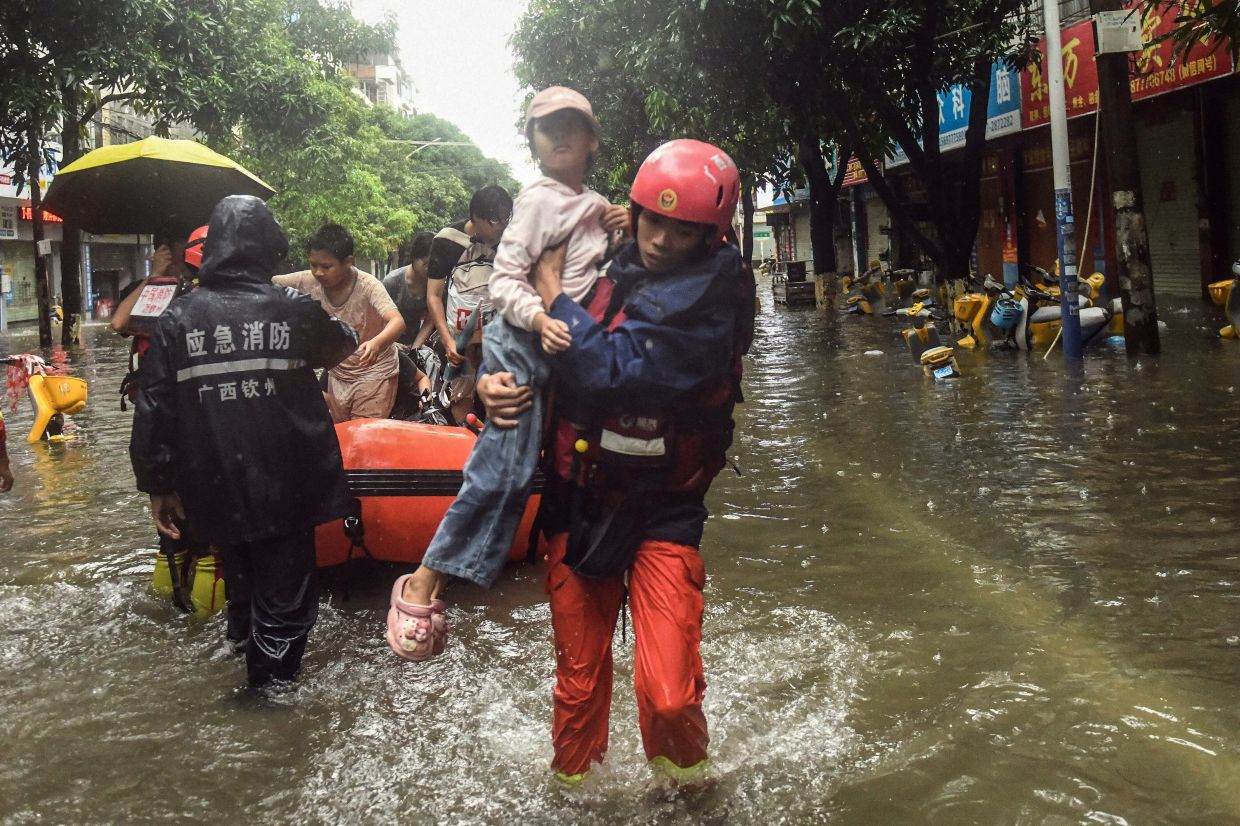
Rescue operations are intensifying across multiple provinces in China following a catastrophic weather event that has claimed at least 39 lives and displaced over 100,000 people. The twin disasters—Typhoon Maysak in southern China and a separate landslide in the northwest—have overwhelmed emergency services and forced authorities to maintain the highest alert levels for flood control. With meteorologists predicting sustained rainfall through the week, officials warn that the worst may not yet be over for affected communities.
The southern region of Guangxi has borne the brunt of the typhoon's impact, where six confirmed deaths and the evacuation of at least 130,000 people underscore the severity of the deluge. The scale of the disaster becomes apparent when examining the infrastructure damage: torrential rains have breached the banks of 40 separate rivers and waterways, inundating nearly 13,000 acres of prime agricultural land. Footage broadcast by state television showed the catastrophic collapse of a reservoir dam, with torrents of muddy water surging through its fractured concrete structure as rescue workers in life vests navigated the surging waters on inflatable boats.
The flooding crisis represents a significant strain on regional resources and infrastructure. Authorities have elevated their flood-control emergency response to the second-highest level across Guangxi, signalling the unprecedented scale of the threat. The Minister of Water Resources, Li Guoying, warned that flood peaks at the Wuzhou Hydrological Station could exceed safe warning levels by more than six metres when the surge reaches the facility early on Thursday. His cautionary assessment highlights the cascading nature of such disasters: rising floodwaters in upstream areas will intensify dangers downstream, where embankments and additional reservoirs face mounting pressure from sustained high water levels.
Beyond the immediate humanitarian crisis, the persistent rainfall poses ongoing structural risks across the affected provinces. Li's statement that "reservoirs and embankments in the affected areas face a severe test" underscores how successive waves of floodwater can overwhelm flood-management infrastructure already stressed by the initial deluge. The extended duration of high water levels is particularly concerning, as saturation of embankments reduces their structural integrity and increases the likelihood of catastrophic failure in outlying areas.
Rescue and relief efforts are being coordinated across multiple government levels. Chinese authorities have mobilised substantial resources, dispatching food supplies, protective clothing, and rubber boats to affected communities. The State Flood Control and Drought Relief Headquarters has maintained operational coordination, though the geographical spread of the disaster across Guangxi and into neighbouring Guangdong province stretches available personnel and equipment. President Xi Jinping directed rescue teams to "go all out" in their emergency operations, signalling high-level political attention to the crisis management response.
The disaster in Guangxi is compounded by severe weather in other regions. Thunderstorms and destructive winds swept through the central province of Hubei, killing 11 people and leaving 331 injured. In Hubei alone, the storms damaged 4,800 houses and completely destroyed 22 more, displacing thousands of residents. Additional tornadoes were reported across other provinces, expanding the geographical footprint of the weather emergency and distributing rescue resources even more thinly across affected areas.
Further west, an independent but simultaneous catastrophe has added to the nation's disaster management burden. A landslide in Dangchang County, Gansu province, has claimed 21 lives following an initial toll of 33 buried residents. The slide occurred early on Tuesday morning at Rencang village, and despite rapid deployment of rescue teams, recovery operations have concluded with a final confirmed death toll that remains substantially high. The cause of the landslide remains under investigation, though such events are often triggered or exacerbated by saturated ground conditions resulting from heavy rainfall in mountainous regions.
For Malaysia and Southeast Asia, China's current weather crisis carries several implications worth monitoring. First, the scale and intensity of these disasters highlight the region's growing vulnerability to extreme weather events driven by climate patterns. Second, any disruption to Chinese industrial or agricultural output—particularly from Guangxi, a significant manufacturing hub—could ripple through regional supply chains. The inundation of nearly 13,000 acres of agricultural land raises questions about food security and potential commodity price pressures across Southeast Asia. Third, the disaster response mechanisms deployed by Chinese authorities offer lessons and potential models for coordinating transnational disaster relief, should flooding or typhoons affect multiple nations simultaneously.
The persistence of rain into Wednesday and beyond creates a moving target for rescue operations. Authorities in both Guangxi and Guangdong face the challenge of managing ongoing inflows even as they respond to existing flooding. The commitment of 30 million yuan (approximately US$4.4 million) in reconstruction funds for the Gansu landslide site signals that Chinese officials are simultaneously pivoting toward recovery planning while the immediate crisis continues to unfold. However, the adequacy of such funding to address losses across all affected regions remains uncertain, particularly given the scale of agricultural damage and the complexity of dam reconstruction.
China's vulnerability to such compound disasters during summer months reflects broader climatic and geographical realities. The country's monsoon-influenced weather patterns create conditions for intense rainfall over short periods, particularly when tropical systems like Typhoon Maysak track into populated regions. Many of China's major population centres and industrial areas are situated in flood-prone lowlands or downstream of mountainous terrain prone to landslides. The concentration of both deaths and evacuations in Guangxi exemplifies how a single weather system can deliver simultaneous threats—flooding, dam failures, and secondary hazards—that compound demands on emergency response capacity.
Looking ahead, the week's forecast remains critical. Continued rainfall through Wednesday will prevent water levels from stabilising, prolonging the evacuation and maintaining the heightened alert status. Rescue teams will race against time to locate any remaining missing persons before secondary hazards such as disease, landslides triggered by saturated soils, and infrastructure failures multiply the tragedy. The coordination between provincial authorities and national agencies will be tested as resources are allocated across Guangxi, Guangdong, Hubei, and Gansu simultaneously. For the 100,000 evacuated residents awaiting the all-clear to return home, the coming days will prove decisive in determining whether this becomes a manageable disaster or a regional catastrophe.

