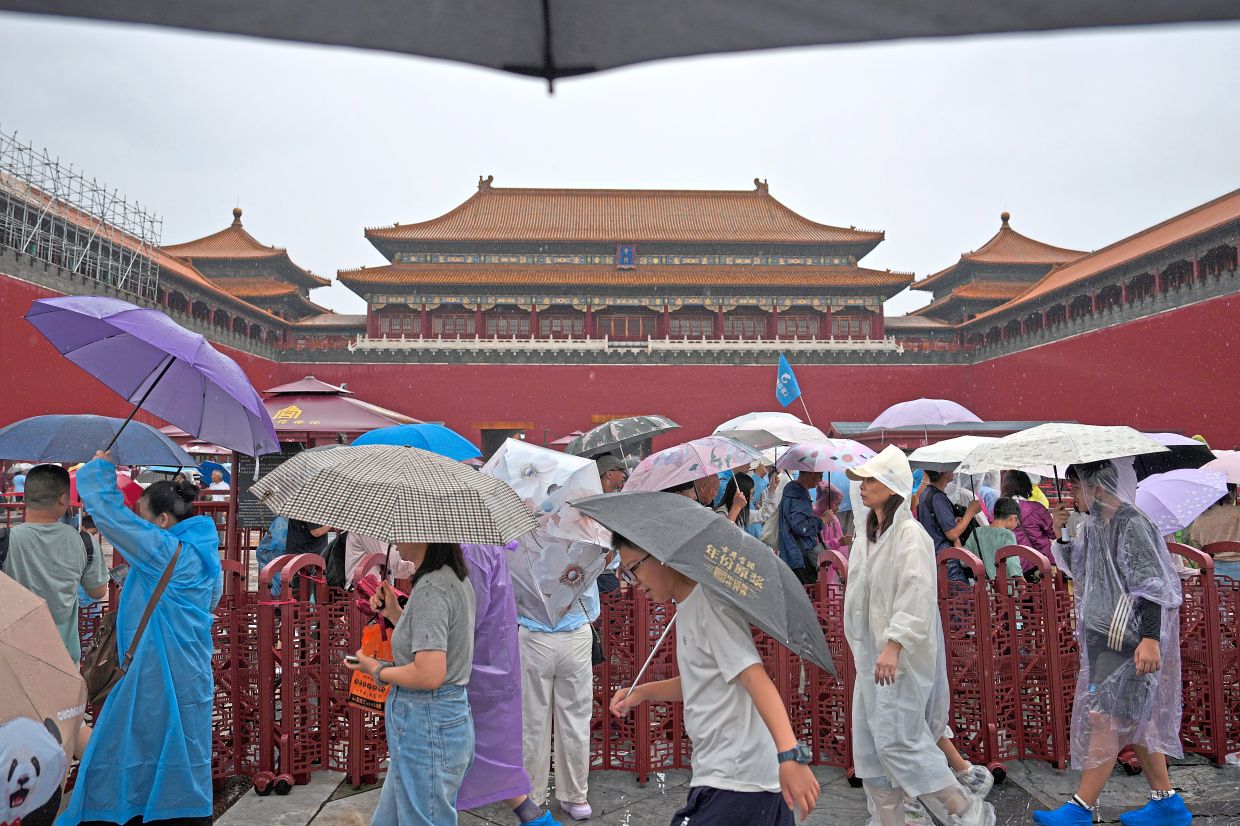
China's recovery as a major tourist destination has accelerated dramatically following years of pandemic-induced isolation, with foreign arrivals now surpassing pre-Covid levels for the first time. The resurgence represents a significant shift in regional tourism patterns, with implications extending across Southeast Asia as travellers redirect spending from traditional destinations like Thailand towards China's increasingly sophisticated urban experiences. Young international visitors, particularly from neighbouring Asian countries, have been drawn by a combination of government-sponsored initiatives and organic social media trends that have repositioned Chinese cities as aspirational travel destinations.
The turning point came when Beijing launched an aggressive visa liberalisation programme beginning in 2023, gradually extending visa-free access to 50 countries. However, the initial rollout proved sluggish as lingering concerns about pandemic restrictions and disrupted flight schedules dampened interest. The real momentum began building throughout 2024 and into 2025, when China's National Bureau of Statistics recorded approximately 35 million foreign tourists arriving annually—a figure that places the country alongside established Asian tourism powerhouses such as Japan and marginally ahead of Malaysia. This surge represents a fundamental recalibration of tourism flows in the region, with visitors now choosing Chinese destinations over competitors with longer-standing international tourism infrastructure.
Government strategy has evolved beyond simple visa facilitation to encompass sophisticated digital marketing campaigns. Chinese officials deployed promotional initiatives across Western social media platforms including TikTok and X—ironically, the very services blocked within China's domestic internet. This calculated use of foreign platforms demonstrates a shift in how Beijing approaches international engagement, recognising that contemporary tourism demand originates from digital recommendations rather than traditional travel guides. Local administrations have committed substantial funding to these efforts, with Beijing allocating CNY2.64 million specifically for managing increased tourist flows and launching online publicity initiatives, while Shanghai has budgeted at least CNY1.6 million for campaigns on platforms like Expedia and Booking.com.
The role of social media culture in driving arrivals cannot be overstated. Viral content depicting architectural innovations, lifestyle aesthetics, and urban experiences has created what marketing professionals describe as authentic representations of Chinese daily life rather than museum-focused tourism narratives. Trends such as "Chinamaxxing"—where Western visitors adopt Chinese habits including consuming hot beverages and practising traditional wellness routines—have resonated particularly among younger demographics. Chongqing's tourism deputy director Zhu Mao has explicitly prioritised making the megacity "Internet famous" through influencer partnerships, recognising that algorithmic visibility directly translates to visitation rates. This represents a departure from conventional destination marketing towards what specialists call experiential social proof.
Visa-free arrangements have proven exceptionally effective, accounting for over 70 percent of arrivals in 2025, representing a 50 percent increase from 2024 alone. The first half of 2026 witnessed 18 million visa-free entries, contributing to a 20 percent surge in total foreign tourists. South Korea, Russia, Malaysia, and Thailand have emerged as leading source markets for this visa-free category, indicating that regional Asian travellers respond most readily to reduced bureaucratic friction. Notably, Beijing has experienced sharp increases in Vietnamese and Russian visitors whilst Japanese arrivals have declined following diplomatic tensions, illustrating how geopolitical dynamics immediately influence tourism flows.
China's revised tourism economy benefits from structural advantages beyond policy reforms. Geopolitical disruptions affecting Middle Eastern stability have elevated air ticket prices along Gulf transit routes, encouraging airlines to route international passengers through major Chinese hubs. China's state-controlled carriers—China Eastern, Air China, and China Southern—offer competitive pricing that foreign airlines, operating at reduced capacity compared to pre-pandemic levels, cannot match. This gives Chinese carriers a temporary but significant competitive advantage in capturing international transit and destination traffic.
The spending patterns of international visitors reveal both opportunities and limitations in China's tourism sector. Foreign tourists spend approximately US$2,240 per visit, substantially below per-capita spending in mature tourism economies. China generated less than one-third of American tourism receipts and approximately 40 percent of per-capita inbound spending during 2025. Tourism contributed under 0.5 percent of national GDP, dramatically lower than established tourism economies such as Spain and Thailand where the sector represents roughly 8 percent of output. These metrics suggest significant untapped revenue potential, particularly if China can increase visitor spending duration and consumption intensity.
Retail and consumer-facing sectors have emerged as primary beneficiaries of the tourism surge. Miniso's flagship Shanghai store attracts foreign visitors representing up to 70 percent of foot traffic during peak hours, driven by exclusive collaborations with culturally resonant characters and brands. The company has experienced accelerating overseas expansion, with international sales surpassing domestic revenue and achieving 20 percent year-on-year growth. Judydoll, a beauty brand owned by Joy Group, has achieved over tenfold growth within two years through primarily Vietnamese and Japanese markets, generating more than CNY600 million in overseas retail sales. These metrics indicate that Chinese consumer brands are leveraging tourism-driven brand awareness to penetrate foreign retail markets, creating multiplier effects beyond immediate tourism spending.
Specialised sectors capitalise on dramatic cost differentials compared to developed economies. American tourists have discovered that dental procedures cost approximately one-fifth of United States prices, whilst Europeans commission bespoke tailored garments from Shanghai's traditional garment markets. These value-driven motivations create repeat visitation incentives and extend average stay duration, increasing total per-visitor expenditure. Chinese domestic consumption weakness and struggling real estate markets have intensified focus on tourism revenue as a critical economic stimulus for municipal governments and retail enterprises.
However, operational barriers significantly constrain the visitor experience and potentially limit future growth. China's predominantly cashless urban infrastructure creates substantial friction for international tourists lacking local bank accounts, digital payment integration, or Chinese phone numbers. Simultaneously, the absence of globally ubiquitous applications including Google, Instagram, and WhatsApp—accessible only through technically illegal virtual private networks—compounds navigation challenges. These friction points disproportionately affect first-time visitors and those travelling independently rather than through organised tour groups.
Emerging solutions attempt to address these accessibility gaps. Kora, an artificial intelligence-powered tourist guide platform, has served tens of thousands of visitors since launching in early 2026 by streamlining ride-hailing coordination, restaurant reservations, and providing multilingual chatbot support. Such innovations reduce barriers to independent travel and enhance spontaneous consumption opportunities. Nevertheless, systematic solutions requiring either regulatory modification or technological integration remain underdeveloped, potentially creating a ceiling on tourism growth without further infrastructure adaptation.
Regional implications for Southeast Asian tourism destinations warrant consideration. Traditional Thailand has long dominated regional tourism rankings, yet China's growth trajectory and competitive pricing advantage challenge its market position. Malaysian arrivals into China have expanded markedly following visa-free arrangements, suggesting some displacement of regional tourism spending. The phenomenon extends beyond simple market share competition, reflecting how targeted policy reforms and coordinated digital marketing strategies can rapidly reposition a destination within regional tourism hierarchies. Southeast Asian tourism operators must recalibrate competitive strategies in light of China's resurgent market dynamism.
Pew Research Centre data indicating record-high favourable views of China in 2025 provide political context for the tourism surge. Comparative shifts in perceptions of the United States under the Trump administration appear to have benefited China's international standing. This suggests that tourism recovery reflects not merely policy reforms or viral content, but deeper shifts in geopolitical sentiment that favour Chinese interests. The intersection of authentic visitor experiences, cultural attractiveness, and favourable international sentiment creates conditions for sustained tourism growth, assuming China addresses remaining accessibility and regulatory constraints.

