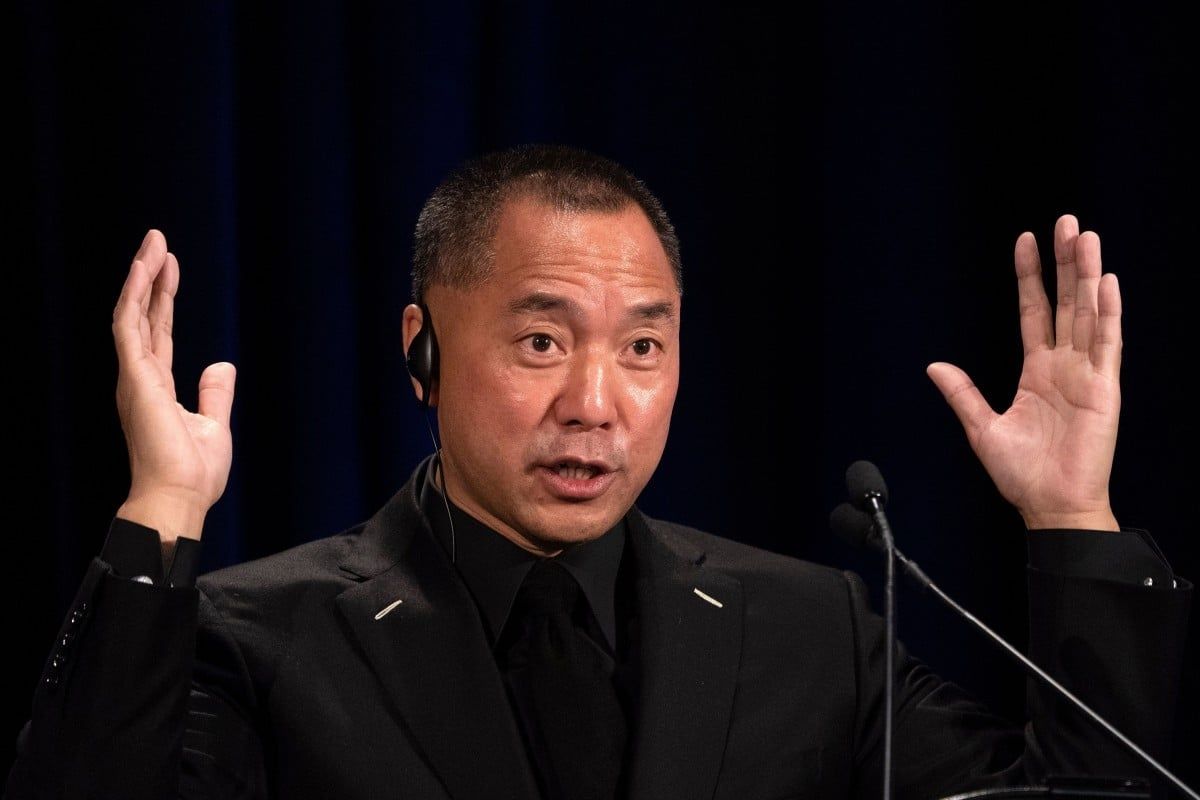
A self-exiled Chinese business magnate once ranked among the wealthiest in his homeland has received a 30-year prison sentence in New York for orchestrating one of the most extensive financial frauds against democracy-seeking investors. Guo Wengui, who abandoned China a decade ago and emerged as a prominent critic of Beijing's Communist Party establishment, was condemned by federal Judge Analisa Torres in a Manhattan courtroom on June 30, with the court finding that his schemes victimised over 1,000 people across multiple countries and caused losses exceeding hundreds of millions of dollars.
The sentencing carries profound implications for Southeast Asian business communities and diaspora networks that have become increasingly entangled with cross-border investment schemes. Guo's case exemplifies how charismatic exiles operating within democratic systems can exploit ideological sympathies and asylum protections to perpetrate massive financial crimes. For Malaysian investors and business professionals engaged in regional networks, the conviction underscores critical vulnerabilities in due diligence practices when evaluating investment opportunities promoted by high-profile political figures or activist businesspeople with compelling personal narratives.
Judge Torres characterised Guo's conduct as deliberately preying on individuals motivated by genuine desire for political reform in China, systematically extracting their savings to finance an extraordinarily lavish lifestyle. During sentencing, the judge referenced letters from defrauded victims describing the devastating psychological and financial toll of their losses, including destroyed family relationships, severe anxiety disorders, and complete depletion of retirement savings. Torres specifically noted that Guo demonstrated no genuine remorse, instead insisting that his actions caused no actual harm and simultaneously directing his remaining supporters to harass and intimidate accusers who dared speak against him.
The evidence presented during a seven-week trial revealed the mechanised nature of Guo's deception. Between 2018 and 2023, prosecutors demonstrated that Guo persuaded hundreds of thousands of investors to commit more than one billion dollars into entities under his control, principally his GTV Media Group, the so-called Himalaya Farm Alliance, and the Himalaya Exchange. These investment vehicles were substantively fraudulent, existing primarily as mechanisms to channel investor funds into Guo's personal wealth accumulation. The defence strategy centred on portraying Guo as a victim of the Chinese Communist Party's persecution, yet this narrative proved insufficient to overcome the overwhelming documentary and testimonial evidence of deliberate fraud.
Guo's trajectory from international business mogul to fraud perpetrator reflects a sophisticated exploitation of geopolitical positioning and ideological alignment. After fleeing China, he established himself in luxury Manhattan real estate overlooking Central Park and joined Mar-a-Lago, the exclusive Florida golf club associated with Donald Trump. More significantly, he cultivated an intimate working relationship with conservative political strategist Steve Bannon, and together they publicly announced initiatives aimed at overthrowing the Chinese government in 2020. This political positioning within American conservative circles provided credibility that enabled him to attract ideologically motivated investors who believed their capital would advance democratic causes while generating financial returns.
The quantum of restitution ordered by the court—889 million dollars—represents one of the largest financial judgments against an individual defrauder in recent years. However, legal observers note that such court orders frequently remain largely uncollected given defendants' limited assets after criminal forfeiture proceedings. For victims spread across multiple nations, including Southeast Asian investors who participated in these schemes, the practical recovery of stolen funds appears extremely limited. This reality underscores a troubling pattern where sophisticated international fraudsters can inflict massive damage across borders while prosecution and recovery mechanisms remain inadequate.
Guo's defence team attempted to situate his conduct within a broader narrative of political persecution, arguing that lengthy imprisonment would validate what they characterised as a Chinese smear campaign designed to eliminate dissidents from public life. They referenced documented physical torture Guo allegedly endured in China between 1993 and 2022, supported by medical evidence of surgical repairs for trauma-related injuries. The defence also noted that comparable fraud defendants in other jurisdictions received sentences ranging from two to four years, suggesting Guo's 30-year sentence represented judicial overreach. However, prosecutors countered that the unprecedented scale and duration of Guo's fraudulent enterprise, combined with his demonstrated manipulation of thousands of victims, justified the severity of sentencing.
China's response to the conviction reflects ongoing international complexity surrounding Guo's status. Beijing's Ministry of Foreign Affairs confirmed that Guo remains subject to multiple criminal allegations including rape, kidnapping, and bribery. An Interpol Red Notice has been issued against him, representing a formal request to law enforcement agencies worldwide to arrest him pending potential extradition proceedings. This creates an unusual situation where Guo faces both American prosecution for financial crimes and potential Chinese prosecution for separate allegations that human rights advocates have described as politically motivated. The interplay between legitimate criminal prosecution and potential political persecution remains contested and legally ambiguous.
For Malaysian and Southeast Asian readers, Guo's prosecution offers critical lessons regarding investment due diligence and ideological vulnerability. The case demonstrates that compelling personal narratives, including stories of political persecution and noble causes, cannot substitute for rigorous financial investigation and independent verification of investment structures. Multiple victims testified that their decision to invest stemmed primarily from Guo's public positioning as a democracy advocate rather than from conventional financial analysis or verified business models. Educational institutions and professional bodies across the region should examine this case within business ethics curricula, particularly regarding the psychological mechanisms through which ideological alignment can override financial caution.
The sentencing also illuminates vulnerabilities within American asylum and business regulatory frameworks that Guo effectively exploited. His lawyers argued that he benefited from lax asylum protections that permitted him to flourish financially whilst evading accountability. Prosecutors countered that Guo weaponised American democratic freedoms specifically to finance fraudulent schemes targeting vulnerable populations seeking meaningful political change. This tension between protecting genuine refugees and preventing opportunistic exploitation of humanitarian frameworks remains unresolved and highly relevant as Southeast Asian nations increasingly confront migration and diaspora investment issues.
Beyond the immediate criminal justice dimensions, Guo's case reflects broader patterns of transnational financial crime wherein sophisticated actors leverage geopolitical narratives and ideological positioning to access capital markets. The conviction demonstrates that even high-profile individuals embedded within prominent political networks and enjoying substantial media attention remain vulnerable to prosecution when evidence of systematic fraud becomes overwhelming. For investors throughout the region, the fundamental takeaway remains clear: regardless of a promoter's political credentials, public prominence, or association with influential figures, investment decisions must rest fundamentally upon verifiable business structures, independent auditing, and transparent financial disclosures rather than ideological affinity or personal charisma.

