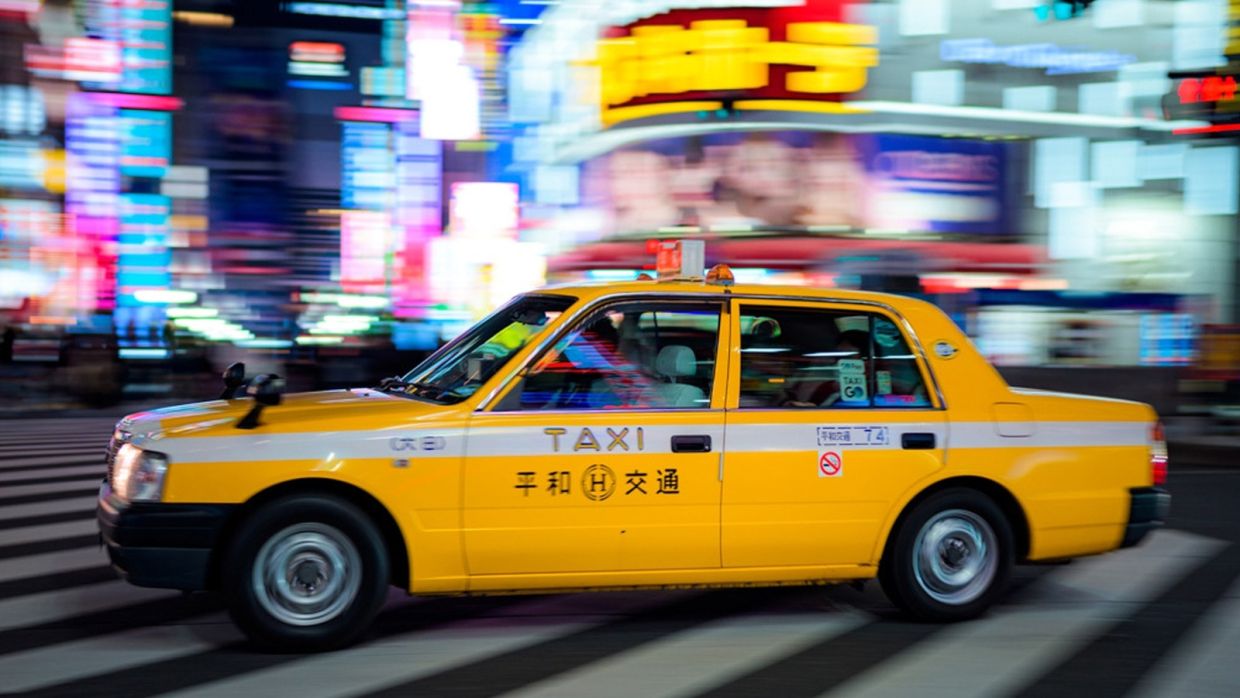
A 41-year-old Chinese businessman named Wang Xiaoyu has been taken into custody by Tokyo authorities on suspicion of orchestrating an elaborate scheme to operate unlicensed taxi services disguised as legitimate commercial transportation. The arrest, which occurred on Sunday, represents a significant crackdown on what police believe is a widespread exploitation of Japan's regulatory framework governing commercial vehicle operations, particularly in serving the booming tourist market centred around Tokyo's major transport hubs.
Wang is accused of leasing vehicles registered under the name of Phoenix Kokusai, a chauffeur service company he effectively controlled, to individuals who were not employed by the company. These non-employees then allegedly used the vehicles to transport Chinese tourists and other passengers in violation of Japan's Road Transportation Act. The operation is believed to have run from February through April of this year, though authorities suspect the arrangement may have extended beyond these dates. Police allege that Wang received approximately 38 million yen, equivalent to around US$233,000, from eighteen drivers who paid fees for the privilege of using the company's name and registered vehicles to conduct their transportation operations.
The vehicles at the centre of this operation were registered as "urban hire" vehicles, a classification introduced in 2014 that occupies a distinct regulatory category within Japan's transportation licensing system. Under the rules governing urban hire status, passengers must reserve services in advance and sign charter contracts for a minimum duration of two hours. This framework was designed to create a middle ground between traditional taxis, which can pick up passengers on demand with the characteristic yellow or white licence plates, and private vehicle rental services. However, the regulatory structure has created significant loopholes that enforcement agencies have struggled to address.
A critical vulnerability in the system lies in the distinctive green licence plates assigned to authorised commercial vehicles in Japan. While these plates are intended to provide visual identification of legitimately operating commercial transportation, law enforcement agencies acknowledge that the plates are easily exploited because it is virtually impossible to determine from external appearance alone whether a vehicle displaying green plates is operating within legal parameters or conducting illegal services. This perceptual ambiguity has made the green plate system attractive to operators seeking to circumvent regulations while maintaining a veneer of legitimacy.
The investigation into Wang's operations gained momentum following complaints lodged by legitimate taxi drivers operating at Tokyo's Haneda Airport, one of Asia's busiest aviation hubs. These drivers reported witnessing urban hire vehicles actively soliciting passengers at the airport, a practice that violates the advance reservation requirement central to the urban hire category. Rather than waiting for passengers to arrange bookings through proper channels, these vehicles were allegedly conducting street-level recruitment of tourists, effectively functioning as illegal taxis while benefiting from the regulatory protection offered by their green plates.
Wang has offered partial denial of the charges against him, suggesting that while elements of the investigation may be accurate, he contests certain aspects of the allegations. His lawyers have not yet outlined the specific grounds for his denial. In addition to Wang's arrest, Tokyo Metropolitan Police Department has also taken three drivers—all Chinese nationals—into custody on identical charges of violating the Road Transportation Act. This broader sweep suggests authorities view the operation as a coordinated network rather than isolated incidents of regulatory violation.
The investigation into this scheme has illuminated a growing tension within Japan's transportation regulatory system. According to data from the Ministry of Land, Infrastructure, Transport and Tourism, the number of registered urban hire vehicles has experienced dramatic growth, escalating from 3,868 vehicles in fiscal year 2013 to 8,850 vehicles by fiscal year 2024. This more than doubling of licensed urban hire vehicles corresponds directly with Japan's explosive growth in international tourism, particularly visitors from China and other Asian nations who often prefer organised transportation services over traditional hailing methods.
For Malaysian readers and regional observers, this development carries important implications regarding the regulation of transportation in an era of surging tourist volumes. Southeast Asia faces similar pressures as tourism expands, and several countries in the region have grappled with comparable challenges posed by ride-sharing platforms and alternative transportation models. The Tokyo case demonstrates how regulatory categories designed with legitimate purposes can become tools for circumventing consumer protection standards and worker protections when enforcement mechanisms prove inadequate.
The scheme's targeting of Chinese tourists specifically suggests that language barriers and unfamiliarity with local transportation norms may have made these visitors vulnerable to recruitment by operators outside official channels. Wang's operation apparently exploited both the regulatory ambiguity surrounding green plates and the practical difficulty of enforcement at high-volume tourist destinations. The involvement of multiple drivers suggests this was not a spontaneous or isolated operation but rather a deliberately structured business model designed to generate substantial revenue while distributing the legal risk across numerous participants.
The timing of the investigation and arrest also merits consideration within the broader context of Japan's ongoing efforts to manage tourism growth. As inbound visitor numbers continue climbing, Japanese authorities are evidently prioritising enforcement against operations that undermine legitimate transportation providers and potentially compromise passenger safety through unregulated services. The substantial financial figures involved—38 million yen in fees collected over approximately six months—indicate that such schemes can achieve significant scale before attracting regulatory attention.
Looking forward, the case may prompt regulatory review in Japan and potentially influence discussions in other Asian jurisdictions about how to balance tourism facilitation with transportation sector integrity. The green plate system's vulnerability to exploitation appears systemic rather than incidental, and addressing this may require either enhanced enforcement resources, technological solutions for verification, or modifications to the regulatory framework itself. For regional governments managing similar tourism pressures, Japan's experience offers cautionary lessons about the importance of enforcement parity and the risks of regulatory categories that create exploitable ambiguities.

