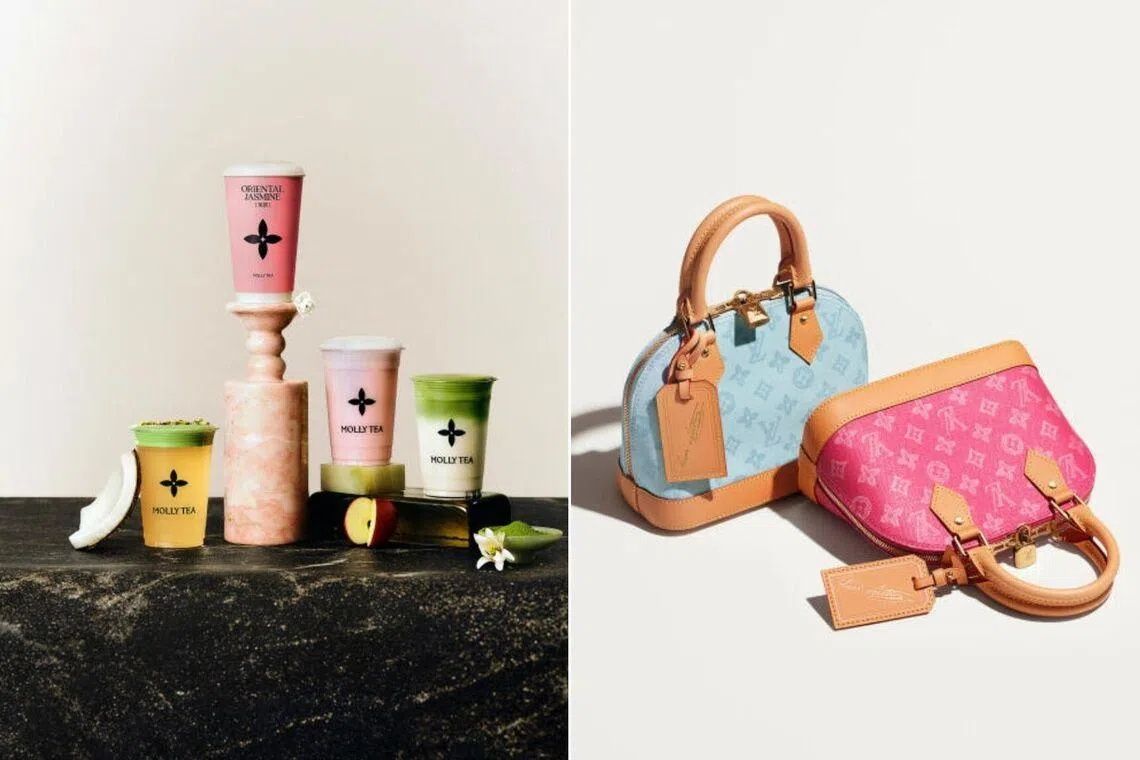
A significant intellectual property ruling in China has reignited debate over trademark protection and cultural elements, with a provincial court finding that Molly Tea, a popular Shenzhen-based milk tea chain, had unlawfully used designs similar to Louis Vuitton's registered trademarks. The Suzhou Intermediate People's Court in Jiangsu province determined on June 29 that the company and one of its Wuzhong district franchises had violated seven of the French luxury giant's four-petal flower graphic trademarks, resulting in a judgment requiring 10.3 million yuan—equivalent to approximately US$1.5 million—in damages along with a mandatory public apology.
The dispute centres on the visual similarity between Molly Tea's brand emblem, featuring a four-petal flower design, and Louis Vuitton's widely recognised monogram motifs. Louis Vuitton initiated legal proceedings in May 2025, and the subsequent ruling has already sparked substantial controversy across Chinese digital platforms, with the case generating over 360 million views on social media under related hashtags. The decision carries implications for other businesses in China and across Southeast Asia that incorporate floral or traditional cultural imagery into their branding strategies.
Molly Tea's trademark applications tell a revealing story about the company's design strategy. Beginning in March 2024, the company and its affiliated entities submitted numerous trademark applications featuring various floral designs to the China National Intellectual Property Administration. These applications primarily sought protection in categories including restaurant and accommodation services, advertising, and convenience foods—sectors directly relevant to the milk tea business. However, the administration rejected most of these filings, with only the trademark containing the Chinese characters for "Molly Tea" itself successfully registering, suggesting that examiners had already identified potential conflicts with existing marks.
Public reaction to the verdict has been notably polarised, reflecting deeper questions about fairness in intellectual property law. Supporters of the court's decision argue that Molly Tea's floral emblem bears striking visual similarities to Louis Vuitton's iconic pattern, making confusion among consumers a genuine concern. Conversely, critics contend that meaningful visual differences exist between the designs and that the companies operate in sufficiently distinct market segments—luxury fashion versus affordable beverages—to preclude any realistic likelihood of consumer confusion. This disagreement exposes fundamental uncertainty about what constitutes genuine trademark infringement in contemporary Chinese commerce.
A particularly contentious aspect of the debate involves questions about cultural ownership and innovation. Some observers have questioned whether Louis Vuitton's signature pattern, despite decades of commercial use, genuinely originates from the brand's creative efforts or whether it draws inspiration from traditional Chinese cultural motifs. This argument invokes a broader concern that strict trademark protection might inadvertently grant foreign corporations exclusive rights to design elements rooted in public cultural heritage. The tension reflects anxieties within China about ensuring that international IP frameworks do not disadvantage domestic enterprises or restrict access to cultural symbols.
Kang Lixia, a partner at the Beijing Standzer IP Firm, has provided technical analysis of the legal framework governing such disputes. She emphasises that floral patterns and motifs present within traditional Chinese culture constitute part of the public domain and theoretically remain available for anyone to utilise. However, this principle encounters practical constraints through China's "first to file" trademark system, which allocates registration rights to the earliest applicant for identical or similar marks covering the same or comparable goods. When applications compete for similar designs, only the first successful registration obtains protection; subsequent applications face rejection regardless of the applicant's own creative process or cultural claims.
The legal doctrine of cross-class protection creates particular challenges for companies like Molly Tea operating in different product categories from the trademark holder. Although Louis Vuitton and Molly Tea are registered in different trademark classes—fashion and beverages respectively—Louis Vuitton's status as an earlier-registered and exceptionally well-known mark entitles it to protection extending beyond its original category. This mechanism means that highly recognisable luxury brands can shield their marks from use across numerous unrelated sectors, substantially limiting later applicants' options even when serving completely different consumer markets. Such protection aims to prevent dilution of famous marks but creates competitive asymmetries that disadvantage smaller enterprises attempting to build brand recognition.
Liu Bin, an intellectual property lawyer at Beijing Zhongwen Law Firm, has advocated for a more nuanced examination of such cases, stressing that trademark law does not require disputed designs to be identical to registered marks for infringement to occur. Rather, legal analysis focuses on whether ordinary consumers would reasonably face confusion between the marks. This consumer confusion standard introduces subjective judgment into decisions that appear mechanically technical, opening space for differing interpretations of visual similarity and market overlap. The question of how much similarity suffices to trigger confusion remains contested in both Chinese jurisprudence and international IP practice.
Liu has additionally highlighted a central paradox underlying the Molly Tea case: the fundamental uncertainty surrounding fair treatment of traditional cultural patterns in modern commercial contexts. Since these design elements constitute public resources inherited from centuries of cultural development, many people intuitively believe that no single entity should monopolise them through trademark registration. Yet intellectual property doctrine specifically protects not the cultural elements themselves but rather the brand recognition that companies accumulate through sustained commercial use of those elements. This distinction between protecting cultural heritage and protecting earned brand reputation remains poorly articulated in public discourse.
Molly Tea has announced its intention to appeal the Suzhou court's decision to a higher court, indicating that the dispute will likely continue through additional judicial proceedings. The appeal's outcome will depend substantially on whether the company can convincingly demonstrate that its design possesses sufficient originality and distinctiveness to justify non-infringement claims, while also potentially marshalling evidence of visual differences from the Louis Vuitton mark that the trial court overlooked or underweighted. The appellate process may provide opportunity for more thorough examination of the cultural origins of both designs and the appropriateness of cross-class protection in cases involving luxury brands and unrelated sectors.
For businesses across Malaysia and Southeast Asia, this case presents cautionary lessons about trademark strategy and cultural branding. Companies cannot simply assume that operating in different industries or markets will shield them from infringement liability if their visual marks resemble earlier-registered, highly recognisable trademarks. Yet equally, the case illustrates how strict application of "first to file" principles combined with cross-class protection can effectively block later entrants from accessing design resources historically open to all. As intellectual property enforcement intensifies across the region, businesses must navigate between creative use of cultural elements and avoidance of marks that courts might perceive as creating consumer confusion with famous established brands. The resolution of Molly Tea's appeal may significantly clarify these boundaries for the entire region.

